What it means
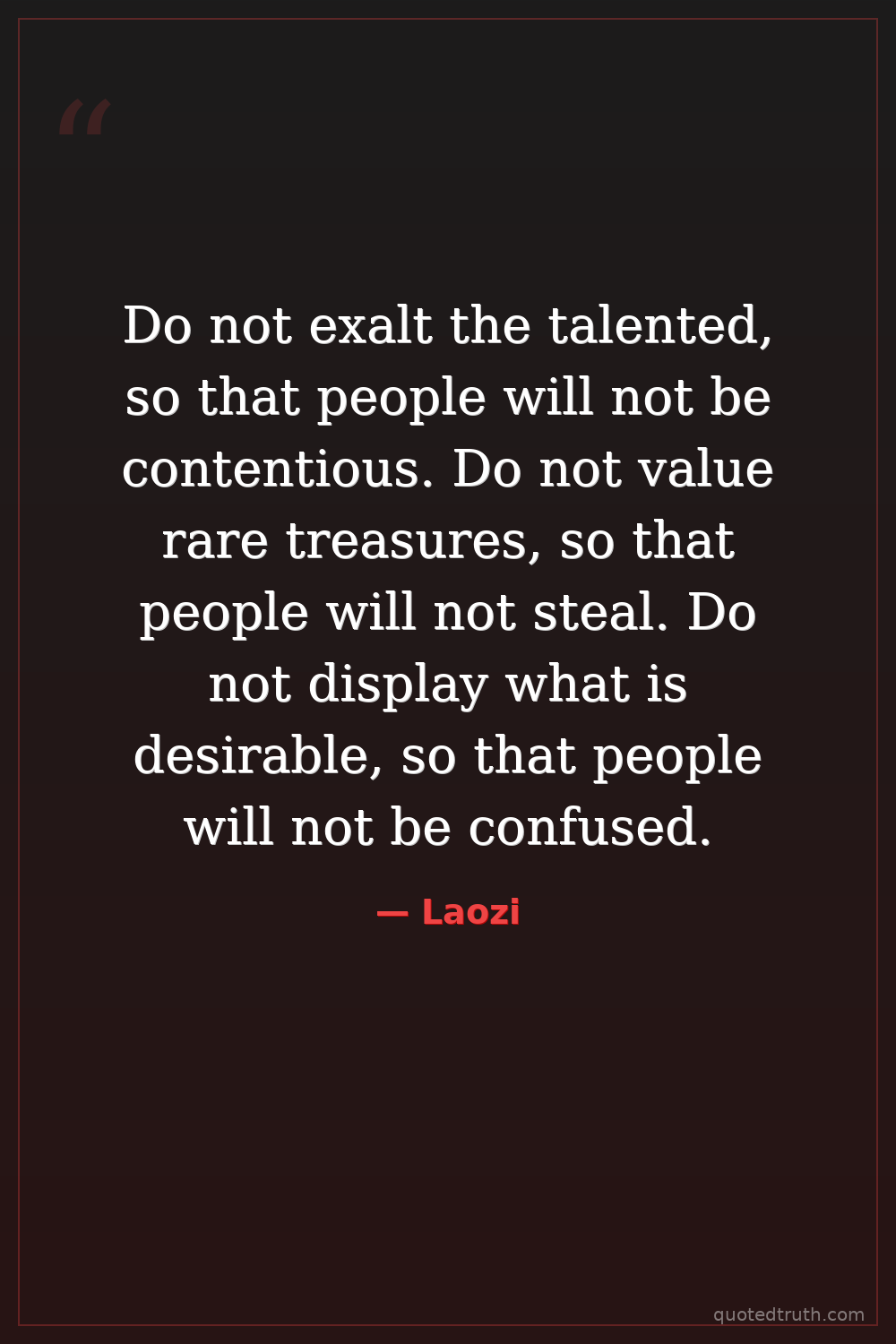
Society creates its own troubles by constantly ranking people and possessions. When you celebrate the gifted, everyone scrambles to outshine each other. When you price objects as rare, theft becomes inevitable. When you parade luxury, ordinary minds grow restless and confused. Stop feeding the comparison machine. Remove the triggers, and competition, greed, and envy quietly lose their fuel. Peace comes from not stirring desires in the first place.
Relevance to Laozi
Laozi worked as an archivist in the Zhou royal court, watching aristocrats scheme over rank, jade, and imperial favor. Disgusted by the striving he witnessed, he reputedly abandoned the capital on a water buffalo, pausing only to write the Tao Te Ching. This passage distills his core doctrine of wu wei, non-striving governance, and his conviction that the sage-ruler calms society by subtracting provocations rather than issuing edicts or rewards.
The era
Laozi lived during the late Zhou dynasty, around the 6th century BCE, as centralized authority crumbled into the Spring and Autumn period's warring fiefs. Rulers hoarded bronze ritual vessels, recruited talented strategists with lavish titles, and fought over scarce jade and silk. Confucius was simultaneously urging merit and ritual hierarchy. Laozi's counter-argument, that such exaltation manufactures the very chaos rulers claim to fight, landed as radical dissent against the meritocratic arms race of his age.
AI-generated insights based on extensive research and information for context. Factual errors? Email [email protected].