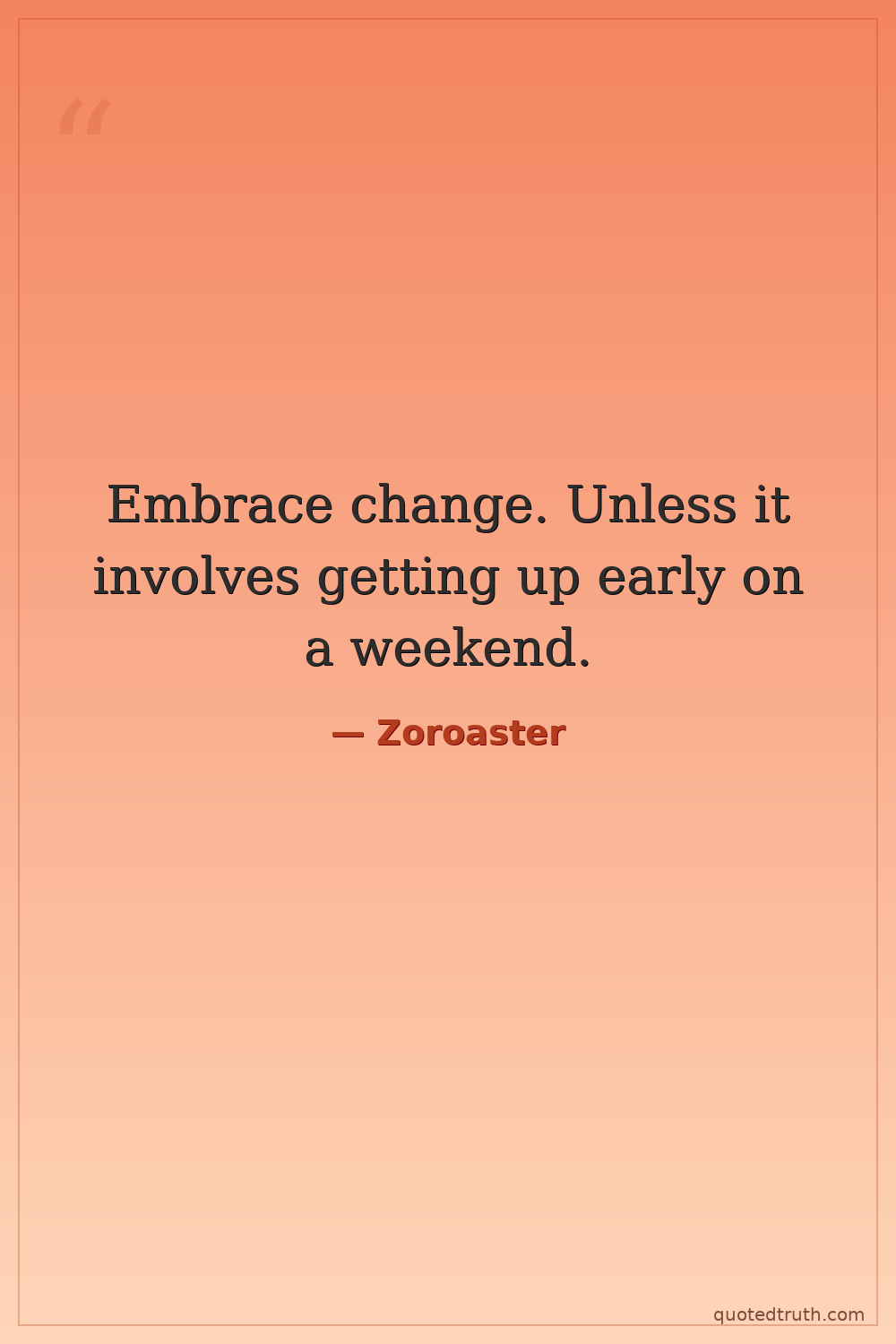
Zoroaster — "Embrace change. Unless it involves getting up early on a weekend."
Embrace change. Unless it involves getting up early on a weekend.
Embrace change. Unless it involves getting up early on a weekend.
Click any product to generate a realistic preview. Up to 3 at a time.
* Initial load can take up to 90 seconds — revising the preview in another color is nearly instant.
"The wise man knows what he does not know. The truly wise man knows what he does not know and then asks someone else to explain it."
"The first step to the Good Religion is to become a foe unto the Lie and a friend unto the Truth."
"Beware of lust; it corrupteth both the body and the mind."
"The two primal spirits, who revealed themselves in vision as twins, are the Better and the Bad in thought, word, and action."
"And when these two spirits came together, they created life and non-life, and how at the end the worst existence shall be for the wicked, but the Best Mind for the righteous."
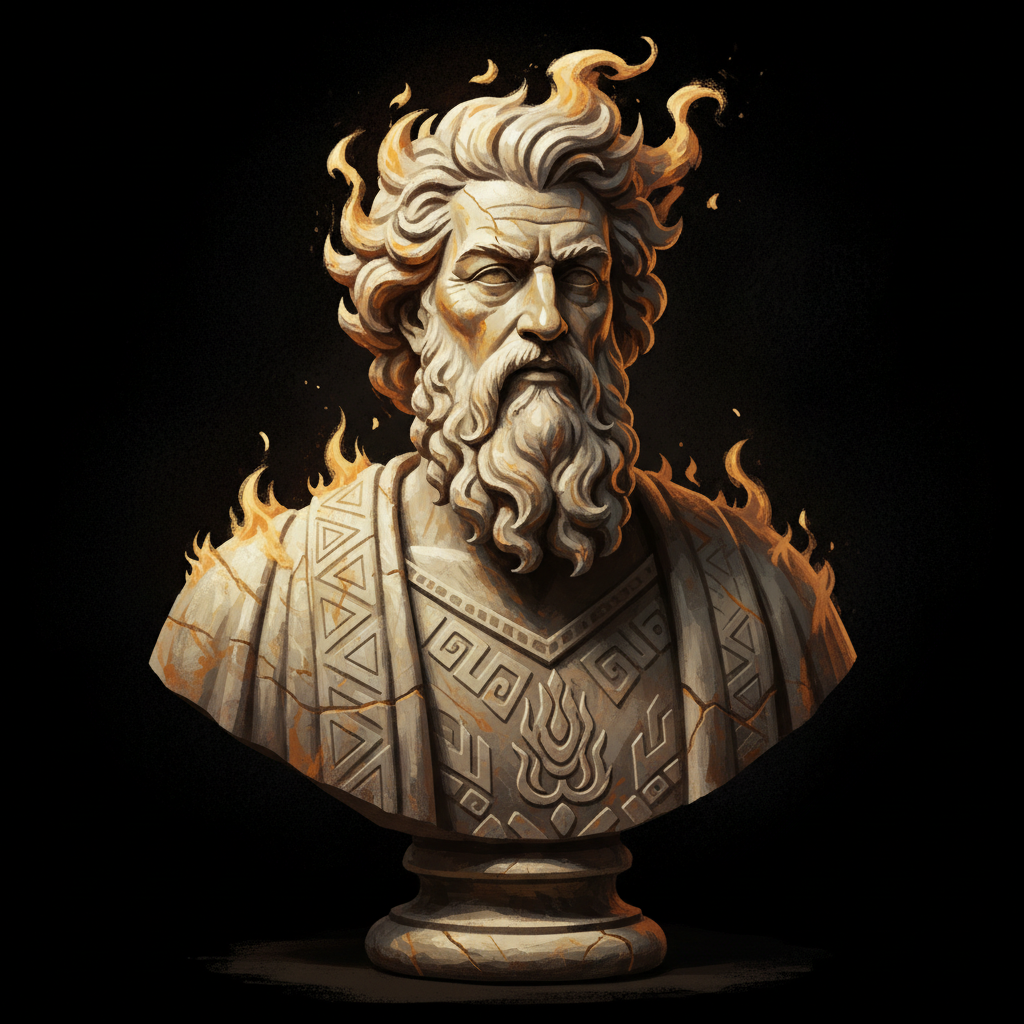
Iranian prophet who founded Zoroastrianism, the first major religion of cosmic dualism between good (Ahura Mazda) and evil (Angra Mainyu). Closely associated with The Buddha (near-contemporary Eastern moral-cosmological revolutionary). For an intellectual contrast, see Friedrich Nietzsche, German philosopher of 'beyond good and evil' — Nietzsche appropriated Zarathustra's name for Thus Spoke Zarathustra (1883) precisely to invert the original's moral cosmology — the historical Zoroaster founded the good-versus-evil framework Nietzsche's character announces the end of.
Found in 1 providers: grok
1 source checked
The line playfully endorses personal growth and adaptability while carving out one stubborn exception: sleeping in on weekends. It captures the modern tension between aspirational self-improvement and the small, human indulgences people refuse to give up. Change is good in principle, the joke says, but please not before coffee on Saturday. It's a wink at how we endorse transformation broadly yet guard our cozy routines fiercely.
Zoroaster preached radical moral change: choose Asha (truth, order) over Druj (the lie), and align thoughts, words, and deeds with Ahura Mazda. He demanded active ethical effort, not passive ritual. Pairing his name with a snooze-button joke is ironic, since his actual teaching was that every dawn renewed the cosmic choice between light and darkness. For Zoroastrians, sunrise prayers were non-negotiable, making weekend lie-ins the exact compromise he rejected.
Zoroaster likely preached in Bronze Age eastern Iran (roughly 1500–1000 BCE), among semi-nomadic Indo-Iranian tribes steeped in polytheistic ritual, animal sacrifice, and priestly hierarchy. He broke from that by proclaiming one supreme creator, Ahura Mazda, and a moral dualism between good and evil. Fire altars, dawn-facing prayers, and seasonal Gahambar festivals structured daily life. In a world governed by agricultural cycles and sunrise devotions, resisting dawn was literally resisting cosmic order.
AI-generated insights based on extensive research and information for context. Factual errors? Email [email protected].
Your cart is empty