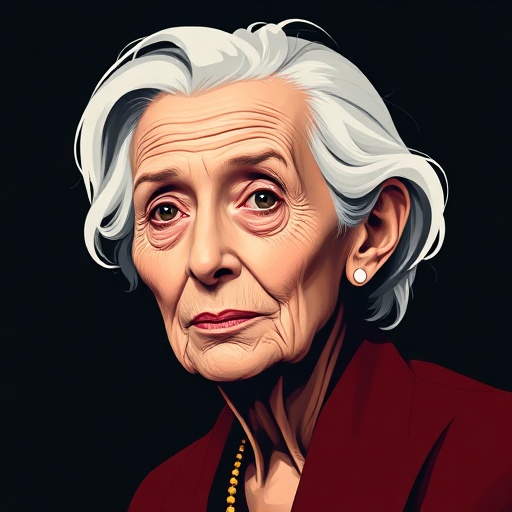
Jane Goodall — "Every day is a new opportunity to make a positive impact on the world."
Every day is a new opportunity to make a positive impact on the world.
Every day is a new opportunity to make a positive impact on the world.
Click any product to generate a realistic preview. Up to 3 at a time.
* Initial load can take up to 90 seconds — revising the preview in another color is nearly instant.
"The greatest threat to our planet is the belief that someone else will save it."
"We have to remember that we are just one species among many, and we need to act accordingly."
"We are not the only intelligent beings on this planet."
"Every day is a chance to make a difference."
"I've touched the soul of a chimpanzee, and it changed my life forever."
British primatologist who in 1960 began the longest-running wild primate study at Gombe Stream, transforming our understanding of chimpanzees. Closely associated with Dian Fossey (mountain-gorilla researcher) and Birutė Galdikas (orangutan researcher; together with Goodall and Fossey one of Louis Leakey's 'Trimates'). For an intellectual contrast, see Walter Palmer, American dentist who killed Cecil the Lion in Zimbabwe in 2015 — Palmer represents the trophy-hunting tradition Goodall's life's work has been organized against — the colonial-era hunter-naturalist worldview that treated primates and big game as specimens or trophies, which Goodall's Roots & Shoots and Jane Goodall Institute exist specifically to displace.
Found in 1 providers: grok
1 source checked
Each new day carries a fresh opportunity to do good — rejecting passivity and fatalism. No matter what happened yesterday, today's choices still matter. This frames positive impact not as a single grand gesture but as a daily practice, accessible to anyone willing to act. It emphasizes consistency and personal agency over waiting for perfect conditions or large-scale systemic change to arrive on its own.
Goodall built her career on patient, daily commitment — spending decades observing chimpanzees at Gombe one session at a time. Her Roots & Shoots program, launched in 1991, operationalizes the belief that individual actions compound into global change. Even after witnessing severe deforestation and species loss, she maintained deliberate optimism, traveling roughly 300 days per year into her eighties to lecture, fundraise, and recruit the next generation of conservationists.
Goodall became a full-time activist during accelerating ecological crisis: tropical deforestation surged through the 1980s and 1990s, climate science reached mainstream urgency in the 2000s, and primate habitats collapsed at record rates. Against relentlessly grim environmental headlines, her insistence on daily hope served as a practical counter-narrative — arguing that despair is itself an obstacle, and that showing up each day is the only viable strategy for conservation work the planet genuinely needs.
AI-generated insights based on extensive research and information for context. Factual errors? Email [email protected].
Your cart is empty