What it means
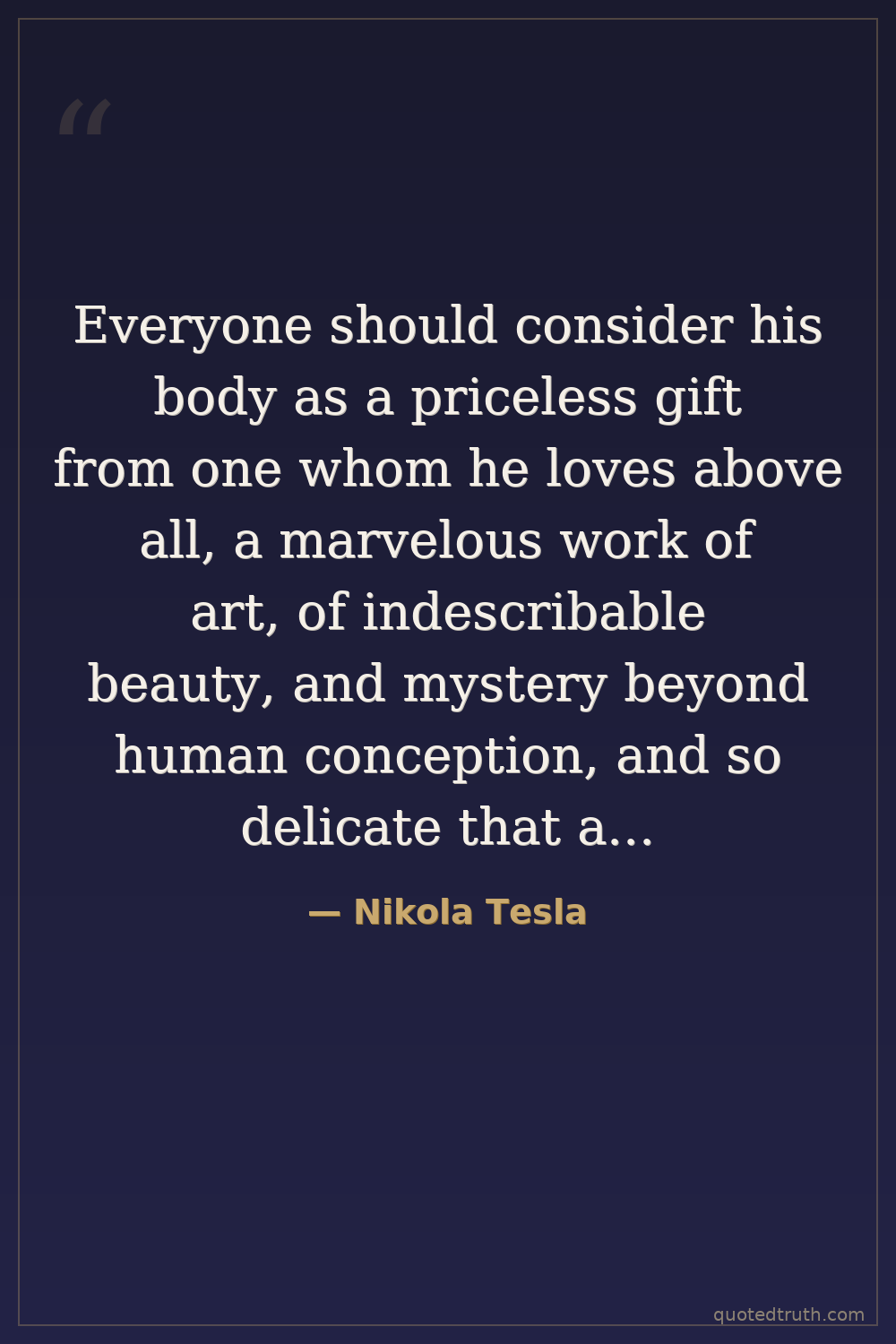
Your body is an extraordinary, fragile gift deserving deep reverence and careful stewardship. Treat it with the same awe you'd give a priceless masterpiece. Even subtle neglect — poor hygiene, careless habits — damages something irreplaceable. Dirtiness isn't just unhealthy; it's a moral failing because it destroys something of immense, almost sacred value that was entrusted to you.
Relevance to Nikola Tesla
Tesla was obsessive about personal hygiene and health, famously germophobic and meticulous in his habits. He avoided shaking hands and was deeply concerned with cleanliness throughout his life. As a scientist who understood biological systems, he viewed the human body with the same precise wonder he brought to electrical engineering — a complex mechanism deserving rigorous care and respect.
The era
Tesla lived through the late 1800s and early 1900s, when germ theory was newly established and public health crises like tuberculosis, cholera, and typhoid killed millions. Sanitation reform was a major civic movement. Understanding that uncleanliness caused disease was revolutionary, not obvious — Tesla's emphasis on hygiene reflected cutting-edge scientific thinking as modern medicine was just transforming public consciousness.
AI-generated insights based on extensive research and information for context. Factual errors? Email [email protected].