Guru Nanak — "False is the body, false are the clothes; false is beauty."
False is the body, false are the clothes; false is beauty.
False is the body, false are the clothes; false is beauty.
Click any product to generate a realistic preview. Up to 3 at a time.
* Initial load can take up to 90 seconds — revising the preview in another color is nearly instant.
"Religion consists not in words; He who looks on all men as equal is religious."
"What is the use of bathing at sacred shrines, if the mind is full of impurity?"
"Recognise the Lord's light within all and do not consider social class or status."
"He who practices truth, contentment, and kindness, and who is free from ego, he is truly a Brahmin."
"The greatest gift is to share. Especially if it's your last piece of samosa."
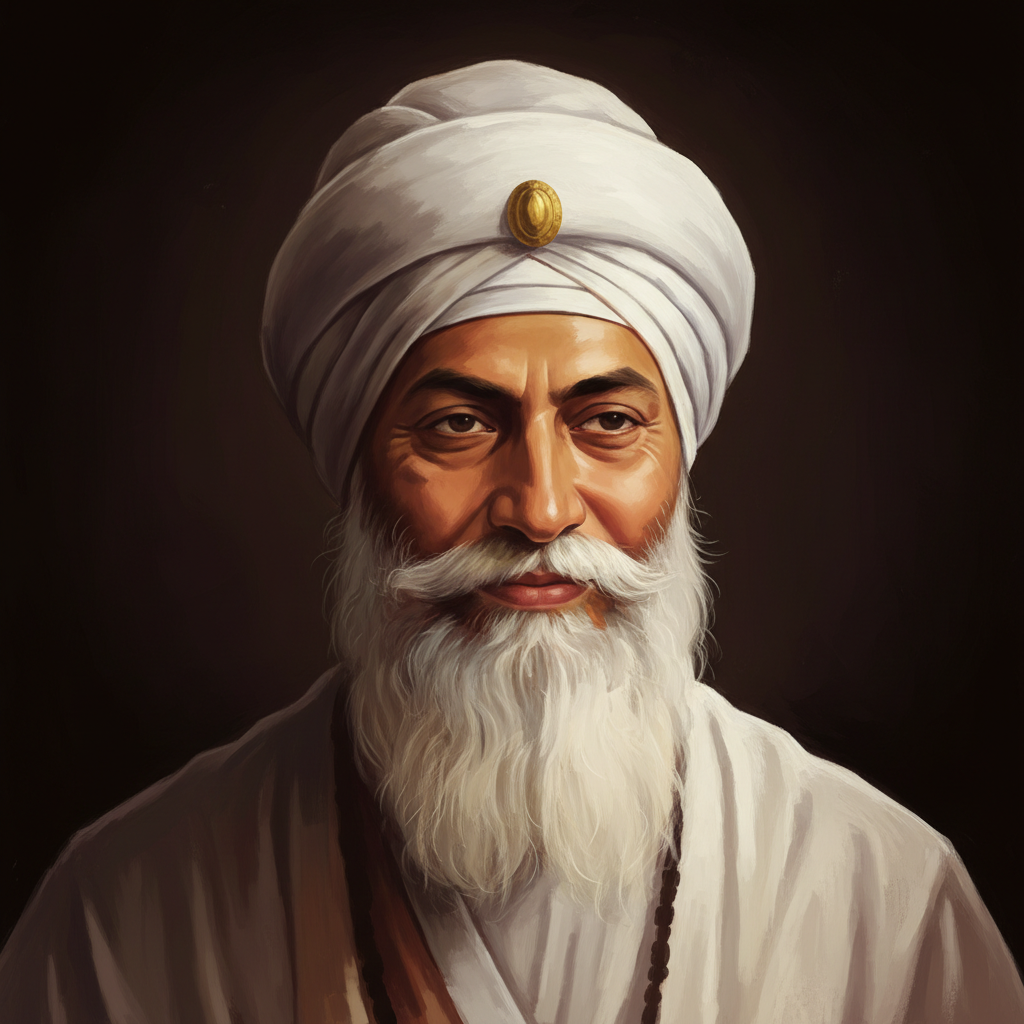
Founder of Sikhism and the first of the Ten Sikh Gurus, whose teachings of one universal God and rejection of caste shaped Punjab. Closely associated with Kabir (mystical poet whose verses appear in the Sikh Guru Granth Sahib). For an intellectual contrast, see Brahmanical orthodoxy, the Hindu caste-and-ritual establishment of his era — Sikhism was founded as a deliberate alternative to both Hindu ritual hierarchy and Islamic exclusivism — Nanak's universalism was a structural rejection of caste and priestly mediation.
Found in 1 providers: gemini
1 source checked
The body ages and dies, clothes wear out, and physical beauty fades — none of these are permanent or define who you truly are. Guru Nanak is warning against self-deception through attachment to appearance and material things. What is real and eternal is the soul and its relationship with God. Chasing external things distracts you from inner truth and genuine devotion, which are the only things that actually last.
Guru Nanak (1469–1539) built his entire mission on rejecting empty outward performance. He criticized Hindu priests for wearing sacred threads as status symbols and Muslim clerics for public piety without inner sincerity. During his four great journeys across Asia he wore simple clothing and broke caste barriers freely. His core teaching — that God perceives the soul, not the body — makes this dismissal of physical beauty and dress foundational rather than incidental to his message.
In late 15th-century northern India, both Hindu and Muslim societies assigned enormous weight to outward markers — caste-specific garments, sacred threads, jeweled court dress, and elaborate ceremonial identity. The Delhi Sultanate was collapsing and Mughal power rising, with religion frequently performed as public spectacle. Declaring the body and clothing 'false' was a radical disruption of that social order, echoing the growing bhakti and Sufi movements that similarly prized interior devotion over institutional display.
AI-generated insights based on extensive research and information for context. Factual errors? Email [email protected].
Your cart is empty