What it means
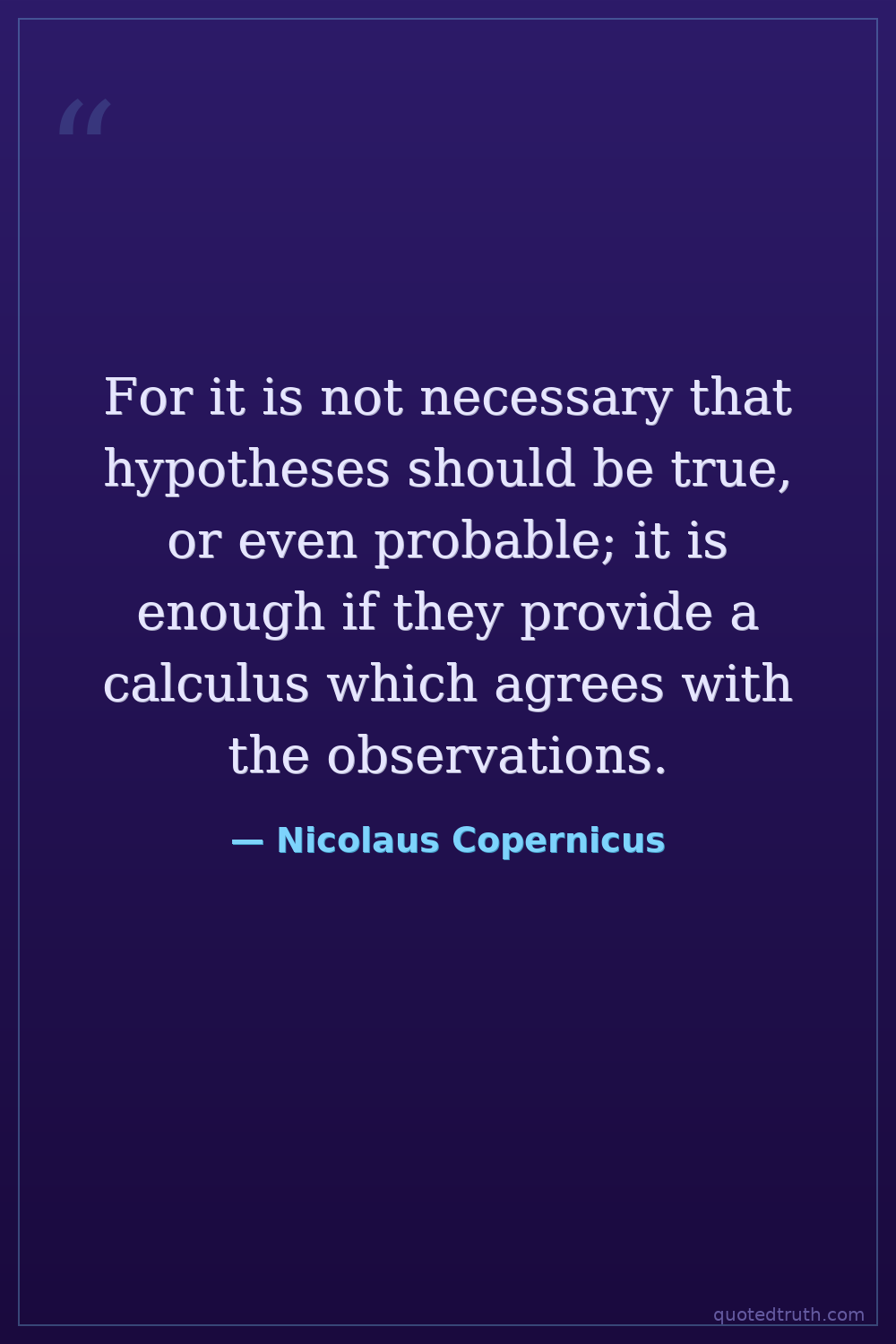
A hypothesis doesn't need to be literally true or even plausible—it just needs to generate predictions that match observed data. Science functions instrumentally here: models are calculating tools, judged by predictive accuracy rather than correspondence to physical reality. This separates mathematical utility from metaphysical truth, suggesting a theory can be useful without being real. The test of a hypothesis is whether its numbers match what we actually see.
Relevance to Nicolaus Copernicus
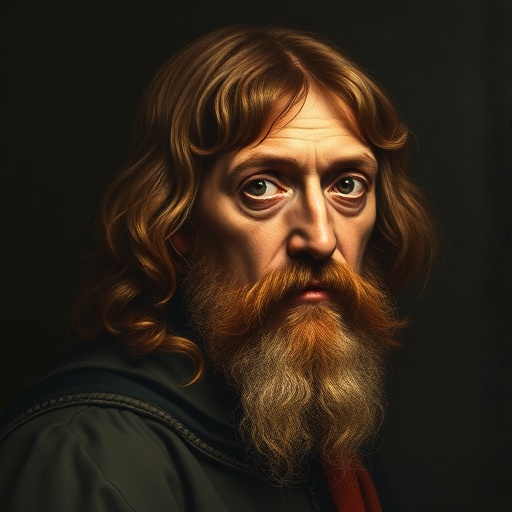
Copernicus spent roughly 30 years developing his heliocentric model before publishing De Revolutionibus in 1543, the year he died. As a Catholic canon risking Church censure, framing heliocentrism as a mere computational device offered protection. Yet Copernicus genuinely believed Earth orbited the Sun—making this instrumentalist framing, actually inserted by editor Andreas Osiander without his consent, contrary to his real convictions. His life's work was driven by belief the cosmos had a true, discoverable physical structure.
The era
The 16th-century Church held absolute authority over cosmological truth, anchoring the 1,400-year-old Ptolemaic geocentric model as sacred doctrine. Challenging it risked heresy charges—Giordano Bruno would be burned at the stake in 1600 for cosmological heterodoxy. Presenting heliocentrism as merely a mathematical tool rather than physical fact was a pragmatic shield against persecution. Simultaneously, the Protestant Reformation was fracturing religious authority, creating a volatile climate where new ideas challenged orthodoxy at genuine personal risk.
AI-generated insights based on extensive research and information for context. Factual errors? Email [email protected].