What it means
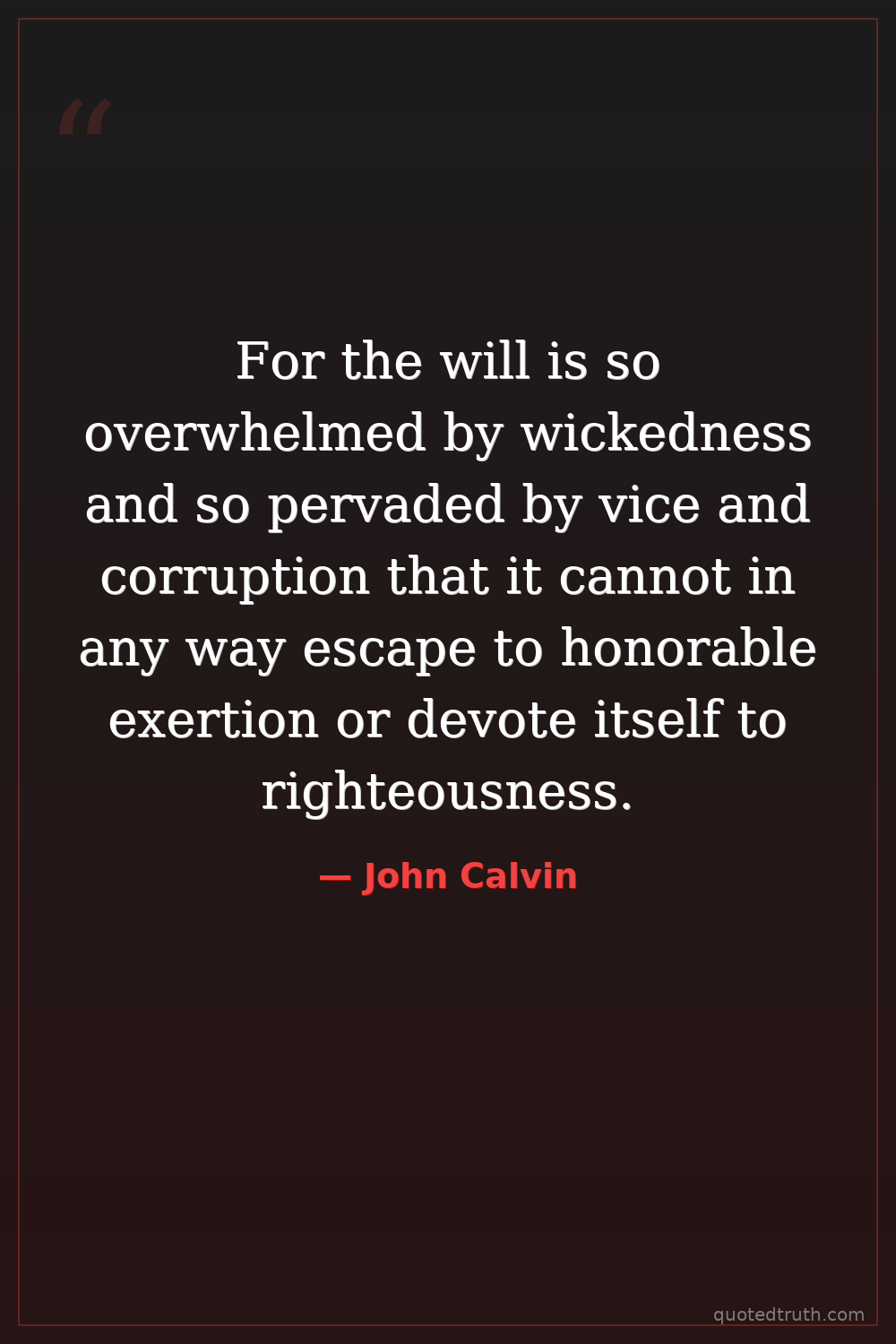
Human beings have no moral freedom to choose good on their own. The will—our capacity to choose and act—is so deeply corrupted by sin that it cannot direct itself toward virtue or righteousness without outside intervention. This is not about occasional bad choices; it is a fundamental claim that human nature is broken at its core, structurally incapable of escaping moral corruption through personal effort or determination.
Relevance to John Calvin
Calvin built his entire theology around total depravity—the T in TULIP. His Institutes of the Christian Religion systematized this claim: human will is so corrupted by Adam's fall that it cannot choose God without divine grace. This directly underpins his doctrine of predestination. As Geneva's theocratic leader, Calvin enforced strict moral codes, convinced unchecked human nature would always trend toward corruption without God's sovereign and irresistible intervention.
The era
Calvin wrote during the Protestant Reformation, when the Catholic Church's teaching that humans could merit salvation through good works and penance was under fierce attack. Luther had asserted grace alone; Calvin extended this by arguing the will itself was irreparably corrupt. As the Council of Trent (1545–1563) reasserted free will and human cooperation with grace, Calvin's total depravity became the defining counterpoint in the era's central theological conflict.
AI-generated insights based on extensive research and information for context. Factual errors? Email [email protected].