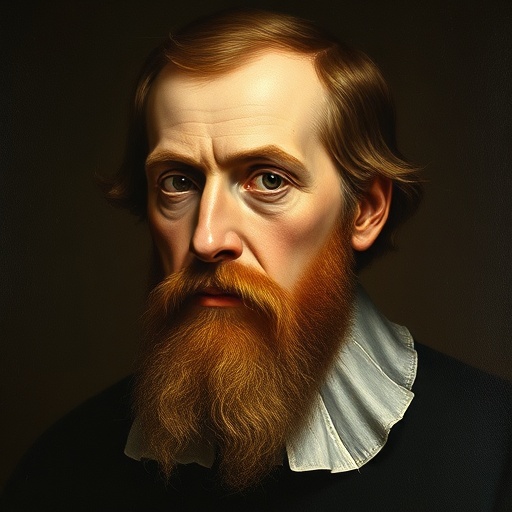
John Calvin — "Free will is an empty term."
Free will is an empty term.
Free will is an empty term.
Click any product to generate a realistic preview. Up to 3 at a time.
* Initial load can take up to 90 seconds — revising the preview in another color is nearly instant.
"Without faith, it is impossible to please God."
"The Lord then would have all the godly to burn with so much zeal in the defense of lawful worship and true religion, that no connection, no relationship, nor any other consideration, connected with th…"
"By predestination we mean the eternal decree of God, by which he has determined with himself whatever he wills to happen with regard to every man."
"For we do not say that man is dragged unwillingly into sinning, but that because his will is corrupt he is held captive under the yoke of sin and therefore of necessity wills in an evil way."
"The reprobate are raised up to manifest the glory of God, when, by their condemnation, they show his justice."
French theologian whose Institutes of the Christian Religion (1536) systematized Protestant Reformed doctrine, including predestination. Closely associated with Martin Luther (Reformation founder, Calvin's predecessor). For an intellectual contrast, see Jacobus Arminius, Dutch Reformed theologian (1560-1609) — Arminius's rejection of strict double-predestination founded Arminianism — the theological tradition modern Methodism, most evangelicalism, and Pentecostalism descend from. The Calvinist-Arminian debate has divided Protestantism for 400 years.
Writings on free will, in opposition to those who claim human autonomy
Date: c. 1530s-1550s
GeneralFound in 1 providers: gemini
1 source checked
Calvin argues that human beings, after the Fall, are so corrupted by sin that their will is enslaved — incapable of choosing good without divine grace. What feels like free choice is really a will in bondage to sinful nature. Calling it free misleads people into thinking they hold neutral power between good and evil. For Calvin, genuine freedom only comes through God's transforming grace, not innate human capacity.
Calvin's entire theological system rests on God's absolute sovereignty. His doctrine of Total Depravity — the T in TULIP — holds that sin corrupts every human faculty, including the will, leaving people unable to choose salvation. In his Institutes of the Christian Religion, he systematically dismantled the idea of human moral merit. As Geneva's chief reformer and pastor, Calvin built civic governance around the conviction that human nature requires divine restraint.
The 16th-century Reformation was defined by fierce debates over salvation. The Catholic Church taught that humans cooperate with grace through their own merit and free choices. Erasmus had defended free will against Luther in 1524. Calvin, writing in Geneva from the 1530s onward, sharpened Luther's position — asserting God alone predestines souls, stripping human will of any salvific power. This directly challenged centuries of Church teaching about human moral agency and merit.
AI-generated insights based on extensive research and information for context. Factual errors? Email [email protected].
Your cart is empty