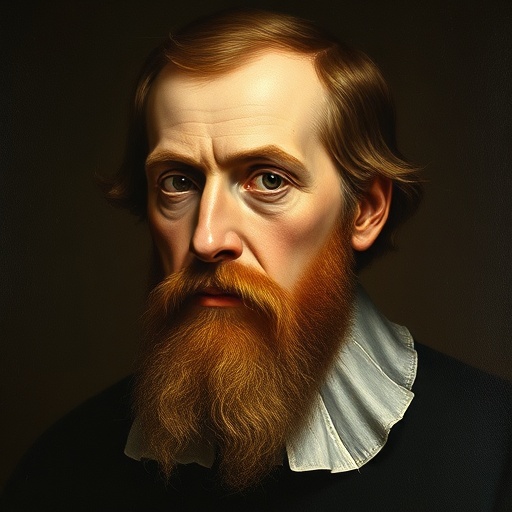
John Calvin — "Without faith, it is impossible to please God."
Without faith, it is impossible to please God.
Without faith, it is impossible to please God.
Click any product to generate a realistic preview. Up to 3 at a time.
* Initial load can take up to 90 seconds — revising the preview in another color is nearly instant.
"There is no worse screen to block out the Spirit than an overactive mind."
"For I stay not to consider the extravagance of those who say that grace is offered equally and promiscuously to all."
"The true knowledge of God consists in acknowledging him as our Father and Lord."
"We must live as if we were always in the presence of God."
"All true knowledge of God is born of obedience."
French theologian whose Institutes of the Christian Religion (1536) systematized Protestant Reformed doctrine, including predestination. Closely associated with Martin Luther (Reformation founder, Calvin's predecessor). For an intellectual contrast, see Jacobus Arminius, Dutch Reformed theologian (1560-1609) — Arminius's rejection of strict double-predestination founded Arminianism — the theological tradition modern Methodism, most evangelicalism, and Pentecostalism descend from. The Calvinist-Arminian debate has divided Protestantism for 400 years.
Found in 1 providers: grok
1 source checked
Genuine relationship with God requires faith as its essential foundation. No amount of ritual, moral effort, or outward religious performance can substitute for it. This isn't about blind belief but active trust and reliance on God's character and promises. The quote cuts to the heart of what makes religious life authentic versus merely mechanical — inner conviction must come before any action can be spiritually meaningful.
Calvin built his entire theological system on this conviction. His doctrine of sola fide — faith alone — directly opposed the Catholic Church's teaching that salvation required sacraments and works alongside faith. His landmark Institutes of the Christian Religion argued that true piety flows from trust in God's sovereign grace, not human effort. His reforms in Geneva restructured church governance, worship, and civic life around this foundational principle.
The 16th-century Reformation made this claim explosive. The Catholic Church taught that salvation required sacraments, indulgences, and moral works alongside faith — a system that funded entire institutions. Luther's break with Rome centered on sola fide, and Calvin sharpened it further. The Council of Trent specifically condemned this view in response. Religious wars erupted across Europe, and Western Christianity fractured permanently along this single theological fault line.
AI-generated insights based on extensive research and information for context. Factual errors? Email [email protected].
Your cart is empty