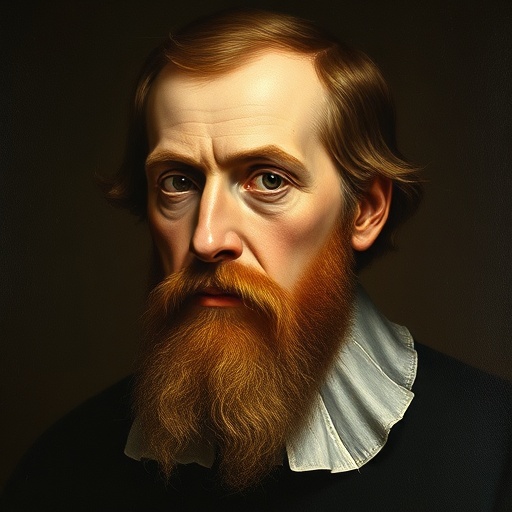
John Calvin — "God uses wicked men as his instruments to execute his judgments."
God uses wicked men as his instruments to execute his judgments.
God uses wicked men as his instruments to execute his judgments.
Click any product to generate a realistic preview. Up to 3 at a time.
* Initial load can take up to 90 seconds — revising the preview in another color is nearly instant.
"Without knowledge of God, there is no true knowledge of self."
"By predestination we mean the eternal decree of God, by which he has determined with himself whatever he wills to happen with regard to every man."
"This is not laid down on human authority; it is God who speaks and prescribes a perpetual rule for his Church."
"God always remains true to himself."
"The reprobate are not able to believe, because God does not give them the gift of faith."
French theologian whose Institutes of the Christian Religion (1536) systematized Protestant Reformed doctrine, including predestination. Closely associated with Martin Luther (Reformation founder, Calvin's predecessor). For an intellectual contrast, see Jacobus Arminius, Dutch Reformed theologian (1560-1609) — Arminius's rejection of strict double-predestination founded Arminianism — the theological tradition modern Methodism, most evangelicalism, and Pentecostalism descend from. The Calvinist-Arminian debate has divided Protestantism for 400 years.
Found in 1 providers: grok
1 source checked
Divine sovereignty extends even through corrupt human actors. God's will is never thwarted by wickedness; evil men serve unknowingly as instruments carrying out divine judgment against nations or individuals. Catastrophes, conquests, and oppression can therefore be understood as providentially ordered—not random chaos or proof of God's absence—while the wicked remain fully morally accountable for their own deliberate choices and sinful motives.
Calvin's theology centered on God's absolute sovereignty over all creation and history. His landmark Institutes of the Christian Religion extensively developed the doctrine of divine providence. Operating in Geneva under constant threat from Catholic powers, he needed theological frameworks for understanding tyrants. His doctrine of predestination required that God direct even Pharaoh's hardened heart—wicked rulers serve God's plan while bearing their own guilt.
The 16th-century Reformation shattered Western Christendom into warring confessions. Protestant communities faced inquisitions, massacres, and systematic state persecution across France, the Netherlands, and England. Calvin wrote as Reformed Christians struggled to understand why God permitted Catholic authorities to execute the faithful. This doctrine offered pastoral reassurance: persecutors unknowingly served divine purposes, not evidence of God's defeat, giving Reformed believers courage to endure suffering and martyrdom without abandoning their convictions.
AI-generated insights based on extensive research and information for context. Factual errors? Email [email protected].
Your cart is empty