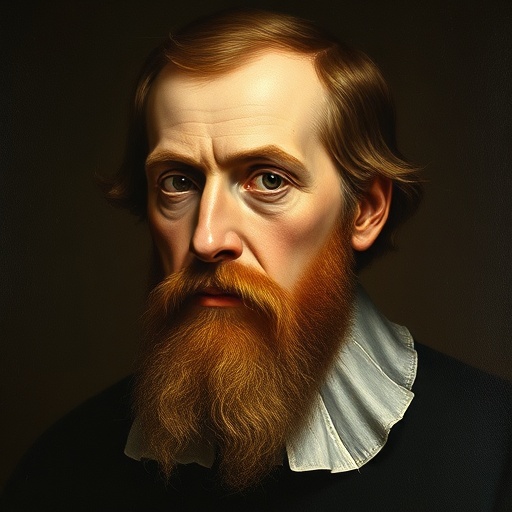
John Calvin — "The reprobate are not able to believe, because God does not give them the gift o…"
The reprobate are not able to believe, because God does not give them the gift of faith.
The reprobate are not able to believe, because God does not give them the gift of faith.
Click any product to generate a realistic preview. Up to 3 at a time.
* Initial load can take up to 90 seconds — revising the preview in another color is nearly instant.
"Without knowledge of self there is no knowledge of God."
"God's sovereignty is absolute."
"It is by no means necessary that the righteous should be distinguished from the wicked by external signs."
"God always remains true to himself."
"The more we know God, the more we humble ourselves."
French theologian whose Institutes of the Christian Religion (1536) systematized Protestant Reformed doctrine, including predestination. Closely associated with Martin Luther (Reformation founder, Calvin's predecessor). For an intellectual contrast, see Jacobus Arminius, Dutch Reformed theologian (1560-1609) — Arminius's rejection of strict double-predestination founded Arminianism — the theological tradition modern Methodism, most evangelicalism, and Pentecostalism descend from. The Calvinist-Arminian debate has divided Protestantism for 400 years.
Found in 1 providers: grok
1 source checked
Some people cannot believe in God — not due to personal failure but because God withheld the capacity for faith. Faith is not a human ability anyone can cultivate through effort; it is a supernatural gift granted by God selectively. Those predestined for damnation, the reprobate, never receive this gift, making their unbelief inevitable rather than freely chosen. Belief itself becomes evidence of divine election, not human merit.
Calvin's doctrine of double predestination — God eternally elects some to salvation and consigns others to damnation — forms the cornerstone of his theology. In his Institutes of the Christian Religion, written in Geneva where he held theocratic authority, Calvin argued God's sovereignty is absolute and unconditional. This statement encapsulates his lifelong insistence that grace is entirely God's action, not a response to human striving or foreseen merit.
The Protestant Reformation shattered Catholic Europe's theological consensus in the 16th century. Luther's debate with Erasmus over free will had already polarized the continent. The Council of Trent, convening to counter Protestantism, emphasized human cooperation with divine grace. Calvin, working in Geneva after fleeing persecution in France, deliberately staked out a harder position: salvation depends entirely on God's inscrutable will, removing any human contribution — a stance foundational to Reformed Protestantism.
AI-generated insights based on extensive research and information for context. Factual errors? Email [email protected].
Your cart is empty