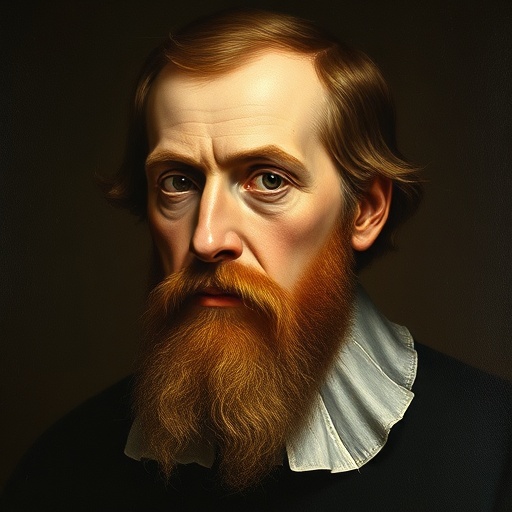
John Calvin — "This is not laid down on human authority; it is God who speaks and prescribes a …"
This is not laid down on human authority; it is God who speaks and prescribes a perpetual rule for his Church.
This is not laid down on human authority; it is God who speaks and prescribes a perpetual rule for his Church.
Click any product to generate a realistic preview. Up to 3 at a time.
* Initial load can take up to 90 seconds — revising the preview in another color is nearly instant.
"The reprobate are not without excuse, because their blindness is voluntary."
"We are pilgrims and strangers on earth."
"All that a good man does, all that he suffers, all that he thinks, has a reference to God."
"We are not our own: let not our reason nor our will, therefore, sway our plans and deeds. We are not our own: let us therefore not set it as our goal to seek what is expedient for us according to the …"
"All good things proceed from God, and all evil things from ourselves."
French theologian whose Institutes of the Christian Religion (1536) systematized Protestant Reformed doctrine, including predestination. Closely associated with Martin Luther (Reformation founder, Calvin's predecessor). For an intellectual contrast, see Jacobus Arminius, Dutch Reformed theologian (1560-1609) — Arminius's rejection of strict double-predestination founded Arminianism — the theological tradition modern Methodism, most evangelicalism, and Pentecostalism descend from. The Calvinist-Arminian debate has divided Protestantism for 400 years.
Commentary on Zechariah 13:3, justifying capital punishment for heretics
Date: 1559
ReligiousFound in 1 providers: gemini
1 source checked
The quote asserts that church rules and doctrine are not invented or approved by human beings—not by councils, popes, or theologians—but are commanded directly by God through scripture. Whatever God has ordained for his church stands permanently, regardless of what any human institution decides. Human authority has no power to override, modify, or replace what God has spoken. The church answers upward, not to earthly consensus.
Calvin built Geneva's Reformed church around this precise conviction. His Institutes of the Christian Religion (1536, revised repeatedly) grounded every church practice in scripture rather than Catholic tradition or papal decree. He fought bitterly with Geneva's city council over church discipline, insisting elders—not magistrates—held authority over church matters because God, not civil government, prescribed that structure. His entire career was an argument that the church's constitution is divine, not negotiable.
The 16th-century Reformation turned on exactly this question: who holds final authority over the church? Rome answered: pope and councils. Reformers answered: scripture alone. The Council of Trent (1545–1563) was actively reasserting Catholic magisterial authority as Calvin wrote. Princes and city councils were seizing church property and governance across Europe, creating confusion about legitimate authority. Calvin's insistence on divine prescription was a direct counter to both Catholic hierarchy and Protestant secular overreach.
AI-generated insights based on extensive research and information for context. Factual errors? Email [email protected].
Your cart is empty