Laozi — "Governing a large country is like cooking a small fish. Too much handling will s…"
Governing a large country is like cooking a small fish. Too much handling will spoil it.
Governing a large country is like cooking a small fish. Too much handling will spoil it.
Click any product to generate a realistic preview. Up to 3 at a time.
* Initial load can take up to 90 seconds — revising the preview in another color is nearly instant.
"The greatest skill is to seem unskilled; The greatest abundance is to seem empty."
"Pursue without interfering."
"Life is a series of natural and spontaneous changes. Don't resist them; that only creates sorrow. Let reality be reality. Let things flow naturally forward in whatever way they like."
"He (the sage) wants all things to follow their own nature, but dares not act."
"The empire is a sacred vessel and cannot be acted on. He who acts on it harms it; he who grasps it loses it."
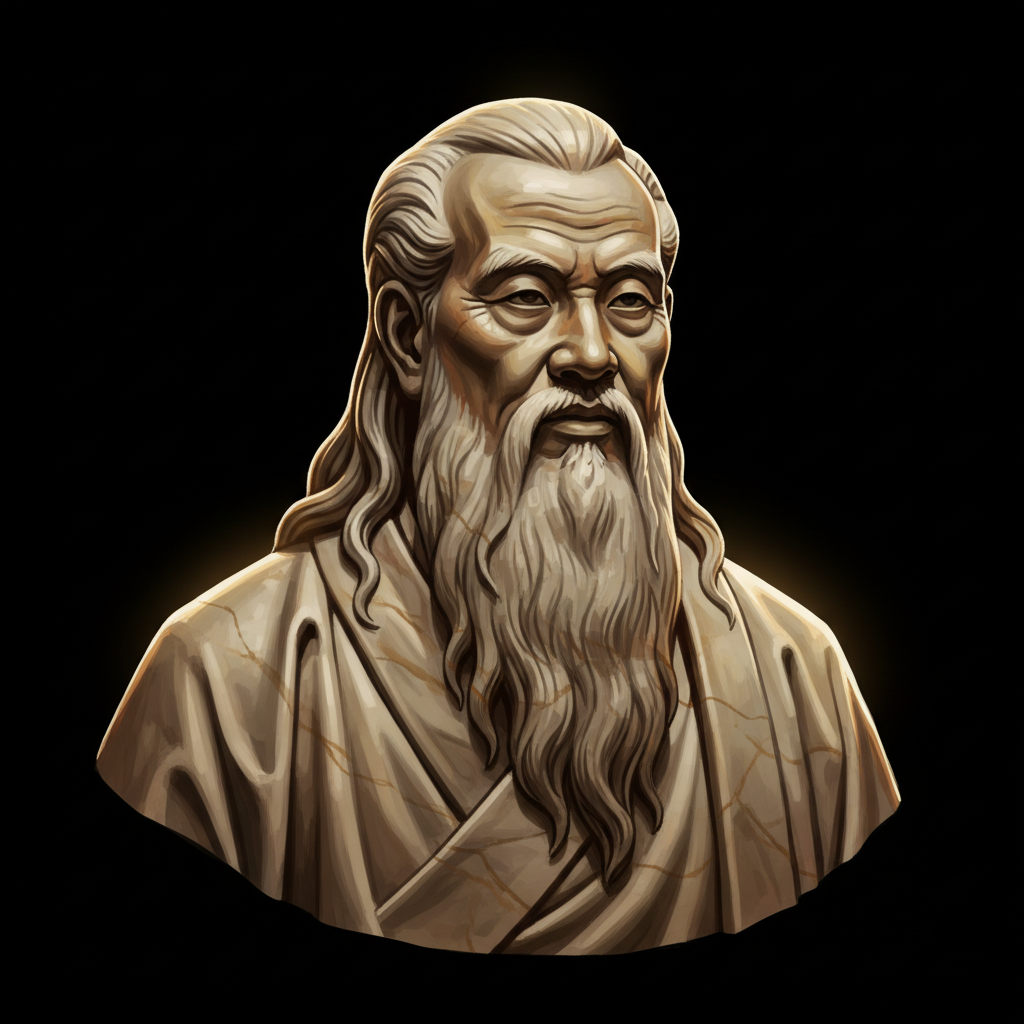
Reputed founder of Taoism and author of the Tao Te Ching, whose wu wei (effortless action) shaped East Asian philosophy. Closely associated with Zhuangzi (later Taoist who extended Laozi's framework). For an intellectual contrast, see Confucius, near-contemporary Chinese sage of social ritual and duty — Confucius systematized social order through ritual and hierarchy; Laozi argued that all such systems were the disease, not the cure — the two founding poles of Chinese moral philosophy.
Found in 1 providers: gemini
1 source checked
Effective leadership requires restraint and minimal interference. Just as a small fish falls apart when poked, prodded, and flipped too often while cooking, a nation unravels when rulers constantly meddle with laws, regulations, and reforms. The best governance lets natural social rhythms work themselves out, intervening only when truly necessary. Over-administration, micromanagement, and endless tinkering create more problems than they solve, breeding resentment and instability among the people being governed.
Laozi served as a keeper of royal archives in the Zhou court, observing firsthand how bureaucratic overreach corroded dynasties. This saying embodies his central doctrine of wu wei, or effortless action, which champions yielding over forcing. Legend says he grew disgusted with Zhou's meddlesome politics and rode west into exile, pausing only to write the Tao Te Ching. His light-touch philosophy directly opposed the rigid, rule-heavy Confucianism gaining ground among rival court advisors.
Laozi lived during the late Zhou dynasty, around the 6th century BCE, as centralized royal authority crumbled and warring states jockeyed for power. Rulers imposed heavier taxes, conscripted armies, and piled on legal codes to control restless populations, producing widespread suffering. Competing schools of thought, later called the Hundred Schools, debated how to restore order. Against Legalist coercion and Confucian ritualism, Laozi's gentle, hands-off governance offered weary peasants and disillusioned officials a radically different vision of stability.
AI-generated insights based on extensive research and information for context. Factual errors? Email [email protected].
Your cart is empty