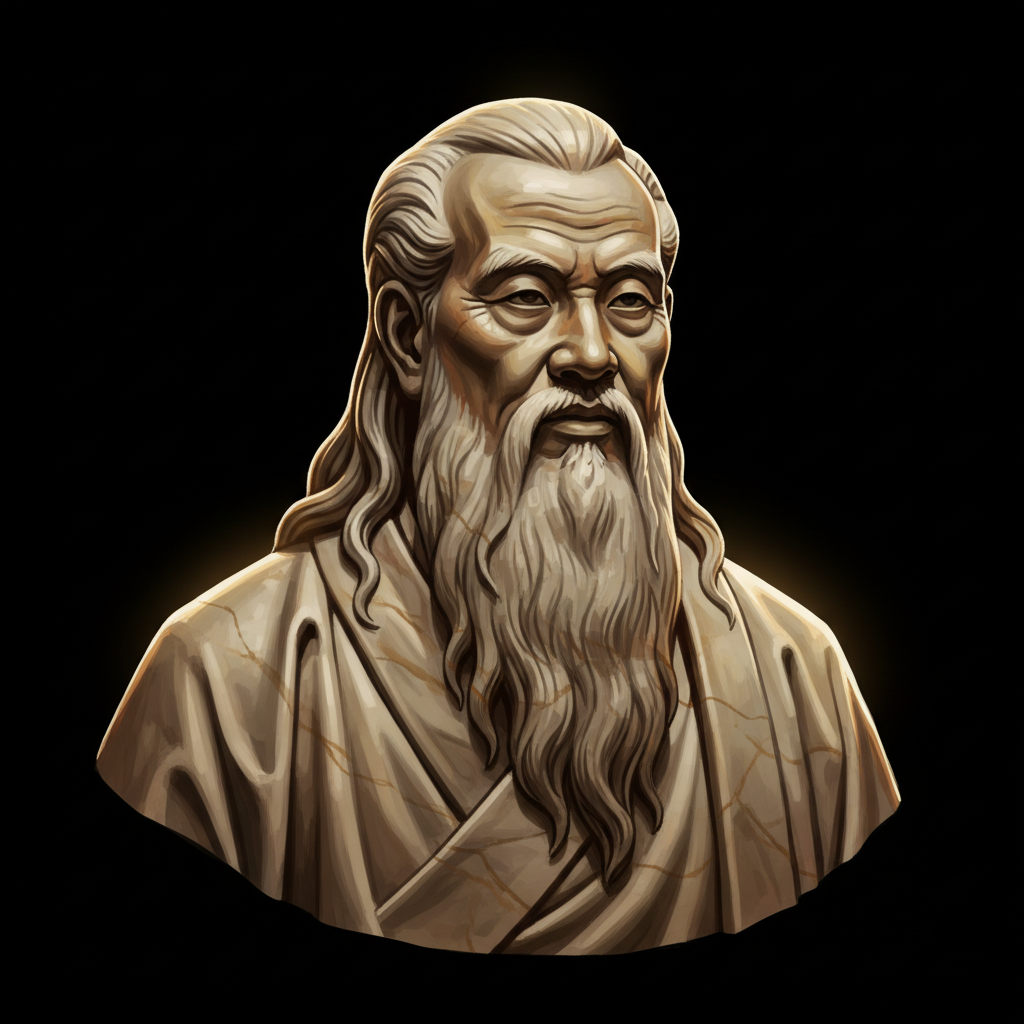
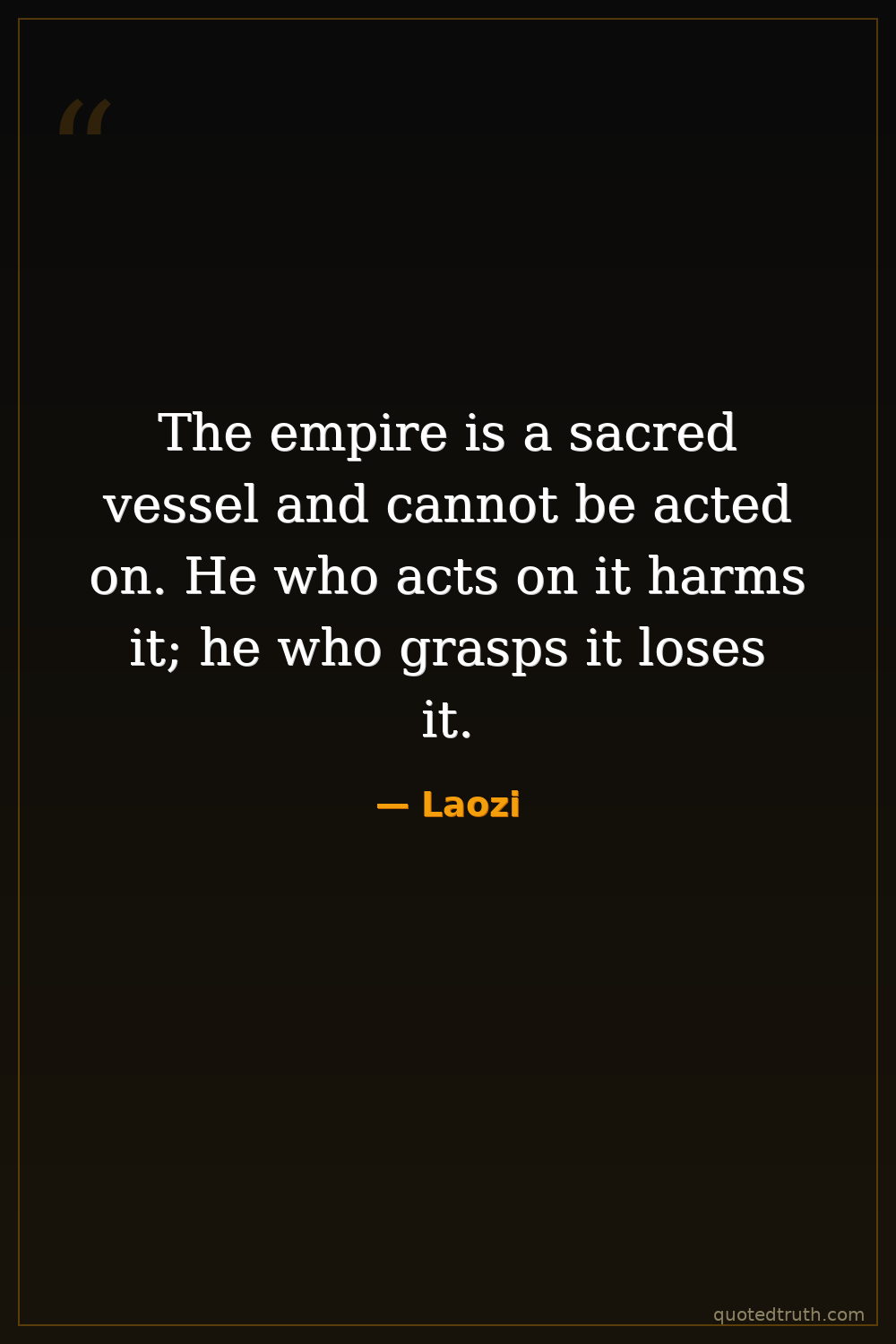
Laozi — "The empire is a sacred vessel and cannot be acted on. He who acts on it harms it…"
The empire is a sacred vessel and cannot be acted on. He who acts on it harms it; he who grasps it loses it.
The empire is a sacred vessel and cannot be acted on. He who acts on it harms it; he who grasps it loses it.
Click any product to generate a realistic preview. Up to 3 at a time.
* Initial load can take up to 90 seconds — revising the preview in another color is nearly instant.
"The great square has no corners. The great vessel takes a long time to complete. The great sound is faint. The great image has no form."
"The best fighter is never angry."
"People fail at the threshold of success. Be as cautious at the end as at the beginning. Then there will be no failure."
"Life is a series of natural and spontaneous changes. Don't resist them; that only creates sorrow. Let reality be reality. Let things flow naturally forward in whatever way they like."
"The sage does not act and therefore does not fail, does not seize and therefore does not lose."
Reputed founder of Taoism and author of the Tao Te Ching, whose wu wei (effortless action) shaped East Asian philosophy. Closely associated with Zhuangzi (later Taoist who extended Laozi's framework). For an intellectual contrast, see Confucius, near-contemporary Chinese sage of social ritual and duty — Confucius systematized social order through ritual and hierarchy; Laozi argued that all such systems were the disease, not the cure — the two founding poles of Chinese moral philosophy.
Found in 1 providers: grok
1 source checked
Society and political order are delicate, living things—not machines you can redesign at will. When rulers try to force the world into their vision through laws, wars, or sweeping reforms, they damage the very thing they want to improve. The tighter you clutch power or try to control outcomes, the faster both slip away. Real stability comes from restraint, not aggressive intervention.
Laozi served as a keeper of royal archives in the Zhou court, watching ambitious rulers rise and fall through meddling. This disillusionment shaped his doctrine of wu wei, non-forced action. Legend says he finally abandoned the court on a water buffalo, refusing to participate in governance he saw as overreaching. The quote distills his central belief that the wise leader governs least and trusts natural order.
Laozi lived during the late Zhou dynasty, a period of fracturing authority that spiraled into the Warring States era. Ambitious lords were constantly scheming, conquering, and imposing harsh legalist codes on peasants. Against this backdrop of aggressive statecraft, claiming the empire was sacred and untouchable was a radical rebuke. It offered an alternative to both Confucian ritual activism and Legalist control, insisting heaven's pattern outranked any ruler's blueprint.
AI-generated insights based on extensive research and information for context. Factual errors? Email [email protected].
Your cart is empty