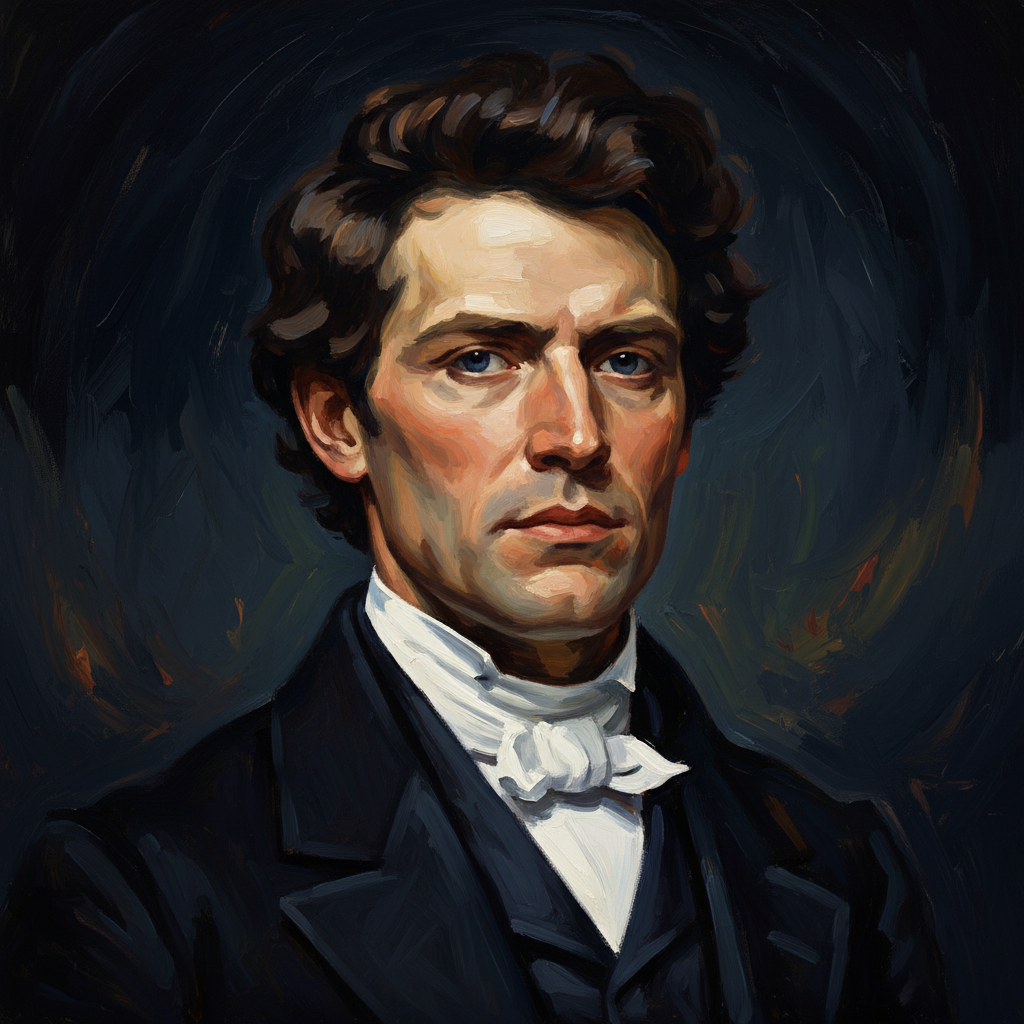
Joseph Smith — "I have learned for myself that God is a being of great condescension, and that h…"
I have learned for myself that God is a being of great condescension, and that he will reveal himself to man.
I have learned for myself that God is a being of great condescension, and that he will reveal himself to man.
Click any product to generate a realistic preview. Up to 3 at a time.
* Initial load can take up to 90 seconds — revising the preview in another color is nearly instant.
"God himself was once as we are now, and is an exalted man, and sits enthroned in yonder heavens! That is the great secret. If the vail was rent today, and the great God who holds this world in its orb…"
"If I am to be a martyr, I am willing to be one."
"All spirits are pure that come from the presence of God."
"I am a man of virtue, and I will be virtuous in all things."
"I am a man of temperance, and I will be temperate in all things."
Found in 1 providers: grok
1 source checked
God is not distant or unapproachable but willing to lower himself to meet humanity directly. 'Condescension' here means divine descent — God reaching down to mankind's level. Smith frames this as personal, lived knowledge rather than inherited doctrine, insisting direct divine revelation is real and accessible. The quote presents faith not as blind belief but as something verified through firsthand spiritual encounter and active communication between God and individual human beings.
Smith claimed the First Vision at age 14, when God the Father and Jesus Christ appeared to him in an upstate New York grove — the founding event of his prophetic identity. This quote directly echoes that experience. His theology posited an embodied, approachable God, sharply departing from Calvinist abstraction. Every subsequent revelation — Book of Mormon, Doctrine and Covenants — reinforced his core conviction that God actively communicates with living prophets rather than remaining silent after biblical times.
The 1820s–1840s Second Great Awakening swept America with competing revivals, especially in upstate New York's burned-over district, where denominations clashed bitterly over authority and salvation. Smith emerged into this crisis of religious legitimacy, offering a radical resolution: God still speaks directly to prophets today. His claim of ongoing revelation challenged Protestantism's closed-canon tradition and resonated with Americans who distrusted Old World church hierarchies and hungered for democratic, personal access to the divine.
AI-generated insights based on extensive research and information for context. Factual errors? Email [email protected].
Your cart is empty