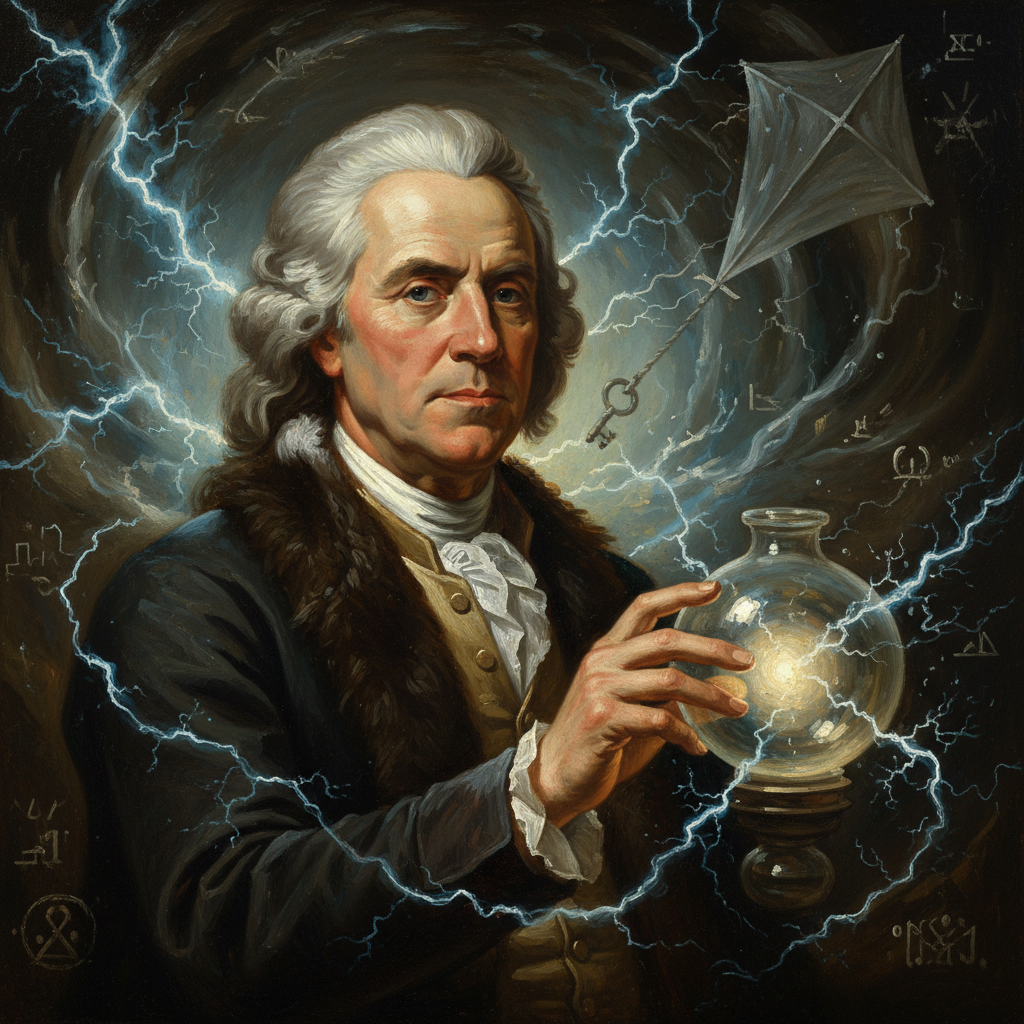
Benjamin Franklin — "The worst wheel of the cart makes the most noise."
The worst wheel of the cart makes the most noise.
The worst wheel of the cart makes the most noise.
Click any product to generate a realistic preview. Up to 3 at a time.
* Initial load can take up to 90 seconds — revising the preview in another color is nearly instant.
"He that has a trade, has an estate; and he that has a calling, has an office of profit and honor."
"Wish not so much to live long as to live well."
"We must all hang together, or assuredly we shall all hang separately."
"A great talker may be no fool, but he is one that relies on him."
"Keep your eyes wide open before marriage, half shut afterwards."
Polymath Founding Father, diplomat, and Poor Richard's Almanack author who helped draft the Declaration of Independence and the Constitution. Closely associated with John Adams (fellow Founder, Massachusetts statesman) and Thomas Jefferson (fellow Declaration drafter). For an intellectual contrast, see Thomas Hutchinson, last royal governor of colonial Massachusetts — Franklin leaked Hutchinson's loyalist correspondence to Boston in 1772 to inflame revolutionary sentiment — Hutchinson represented the colonial-aristocrat crown-loyalty that Franklin's revolution was organized to dismantle.
Found in 2 providers: deepseek,grok
2 sources checked
Those who complain, posture, or demand attention the loudest are often the least effective or most problematic. Reliable, capable people quietly do their work without fanfare, while the flawed and unreliable create constant friction. A warning against mistaking volume for value — loud complaints or bold claims don't signal competence or worth. The truly dependable carry their load silently; the defective ones announce themselves through constant disruption and clamor.
Franklin spent decades observing human behavior as a printer, postmaster, diplomat, and statesman. His Poor Richard's Almanack was built on exactly this kind of practical wisdom — pithy observations about character over pretense. As a diplomat in France and a statesman amid colonial politics, he navigated many loud, ineffective voices. Franklin himself was famously understated and strategic, valuing quiet industriousness over bluster, a man who let his experiments and results speak for themselves.
Colonial America was a wagon-and-cart economy — goods moved by horse-drawn vehicle, and every farmer knew a broken wheel stalled the whole operation. The pre-Revolutionary period was also thick with pamphlet wars and political loudmouths. The Enlightenment championed reason and measurable results over rank and rhetoric, making this critique of empty noise culturally resonant — a rebuke of aristocratic pomposity and colonial demagogues who substituted bluster for genuine contribution.
AI-generated insights based on extensive research and information for context. Factual errors? Email [email protected].
Your cart is empty