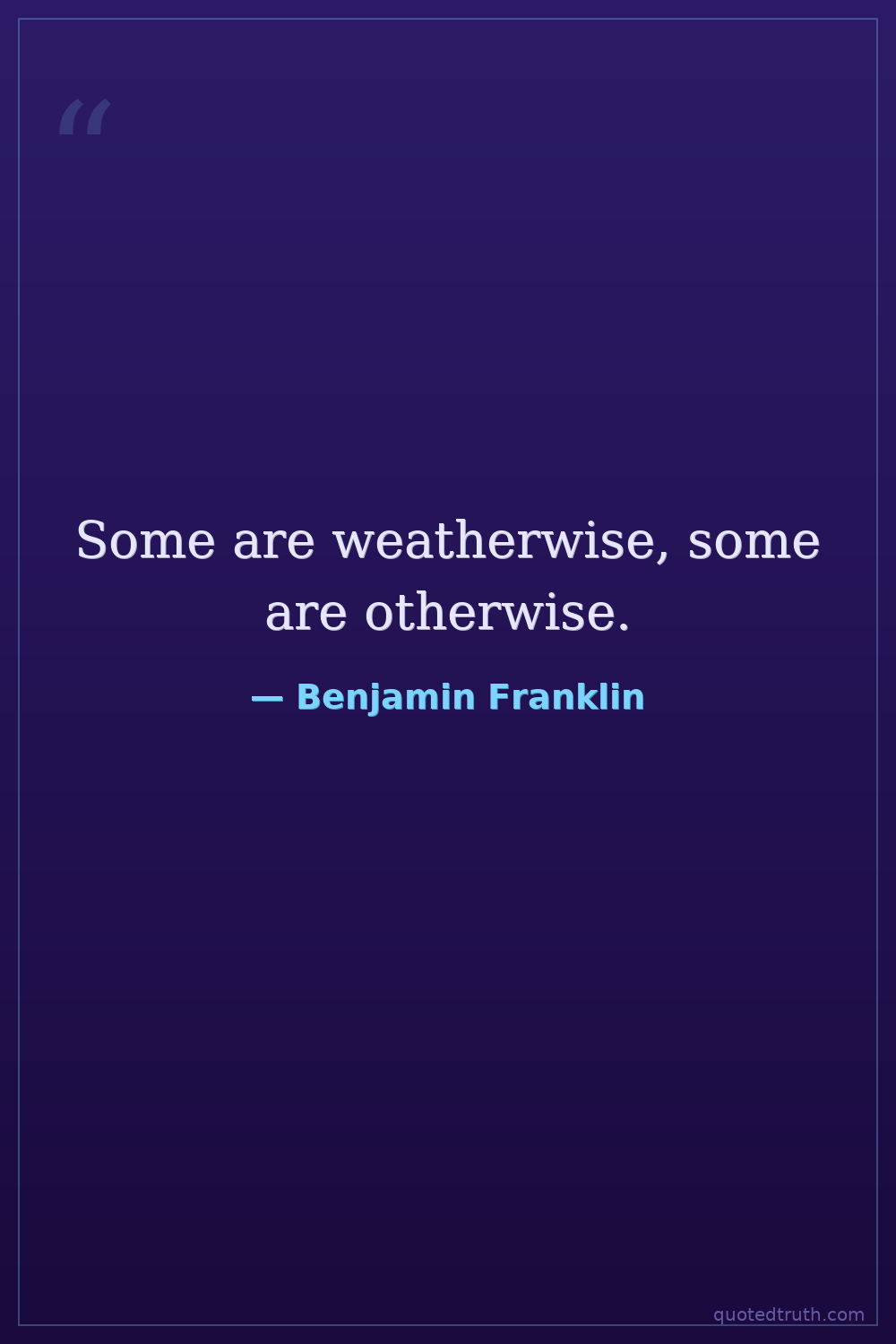
Benjamin Franklin — "Some are weatherwise, some are otherwise."
Some are weatherwise, some are otherwise.
Some are weatherwise, some are otherwise.
Click any product to generate a realistic preview. Up to 3 at a time.
* Initial load can take up to 90 seconds — revising the preview in another color is nearly instant.
"In reality, there is, perhaps, no one of our natural passions so hard to subdue as pride."
"A heavy ship cannot sink."
"How many observe Christ's birthday! How few, his precepts!"
"An investment in knowledge always pays the best interest."
"Write injuries in dust, benefits in marble."
Polymath Founding Father, diplomat, and Poor Richard's Almanack author who helped draft the Declaration of Independence and the Constitution. Closely associated with John Adams (fellow Founder, Massachusetts statesman) and Thomas Jefferson (fellow Declaration drafter). For an intellectual contrast, see Thomas Hutchinson, last royal governor of colonial Massachusetts — Franklin leaked Hutchinson's loyalist correspondence to Boston in 1772 to inflame revolutionary sentiment — Hutchinson represented the colonial-aristocrat crown-loyalty that Franklin's revolution was organized to dismantle.
Found in 1 providers: grok
1 source checked
Some people develop sharp, practical judgment by closely observing the world around them — they read the signs and act wisely. Others simply don't bother, or can't. Franklin loads a double meaning into 'otherwise': it sounds like a parallel category but quietly signals plain foolishness. The real point is that genuine wisdom is earned through attentive observation, not status or book learning. Practical intelligence outranks all other kinds.
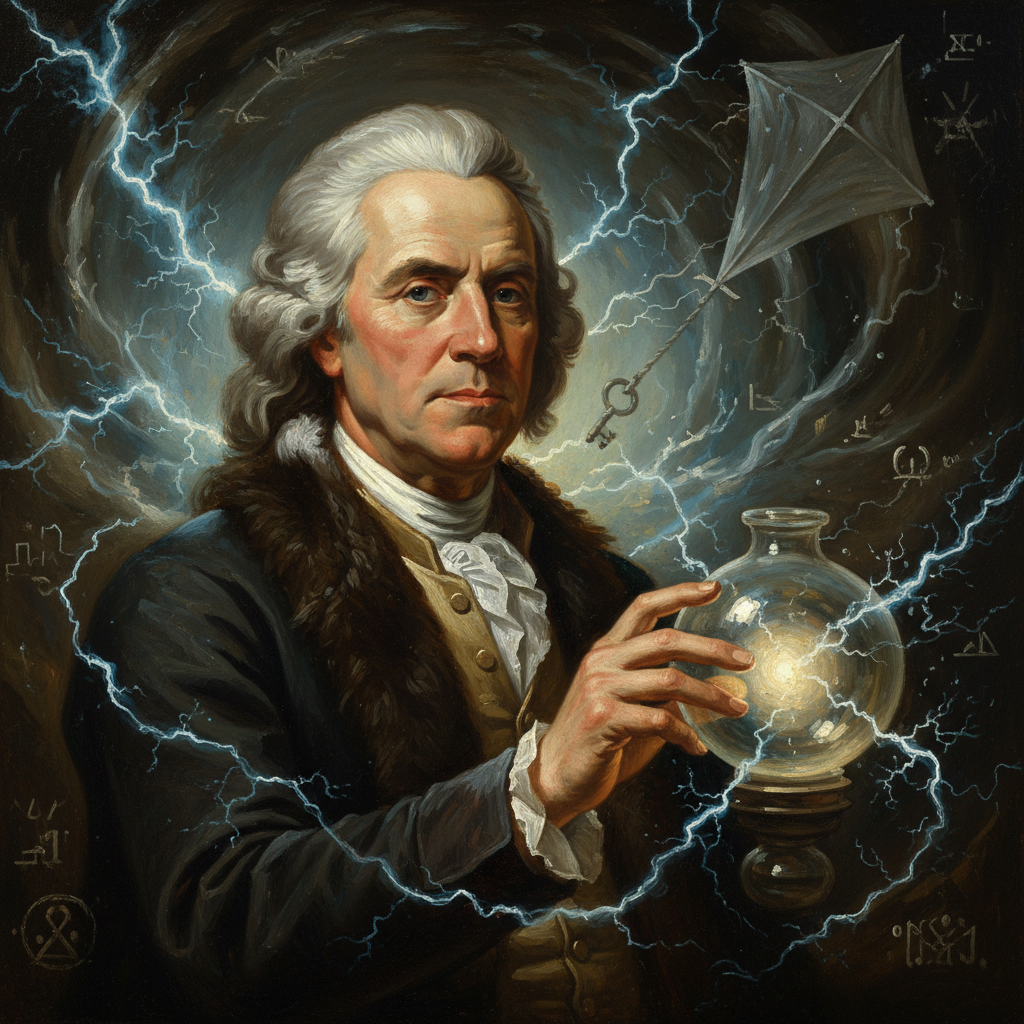
Franklin literally studied weather — his kite experiment identified lightning as electrical, and his lightning rod saved countless buildings. He published Poor Richard's Almanack for 25 years, and its weather forecasts were among the most trusted guides colonial farmers had. His entire career — as printer, inventor, diplomat, scientist — was built on careful observation over received opinion. This quip is autobiography: he was definitively weatherwise, and he had little patience for those who weren't.
Colonial America was overwhelmingly agrarian. A misread season meant crop failure, debt, or starvation; a misread sky could sink a ship. Formal meteorology didn't exist — practical folk observation and almanacs were the only forecasting tools available. Franklin's era also prized wit as public currency, so a saying that delivered genuine practical warning through clever wordplay carried maximum cultural weight. Being 'weatherwise' wasn't a hobby; it was survival intelligence.
AI-generated insights based on extensive research and information for context. Factual errors? Email [email protected].
Your cart is empty