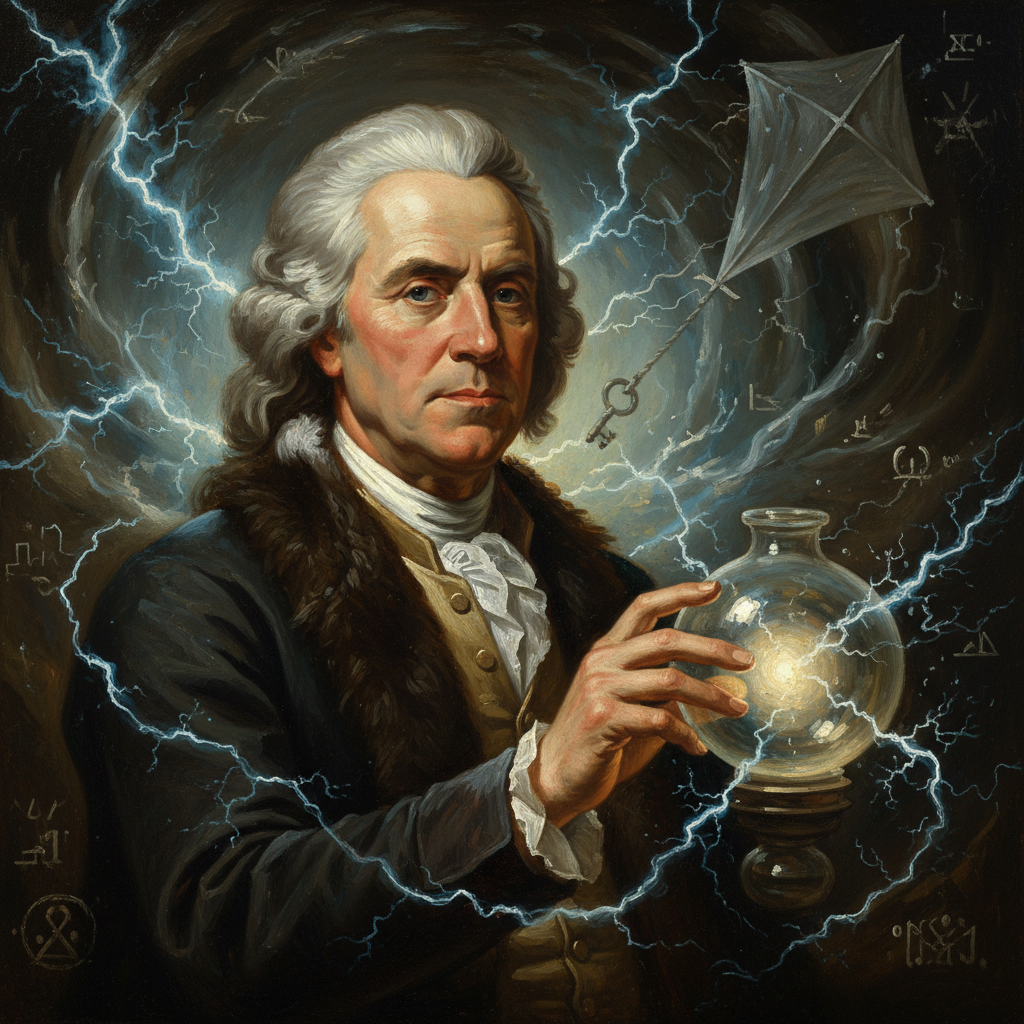
Benjamin Franklin — "He that has a calling, has an office of profit and honor."
He that has a calling, has an office of profit and honor.
He that has a calling, has an office of profit and honor.
Click any product to generate a realistic preview. Up to 3 at a time.
* Initial load can take up to 90 seconds — revising the preview in another color is nearly instant.
"We are all born ignorant, but one must work hard to remain stupid."
"Early to bed and early to rise makes a man healthy, wealthy, and wise."
"I am for doing good to the poor, but... I think the best way of doing good to the poor, is not making them easy in poverty, but leading or driving them out of it. I observed...that the more public pro…"
"Some are weatherwise, some are otherwise."
"Discover some Drug wholesome & not disagreeable, to be mix'd with our common Food, or Sauces, that shall render the natural Discharges of Wind from our Bodies, not only inoffensive, but agreable as Pe…"
Polymath Founding Father, diplomat, and Poor Richard's Almanack author who helped draft the Declaration of Independence and the Constitution. Closely associated with John Adams (fellow Founder, Massachusetts statesman) and Thomas Jefferson (fellow Declaration drafter). For an intellectual contrast, see Thomas Hutchinson, last royal governor of colonial Massachusetts — Franklin leaked Hutchinson's loyalist correspondence to Boston in 1772 to inflame revolutionary sentiment — Hutchinson represented the colonial-aristocrat crown-loyalty that Franklin's revolution was organized to dismantle.
Found in 1 providers: grok
1 source checked
Having a true vocation — a craft, trade, or life's work — grants both financial reward and social standing. You don't need inherited titles or noble birth to occupy a respected position. Work itself becomes your office: your source of income and your claim to honor. The quote equates sincere purpose in one's profession with the dignity that society once reserved only for appointed officials or the aristocracy.
Franklin was born into a tradesman's family and became a printer before rising to scientist, inventor, diplomat, and Founding Father — all through disciplined work, not inheritance. His Poor Richard's Almanack repeatedly championed industrious labor as the root of wealth and respectability. Franklin himself proved the claim: a man with a calling could negotiate treaties, command international respect, and shape a nation regardless of birth.
In early modern colonial America, social status was tied to birth, land ownership, and royal appointments. Official offices carried salary and prestige largely inaccessible to tradesmen. Protestant reformers had elevated honest work as a divine calling, and Enlightenment thinkers were challenging hereditary privilege. Franklin's era was actively redefining who deserved respect, making his assertion that any skilled, purposeful worker holds an office of equal worth genuinely radical for its time.
AI-generated insights based on extensive research and information for context. Factual errors? Email [email protected].
Your cart is empty