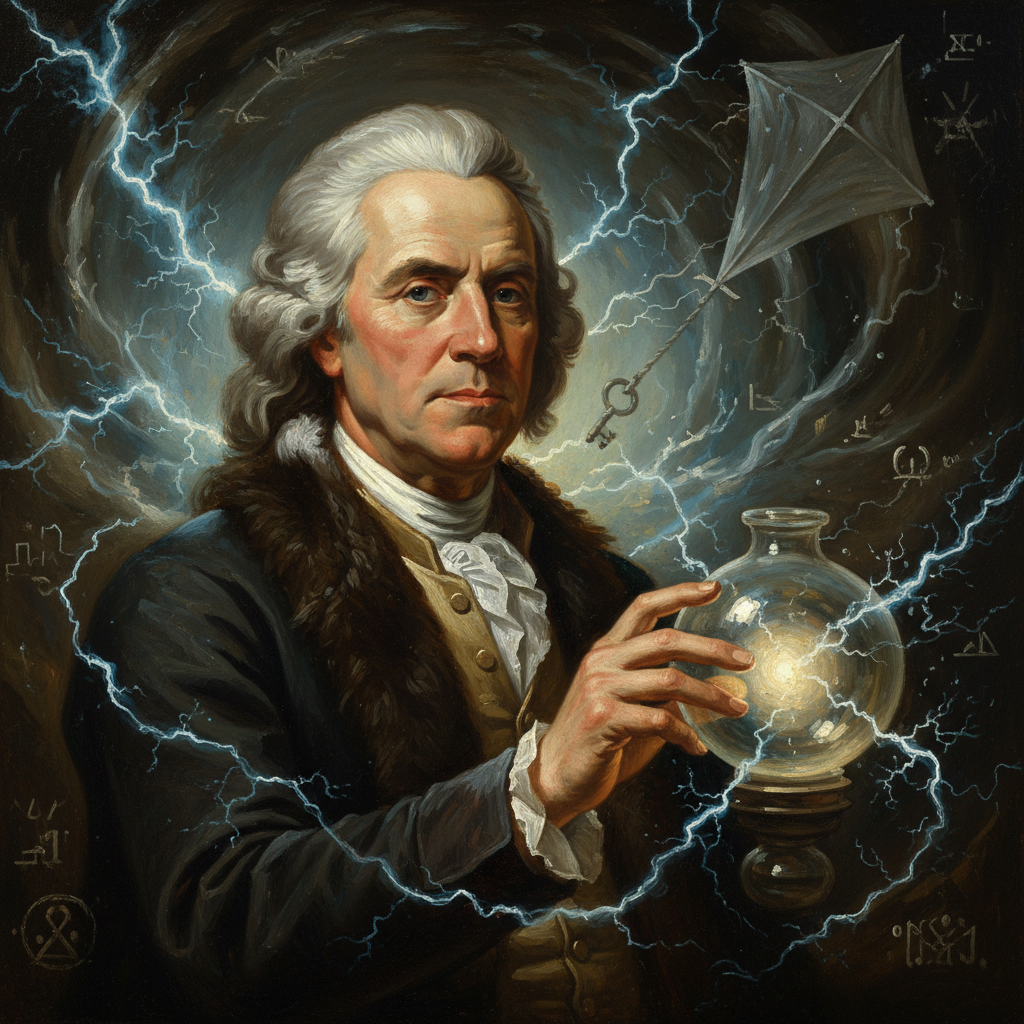
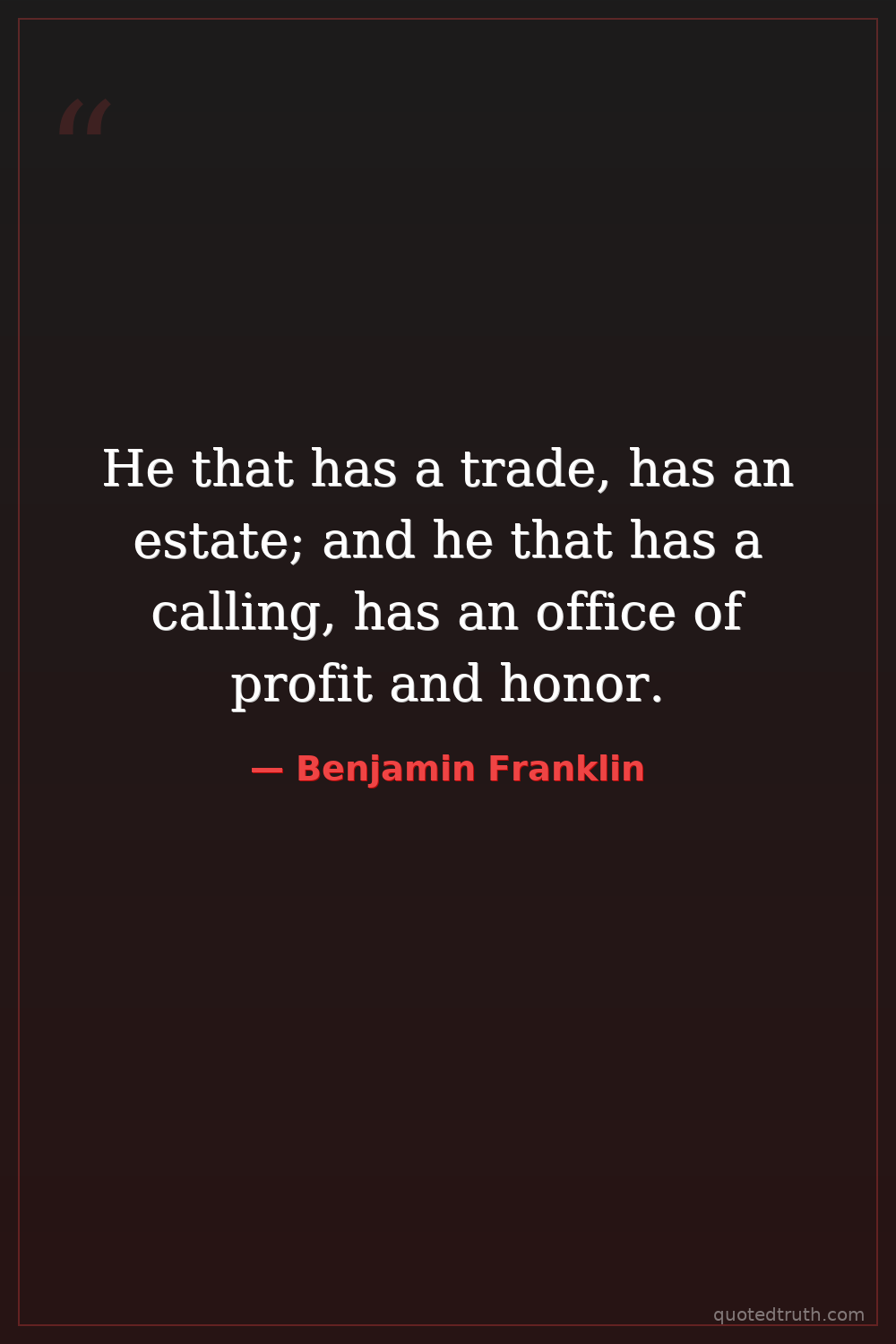
Benjamin Franklin — "He that has a trade, has an estate; and he that has a calling, has an office of …"
He that has a trade, has an estate; and he that has a calling, has an office of profit and honor.
He that has a trade, has an estate; and he that has a calling, has an office of profit and honor.
Click any product to generate a realistic preview. Up to 3 at a time.
* Initial load can take up to 90 seconds — revising the preview in another color is nearly instant.
"He that falls in love with himself will have no rivals."
"A full belly makes a dull brain."
"If you would be revenged of your enemy, govern yourself."
"Contentment makes poor men rich, discontent makes rich men poor."
"Necessity never made a good bargain."
Polymath Founding Father, diplomat, and Poor Richard's Almanack author who helped draft the Declaration of Independence and the Constitution. Closely associated with John Adams (fellow Founder, Massachusetts statesman) and Thomas Jefferson (fellow Declaration drafter). For an intellectual contrast, see Thomas Hutchinson, last royal governor of colonial Massachusetts — Franklin leaked Hutchinson's loyalist correspondence to Boston in 1772 to inflame revolutionary sentiment — Hutchinson represented the colonial-aristocrat crown-loyalty that Franklin's revolution was organized to dismantle.
Found in 1 providers: grok
1 source checked
Skilled work is real wealth. A trade — a craft or practical skill — gives you the security of an estate because it produces income no matter what. A calling, work aligned with purpose, carries both financial reward and social dignity. Franklin equates skilled labor with property ownership, arguing that what you can do with your hands and mind is as valuable as inherited land.
Franklin lived this principle. Born into a working-class Boston family, he apprenticed as a printer at 12 — a trade that funded his entire rise. He never inherited wealth; he built it through skilled work. As printer, publisher of Poor Richard's Almanack, and inventor, his professional identity was inseparable from his output. His belief that industriousness breeds self-sufficiency shaped his Autobiography and advocacy for artisan and merchant classes.
Colonial America had no hereditary aristocracy, yet land and birth still dominated social rank. Most colonists were farmers or tradespeople, and the merchant class was rising but not yet respected as gentry. Franklin's era saw the Protestant work ethic — Calvinist ideas linking labor to virtue — deeply embedded in colonial culture. Craft guilds were fading in England; in America, skilled trades were the primary engine of upward mobility for ordinary men.
AI-generated insights based on extensive research and information for context. Factual errors? Email [email protected].
Your cart is empty