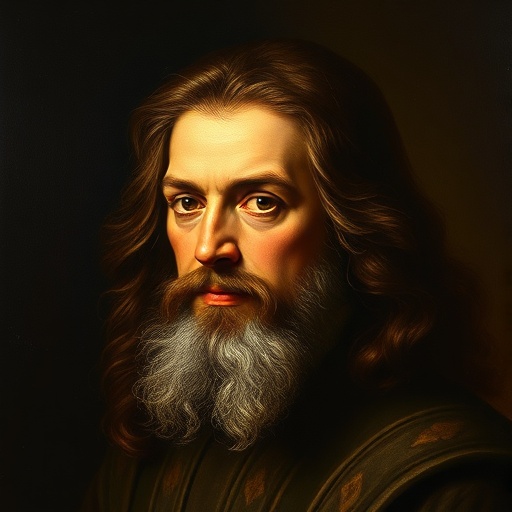
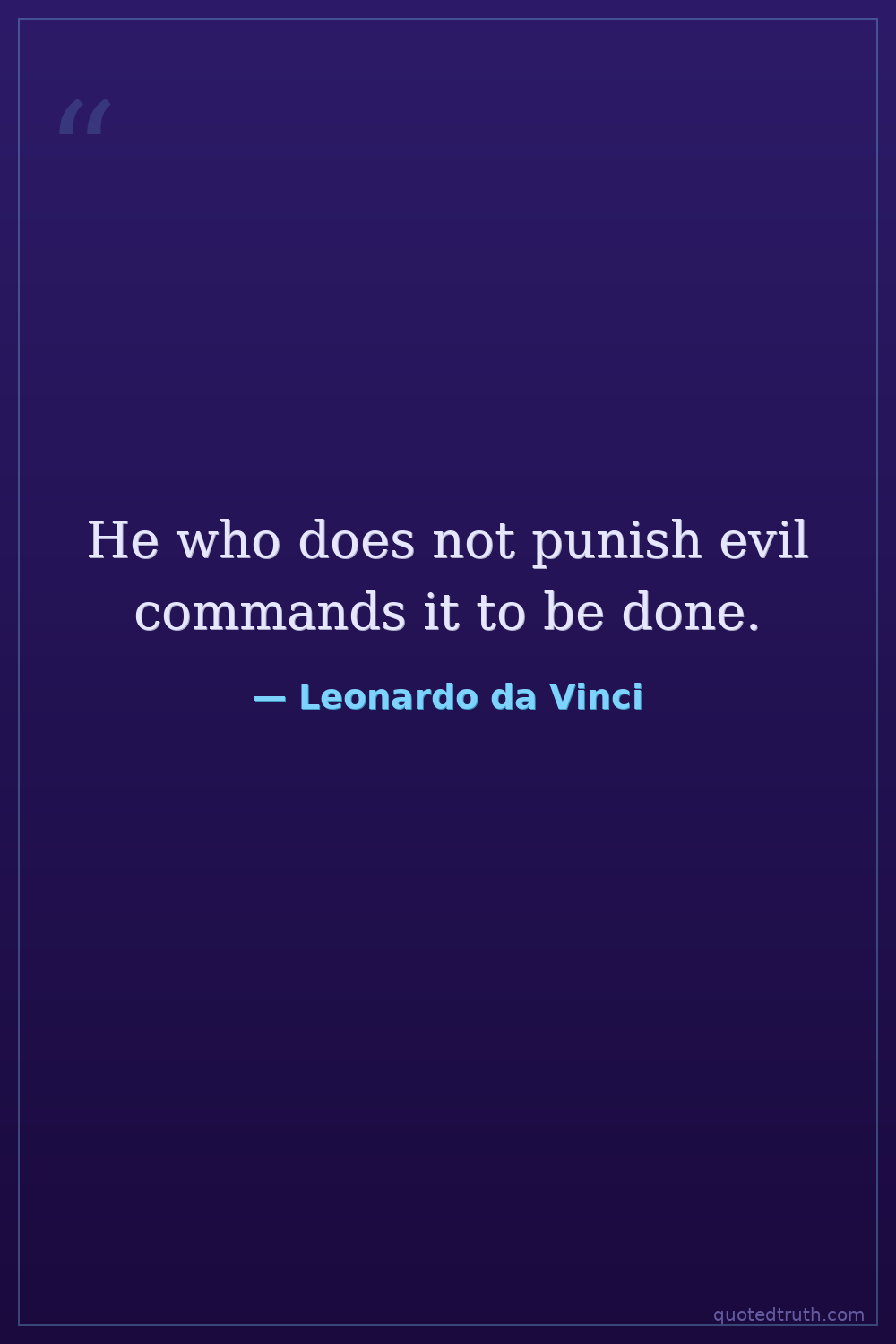
Leonardo da Vinci — "He who does not punish evil commands it to be done."
He who does not punish evil commands it to be done.
He who does not punish evil commands it to be done.
Click any product to generate a realistic preview. Up to 3 at a time.
* Initial load can take up to 90 seconds — revising the preview in another color is nearly instant.
"As a well-spent day brings happy sleep, so a life well spent brings happy death."
"Simplicity is the ultimate sophistication."
"To develop a complete mind: Study the science of art; Study the art of science. Learn how to see. Realize that everything connects to everything else."
"Men will seem like wooden puppets, moving without reason."
"The senses are of the earth, reason is of the soul."
Found in 1 providers: grok
1 source checked
Silence and inaction in the face of wrongdoing make you complicit in it. If you witness injustice and do nothing, you effectively sanction it. Neutrality is not innocence — failing to oppose evil is a form of permission, a passive endorsement that allows harm to continue and even flourish unchallenged.
Da Vinci served powerful patrons — Ludovico Sforza, Cesare Borgia, the Medici — and witnessed court corruption, warfare, and political brutality firsthand. His notebooks reveal deep moral wrestling. As an illegitimate son excluded from guilds, he understood systemic injustice personally, and his engineering of war machines forced him to confront complicity in violence directly.
Renaissance Italy was fractured into competing city-states riven by assassination, mercenary warfare, and Papal political intrigue. The Borgia family epitomized unpunished evil at the highest levels. Machiavelli was simultaneously theorizing power's amorality. In this environment, da Vinci's statement was a sharp rebuke of rulers who tolerated cruelty for political convenience — a dangerous sentiment to voice openly.
AI-generated insights based on extensive research and information for context. Factual errors? Email [email protected].
Your cart is empty