What it means
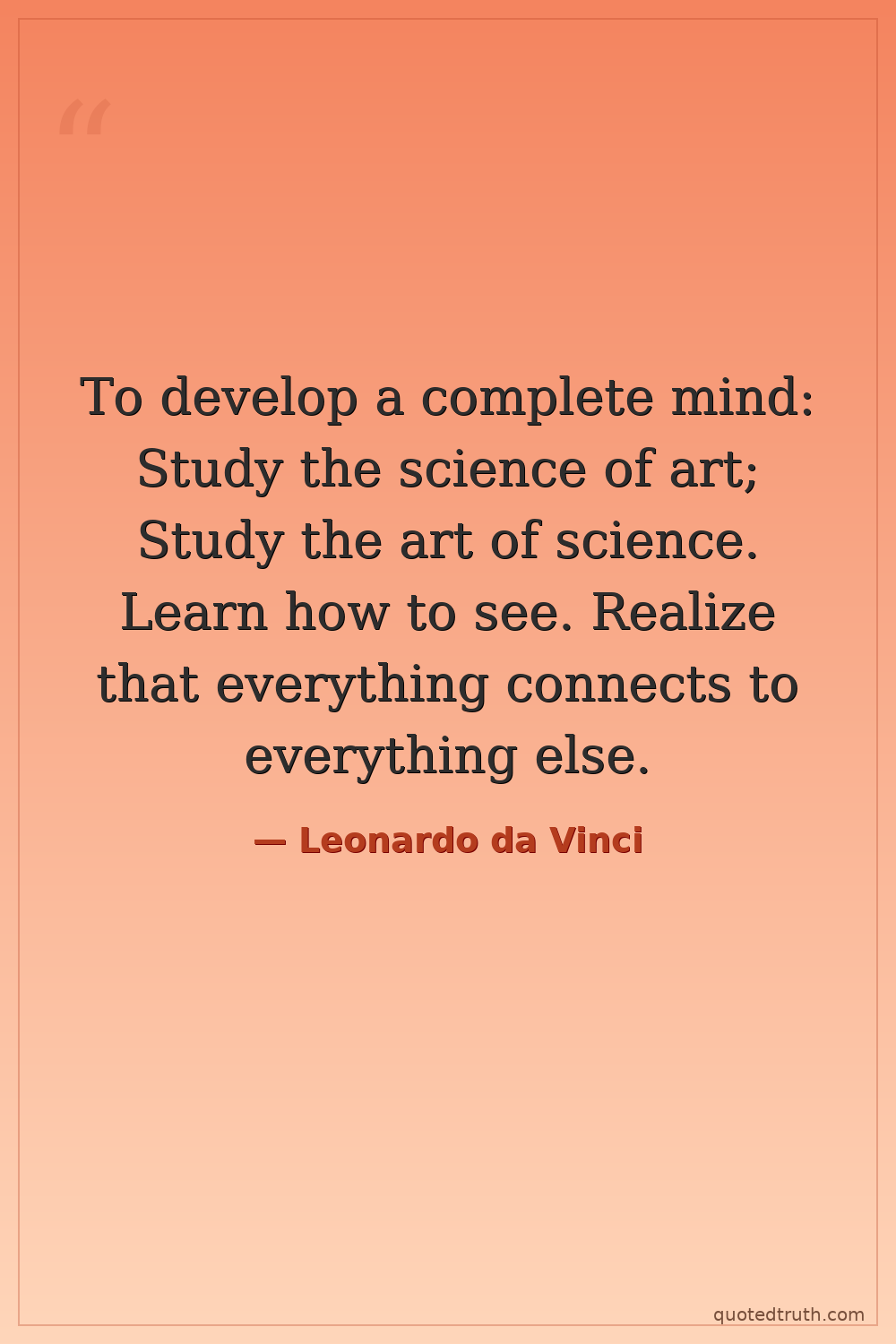
True intellectual completeness demands crossing disciplinary boundaries: art deserves rigorous analytical thinking, and science deserves creative, aesthetic intuition. Beyond combining fields, this calls for cultivating active perception—genuinely seeing the world rather than passively observing it. Its deepest point is systems thinking: no subject exists in isolation. Understanding anything fully requires tracing its connections to everything else, a direct rejection of narrow specialization and siloed expertise.
Relevance to Leonardo da Vinci
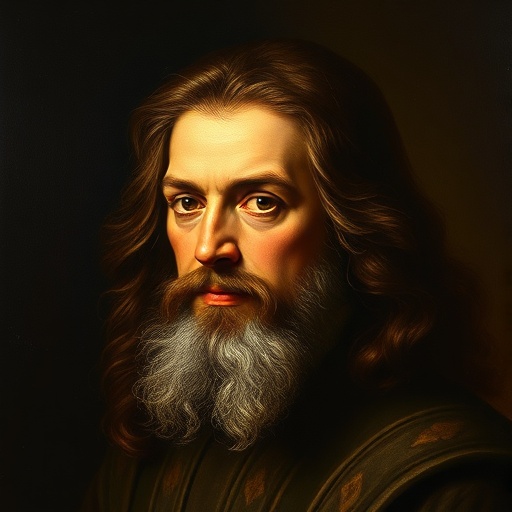
Da Vinci embodied this philosophy entirely. His anatomical dissections—over 30 corpses—directly sharpened the physical realism in paintings like the Virgin of the Rocks. His optics studies gave birth to sfumato. He designed war machines and hydraulic systems by observing nature as both engineer and artist. His thousands of notebook pages place botany, geology, mathematics, and portraiture side by side, treating all knowledge as one unified system to be decoded.
The era
The Italian Renaissance was reclaiming ancient Greek ideals of unified knowledge after medieval scholasticism's rigid categorical divisions. Gutenberg's press in the 1450s was accelerating cross-disciplinary idea exchange. Florentine and Milanese patrons funded painters, engineers, and natural philosophers equally. The period's uomo universale ideal celebrated mastery across all domains. Da Vinci's era explicitly rewarded those who refused to choose between art and science, making his integrative philosophy both culturally timely and personally consequential.
AI-generated insights based on extensive research and information for context. Factual errors? Email [email protected].