Guru Nanak — "He who is born, is bound to die. The only thing certain is death. All else is il…"
He who is born, is bound to die. The only thing certain is death. All else is illusion.
He who is born, is bound to die. The only thing certain is death. All else is illusion.
Click any product to generate a realistic preview. Up to 3 at a time.
* Initial load can take up to 90 seconds — revising the preview in another color is nearly instant.
"Without the True Guru, none obtains salvation."
"One cannot comprehend Him through the intellect, even if one were to try a hundred thousand times."
"The true prayer is to live in God's will."
"As reflection is within the mirror, So does your Lord abide within you, Why search for him without?"
"There is but One God. His Name is Truth. He is the Creator. He fears none. He is without enmity. He is timeless, unborn, self-existent. By the Guru's Grace, He is met."
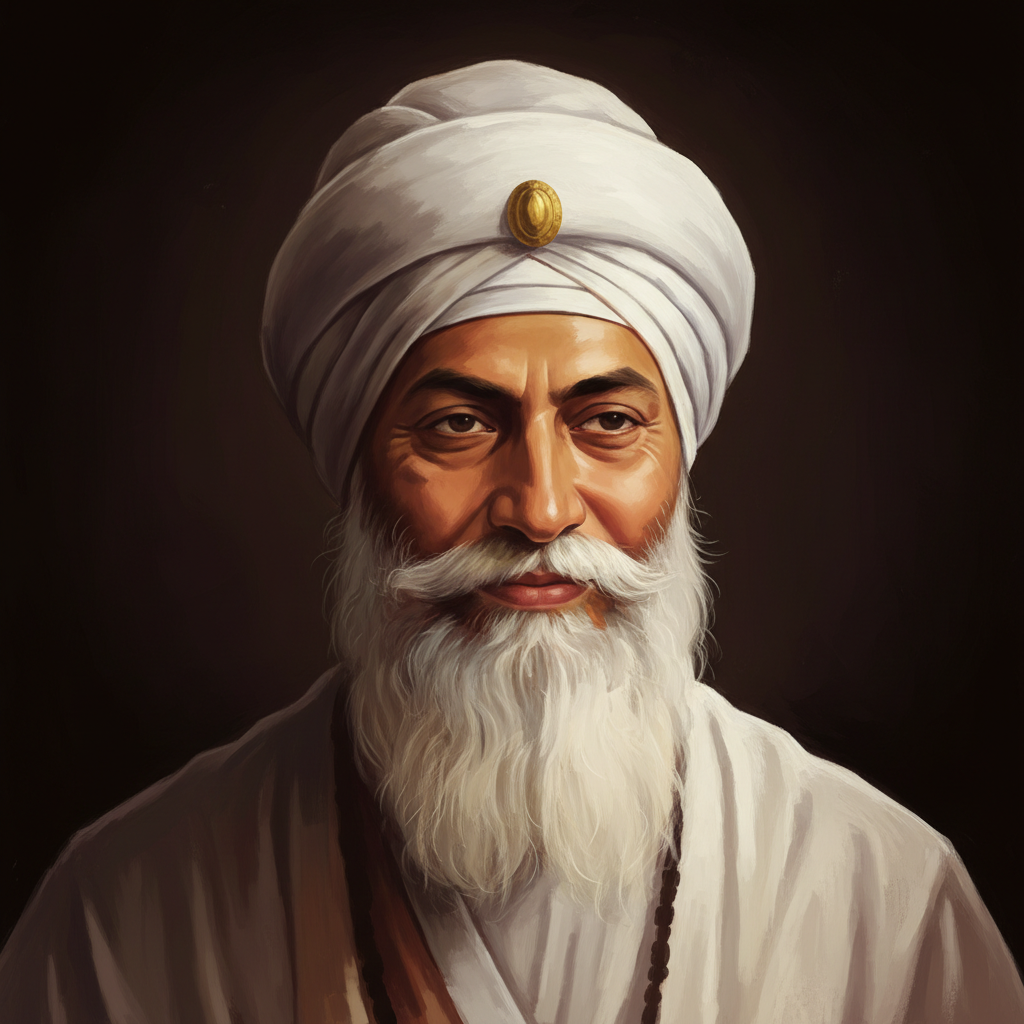
Founder of Sikhism and the first of the Ten Sikh Gurus, whose teachings of one universal God and rejection of caste shaped Punjab. Closely associated with Kabir (mystical poet whose verses appear in the Sikh Guru Granth Sahib). For an intellectual contrast, see Brahmanical orthodoxy, the Hindu caste-and-ritual establishment of his era — Sikhism was founded as a deliberate alternative to both Hindu ritual hierarchy and Islamic exclusivism — Nanak's universalism was a structural rejection of caste and priestly mediation.
Found in 1 providers: grok
1 source checked
Every living being faces inevitable death — that is the one inescapable truth. Everything else we chase or cling to — possessions, status, relationships, pleasures — is maya, illusion. This is not nihilism but a redirect: if death is certain, invest your time in spiritual truth, not material accumulation. Strip away what fades and what remains is what matters. Life's purpose becomes clear when you accept its ending.
Guru Nanak (1469–1539) traveled thousands of miles challenging priests, rulers, and the caste-obsessed elite who hoarded wealth and status. His core teaching was that attachment to worldly identity — caste, riches, ritual — is maya, illusion. He farmed at Kartarpur in his final years, modeling humble labor over accumulation. His journeys (udasis) were lived proof that spiritual truth outweighs any earthly rank or possession.
In 15th–16th century Punjab, Babur's Mughal invasions, the fall of the Lodhi Sultanate, and relentless sectarian conflict made death an ever-present reality. Rigid Hindu caste and Islamic orthodoxy promised salvation through lineage or ritual. Guru Nanak's declaration that death equalizes all — Brahmin and untouchable alike — was profoundly subversive. Naming earthly power as illusion directly challenged every structure that claimed divine sanction for inequality.
AI-generated insights based on extensive research and information for context. Factual errors? Email [email protected].
Your cart is empty