What it means
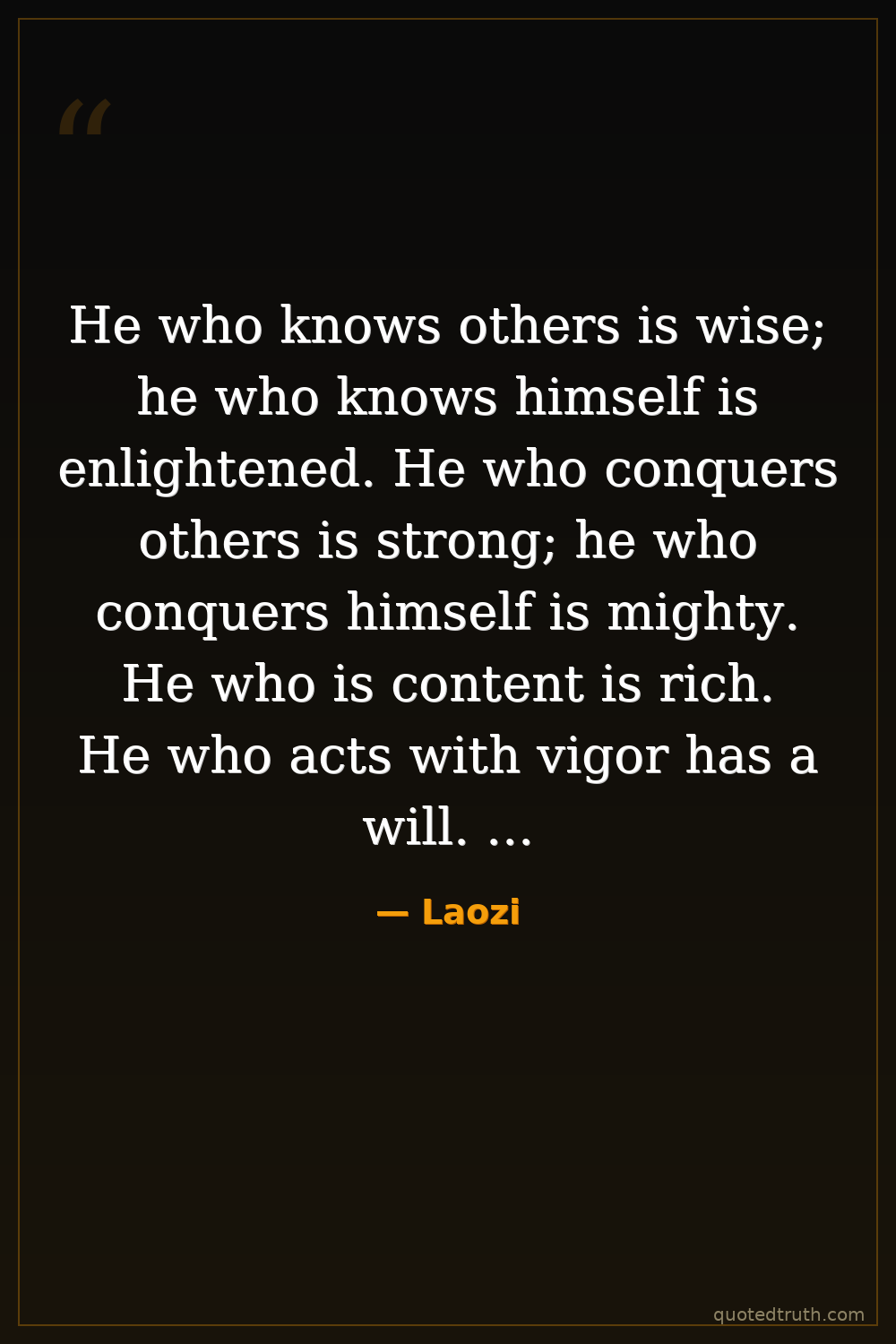
Real power and wealth come from within, not from dominating others or accumulating possessions. Understanding other people is clever, but understanding yourself is true insight. Beating opponents takes strength, but mastering your own impulses takes something greater. Being satisfied with what you have makes you rich. Staying committed to your purpose gives your life endurance, and living in a way that outlasts your death is the closest anyone gets to immortality.
Relevance to Laozi
Laozi, the legendary founder of Taoism, was said to have worked as an archivist in the Zhou royal court before withdrawing from public life, reportedly disillusioned with political ambition and social climbing. This saying captures the core Taoist ideal he taught: inner cultivation over outer conquest, self-knowledge over reputation, and alignment with the Tao over striving. The emphasis on contentment and self-mastery reflects his reputed decision to abandon status and ride west into obscurity.
The era
Laozi is traditionally placed in the 6th century BCE during the late Zhou dynasty, an era of collapsing central authority sliding toward the Warring States period. Rival lords fought for territory, and rising schools like Confucianism pushed social duty, ritual, and hierarchy as the fix. Taoism offered a counter-response: retreat from ambition, power struggles, and rigid roles. In a culture obsessed with conquest and standing, praising self-mastery and contentment over dominance was a pointed philosophical rebuke.
AI-generated insights based on extensive research and information for context. Factual errors? Email [email protected].