What it means
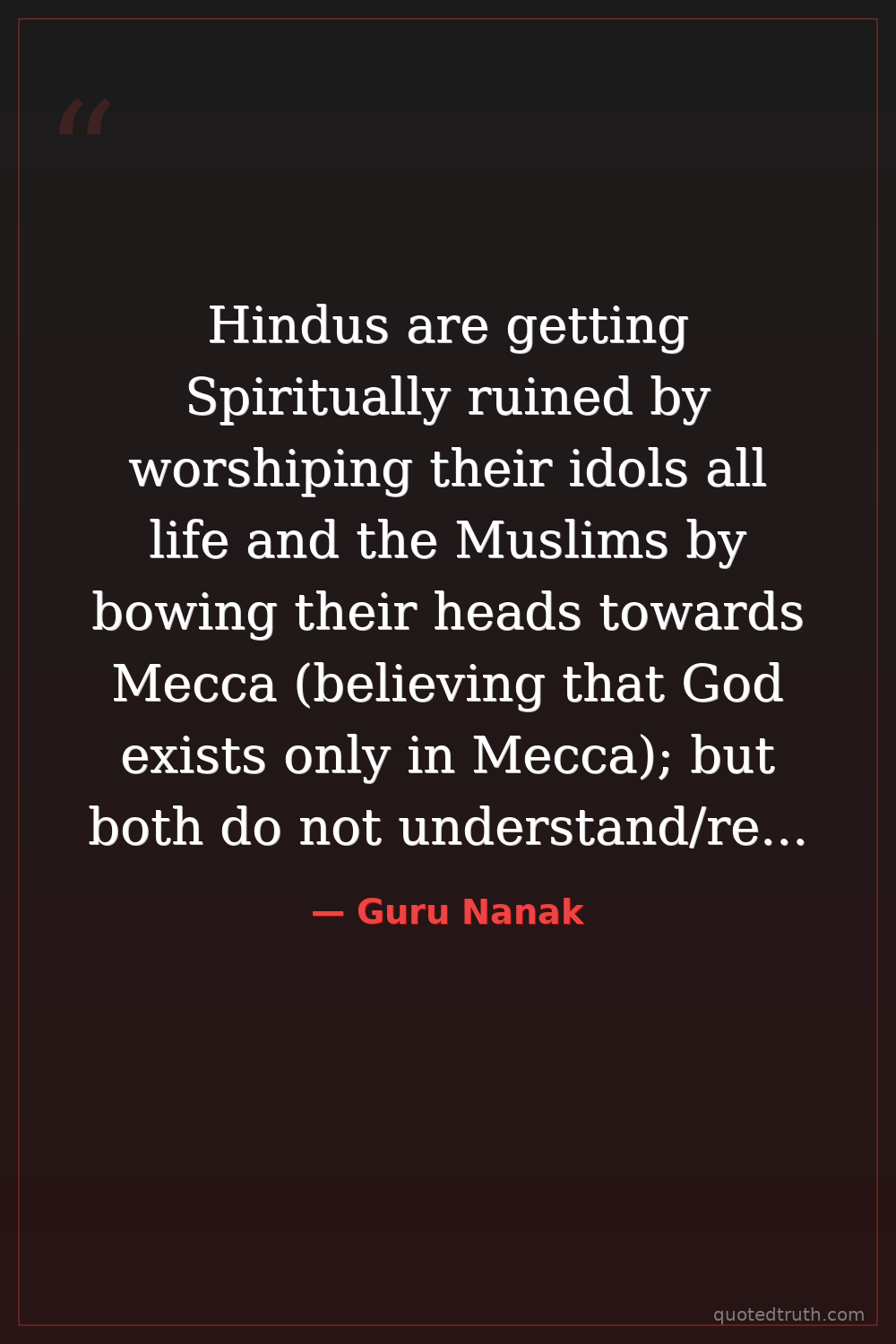
Both Hindus worshipping idols and Muslims praying toward Mecca are missing the point by locking God into a physical form or a single location. Ritual performed mechanically for a lifetime becomes a substitute for real understanding. The divine is not a statue or a geographic direction; it is a universal reality present everywhere. Until people look past the outward symbol, they never grasp what God actually is.
Relevance to Guru Nanak
Guru Nanak spent his life traveling between Hindu and Muslim communities, famously declaring 'there is no Hindu, there is no Musalman.' Raised Hindu in a Muslim-ruled Punjab, he rejected idol worship, caste, and ritual formalism while also challenging Islamic exclusivity. Founding Sikhism on Ik Onkar, one formless God accessible through honest living and inner devotion, he spoke directly to both audiences, critiquing the empty ritualism he observed in each.
The era
Nanak lived 1469 to 1539 in Punjab under the Delhi Sultanate and early Mughal rule, a frontier zone where Hindu temple traditions and Islamic orthodoxy collided daily. Forced conversions, pilgrimage taxes, Brahminical caste rigidity, and sectarian violence were routine. The Bhakti and Sufi movements were already pushing back with devotional, inward faith. Nanak's critique of idols and Mecca landed in a society exhausted by ritual competition between two establishments claiming exclusive access to God.
AI-generated insights based on extensive research and information for context. Factual errors? Email [email protected].