What it means
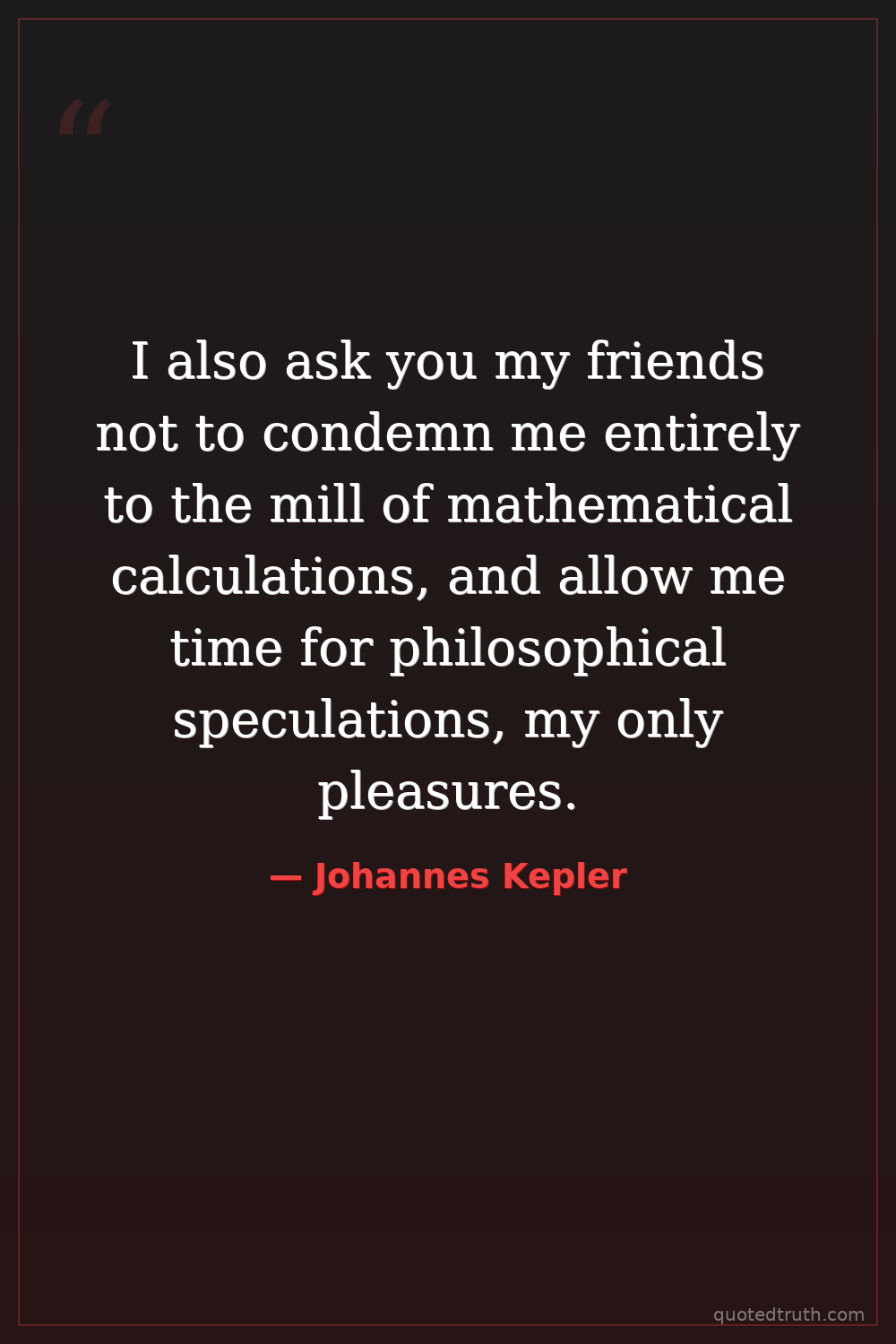
The speaker is pleading with colleagues to stop burying him in endless number-crunching and grant him space to think broadly about deeper questions. He admits that pure calculation exhausts him, while reflecting on bigger ideas about nature and meaning is what actually brings him joy. It is a request for balance between tedious technical labor and the imaginative, contemplative work that makes the effort worthwhile in the first place.
Relevance to Johannes Kepler
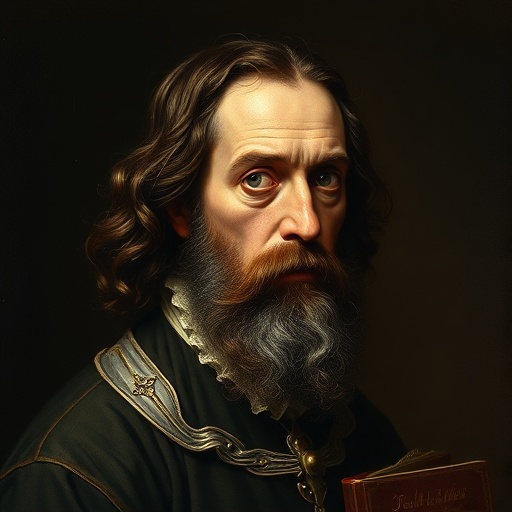
Kepler spent grueling years doing astronomical arithmetic by hand, famously filling nearly a thousand pages to derive Mars's orbit before arriving at his three laws. Yet he considered himself as much a philosopher and theologian as a mathematician, pursuing cosmic harmony, geometry of the soul, and divine order. This remark captures the tension he lived: a working computer of planetary tables who longed to contemplate why the heavens moved, not merely how.
The era
In the early seventeenth century, astronomy was transforming from qualitative cosmology into rigorous quantitative science. Patrons like Emperor Rudolf II demanded horoscopes and precise planetary tables, chaining mathematicians to tedious computation. Meanwhile the Scientific Revolution was unfolding around Galileo, Brahe, and Kepler, and the boundary between natural philosophy, theology, and mathematics was still blurred. Practitioners were often expected to grind out numbers while defending speculative ideas against both church authorities and skeptical academics.
AI-generated insights based on extensive research and information for context. Factual errors? Email [email protected].