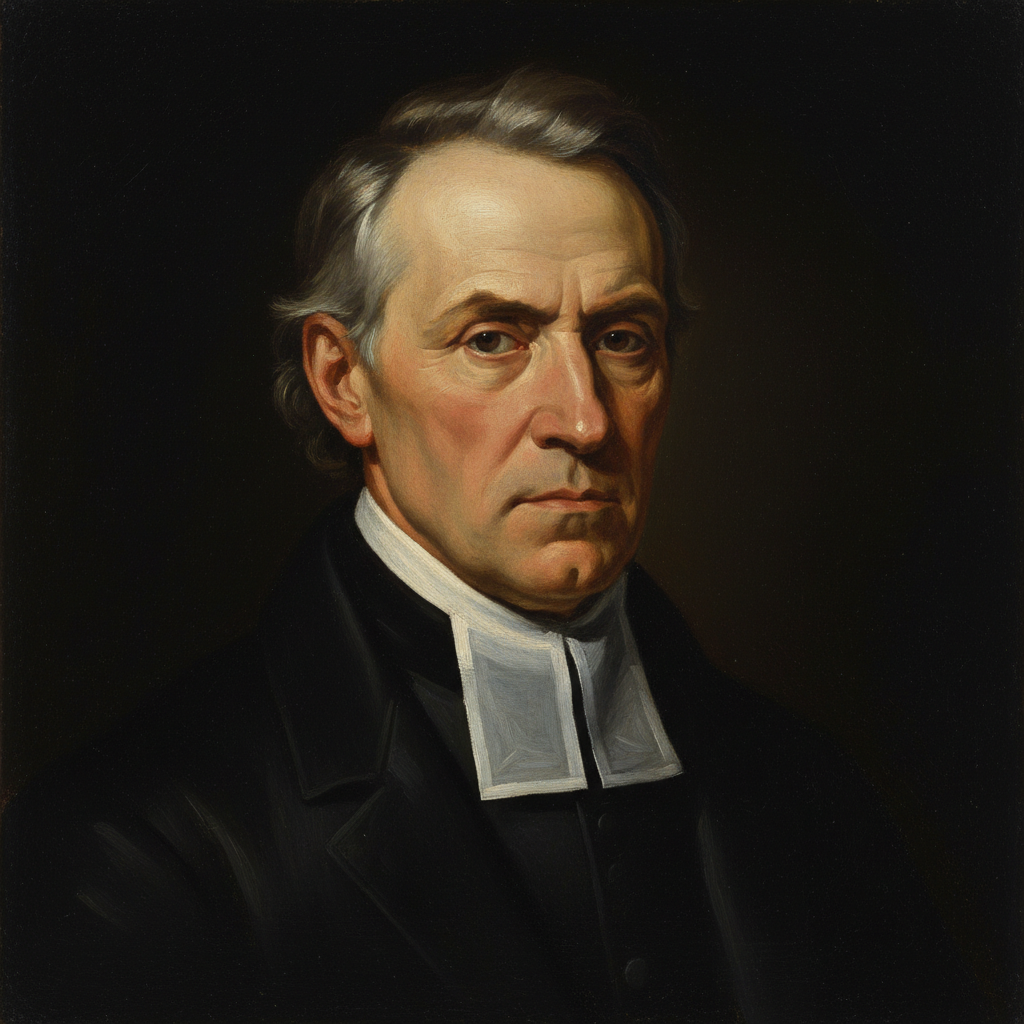
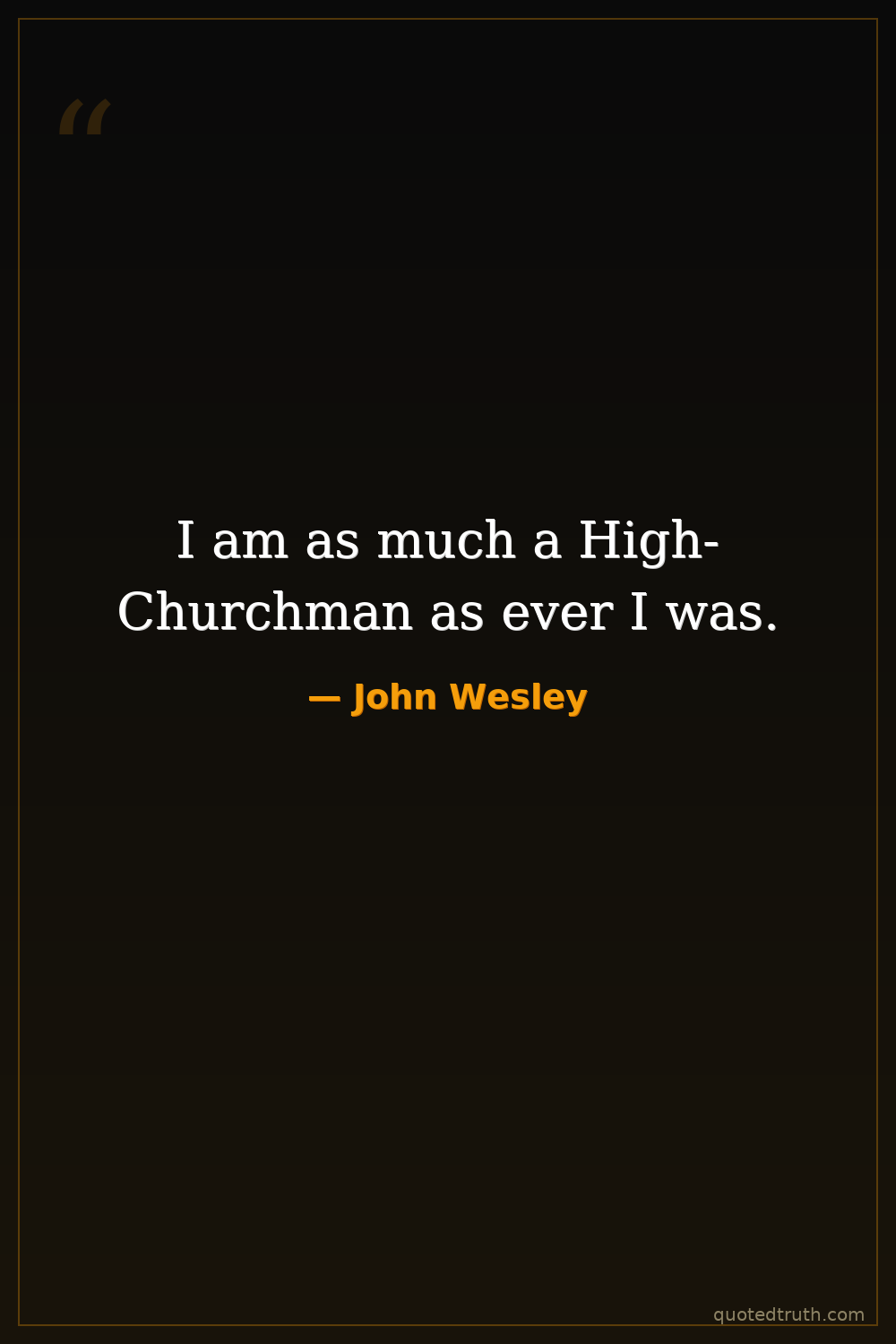
John Wesley — "I am as much a High-Churchman as ever I was."
I am as much a High-Churchman as ever I was.
I am as much a High-Churchman as ever I was.
Click any product to generate a realistic preview. Up to 3 at a time.
* Initial load can take up to 90 seconds — revising the preview in another color is nearly instant.
"I set myself on fire, and people come to watch me burn."
"I cannot but observe, that the Methodists are not a people who are fond of novelties."
"I am not an enemy to pleasure; but I am an enemy to sin."
"Are we not a little too apt to forget that the Methodists are not the only Christians in the world?"
"I found myself much out of order, and apprehended that my end was near. I had no fear of death, but I was concerned for the cause of God, which I apprehended would suffer by my removal."
English Anglican cleric and founder of Methodism, whose open-air preaching and class-meeting structure created the largest 18th-century evangelical revival. Closely associated with Charles Wesley (his hymn-writing brother) and George Whitefield (early co-revivalist, later doctrinal opponent). For an intellectual contrast, see George Whitefield, Calvinist evangelical revivalist — Whitefield's predestinarian Calvinism vs Wesley's free-grace Arminian theology split the early Methodist movement permanently in the 1739-41 break. The founding evangelical Calvinist-Arminian schism — the two parallel evangelical traditions American Christianity descends from.
Found in 1 providers: grok
1 source checked
Wesley insists his commitment to Anglican High-Church principles—sacramental practice, liturgical order, and church authority—remains unchanged despite his controversial field preaching and Methodist societies. He's defending against accusations of abandoning the established church's traditions. The point: innovation in method doesn't equal abandonment of doctrine. You can organize open-air revival meetings and still hold exactly the theological and ecclesial convictions that Anglo-Catholic High-Churchmen prize.
Wesley was an ordained Anglican priest who never formally left the Church of England. Steeped in High-Church tradition at Christ Church Oxford and the Holy Club, he insisted Methodism was a renewal society within Anglicanism, not a breakaway denomination. He administered sacraments, revered liturgy, and believed in apostolic order. This quote captures the painful tension he carried lifelong: a High-Churchman whose movement inevitably became a separate church only after his death.
In 18th-century England, High-Churchmen and evangelical reformers were in open conflict inside the Church of England. Wesley's open-air preaching and lay preachers looked exactly like Dissent to his critics—and Dissenters faced real legal disabilities under the Test and Corporation Acts. Claiming High-Church identity wasn't theological vanity; it was Wesley positioning himself as a reformer working within the establishment rather than a Nonconformist outsider, a distinction that carried serious social and legal weight.
AI-generated insights based on extensive research and information for context. Factual errors? Email [email protected].
Your cart is empty