What it means
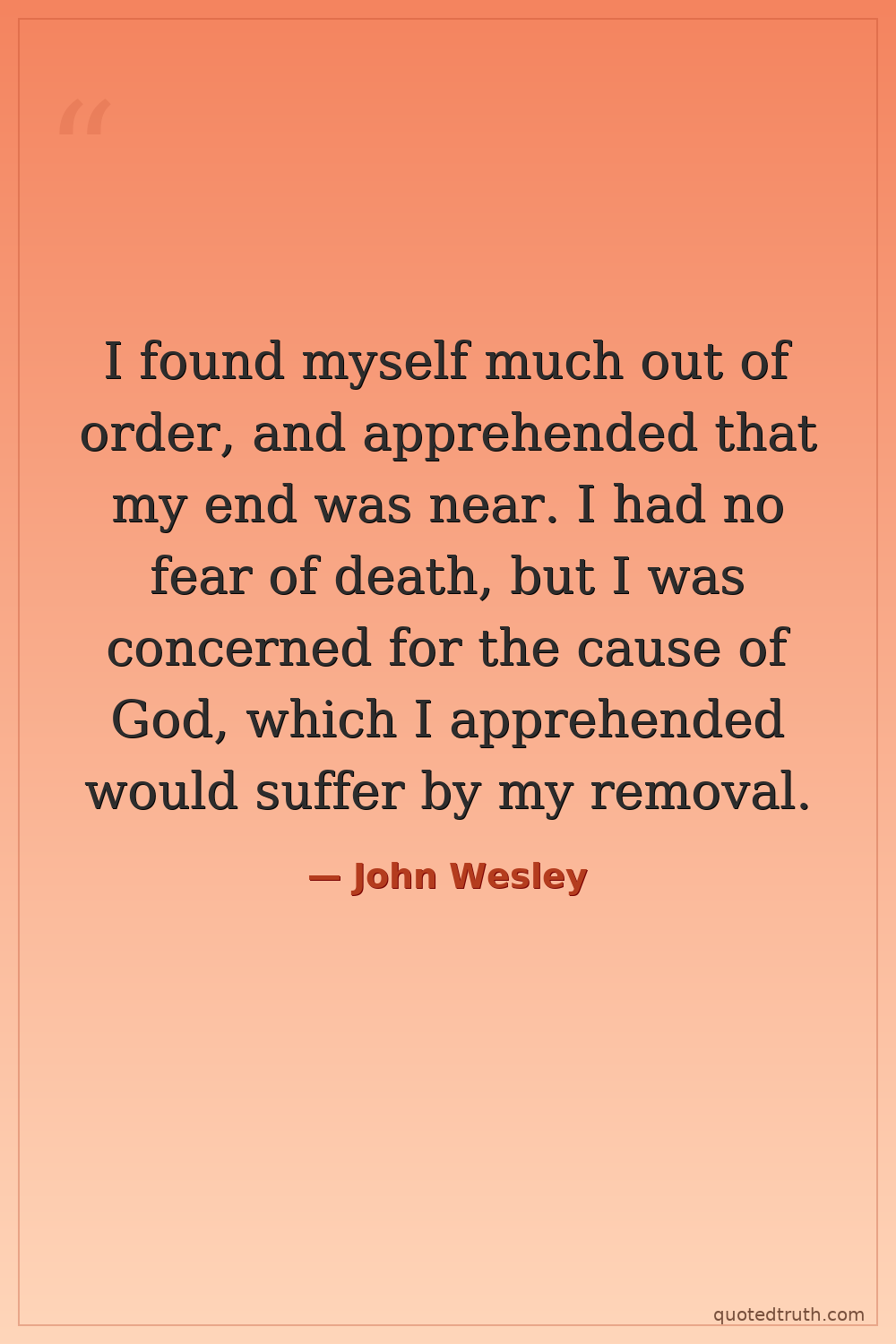
A man facing what he believes is his deathbed confesses two things: he is personally unafraid of dying, and yet deeply anxious. His anxiety isn't about himself — it's about the movement he leads. He fears that without him, God's work will stall or collapse. The quote captures the tension between personal peace with mortality and the weight of feeling responsible for something larger than oneself.
Relevance to John Wesley
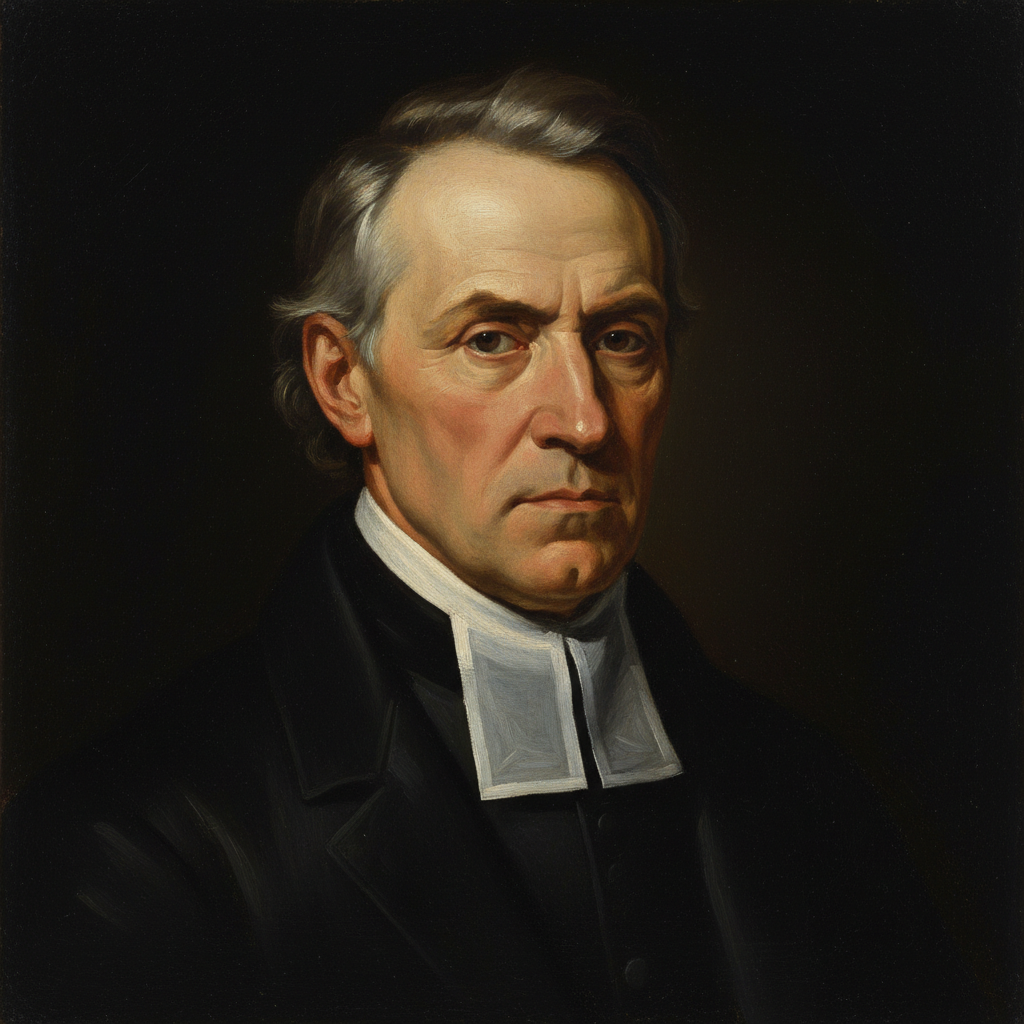
Wesley traveled over 250,000 miles on horseback, preached 40,000 sermons, and personally organized thousands of Methodist societies across Britain and America. He was genuinely irreplaceable in the movement's early decades — its networks, theology, and discipline flowed through him. Drawn from his journals, which he kept for 66 years, this reflects the paradox he lived: radical personal humility coexisting with clear-eyed awareness that he was the linchpin of a historic spiritual awakening.
The era
The 18th-century Church of England had grown distant from ordinary people. Wesley's revival emerged as industrialization uprooted rural England, creating urban poor with no spiritual home. His movement was actively suppressed — mobs attacked his meetings, bishops barred him from pulpits. Every leader in such a fragile, persecuted movement was genuinely irreplaceable. Wesley's fear that his death would harm the cause was not vanity but a realistic assessment of how dependent early Methodism was on his singular organizing energy.
AI-generated insights based on extensive research and information for context. Factual errors? Email [email protected].