What it means
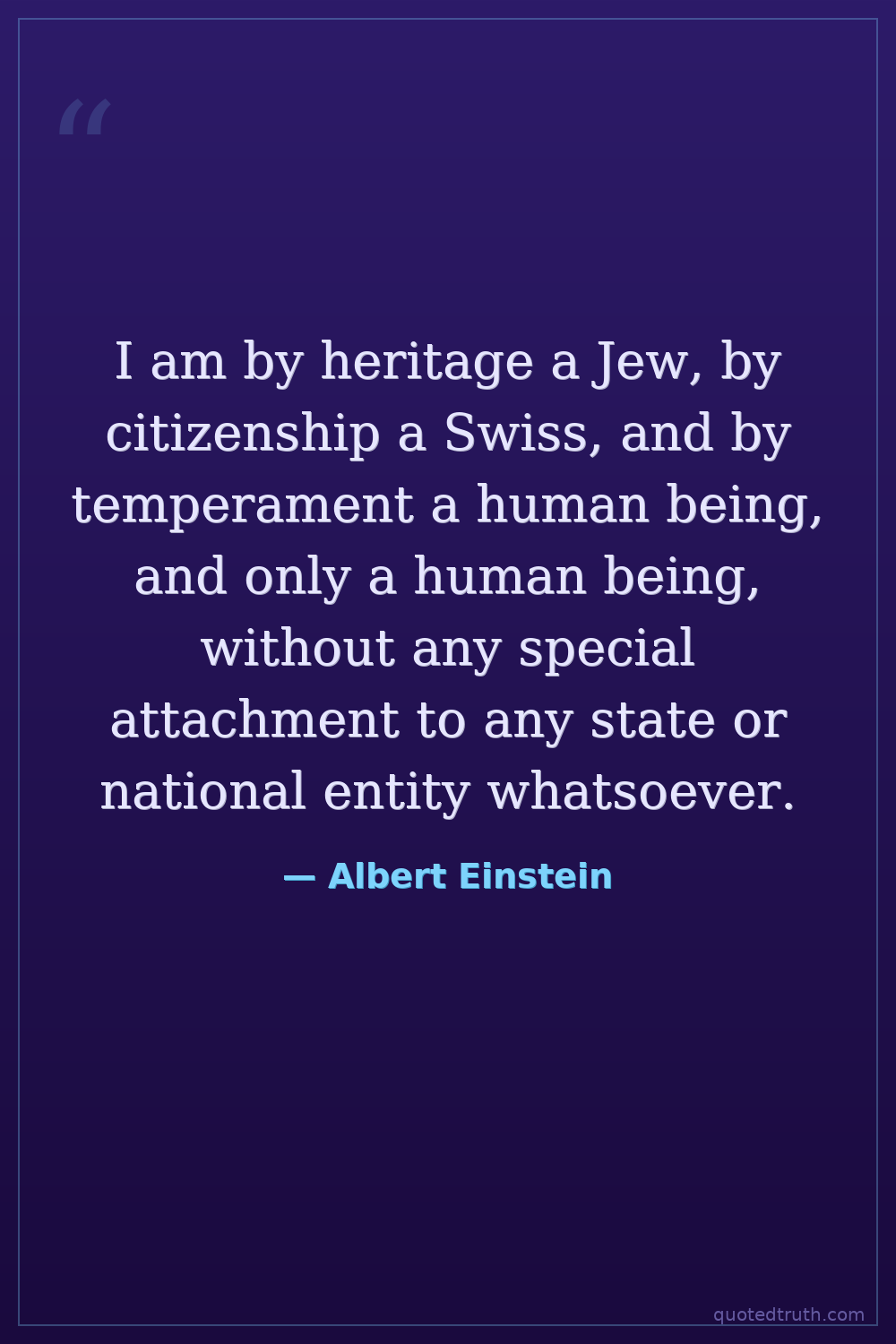
Identity runs deeper than borders or tribal loyalty. A person can hold multiple official affiliations—ethnic heritage, legal citizenship—while still placing universal humanity above all of them. This rejects nationalism and ethnocentrism as the primary lens through which one defines oneself, insisting that shared human belonging outweighs any particular flag, state, or blood lineage.
Relevance to Albert Einstein
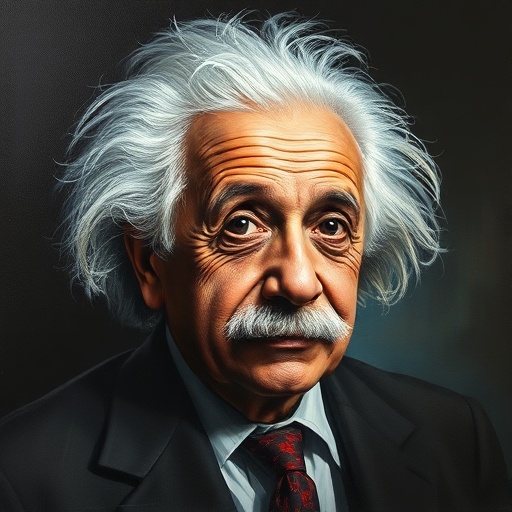
Einstein lived this tension directly. Born in Germany, he renounced German citizenship at 16, became Swiss, later accepted American citizenship. As a Jew he faced antisemitism and Nazi persecution, which forced him to flee Europe in 1933. Despite Zionist sympathies he declined Israel's presidency in 1952, consistently prioritizing pacifism and world government over any single nation's claim on him.
The era
Einstein spoke these words against a backdrop of aggressive European nationalism—the same forces that produced two World Wars, the Dreyfus Affair, and the Holocaust. In an era when governments demanded absolute loyalty and ethnic identity was weaponized by fascist movements, declaring oneself simply 'a human being' was a deliberate, radical act of resistance against the tribalism tearing the world apart.
AI-generated insights based on extensive research and information for context. Factual errors? Email [email protected].