What it means
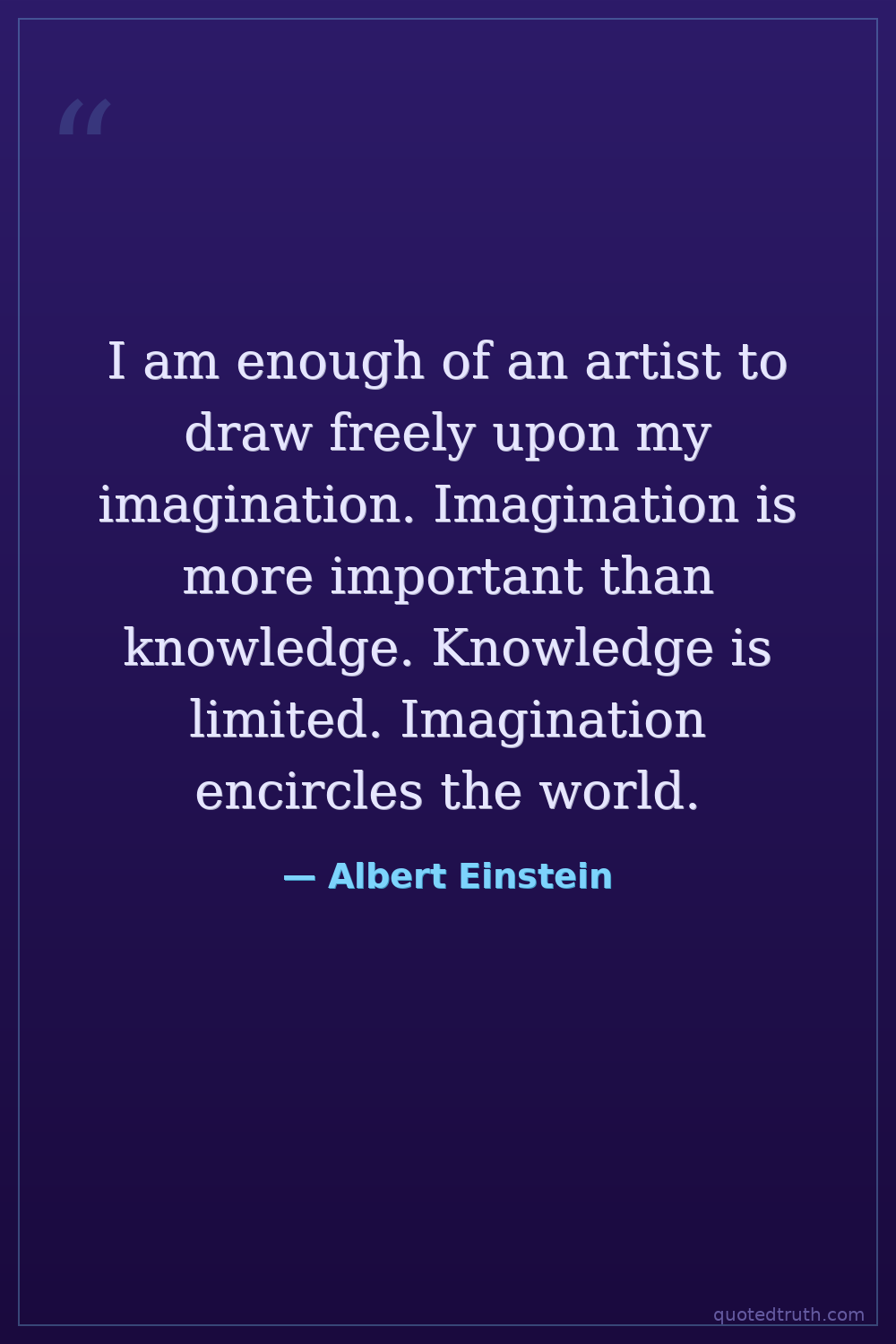
Pure facts and accumulated learning can only take you so far — they describe what already exists. But imagination has no ceiling: it lets you conceive what has never existed, combine ideas in novel ways, and push beyond the boundaries of the known. A person who can envision possibilities freely will always outpace one who only catalogues what is already understood.
Relevance to Albert Einstein
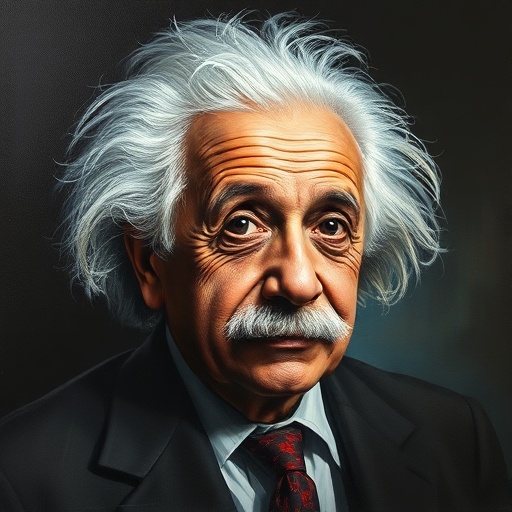
Einstein arrived at special relativity not through laboratory experiments but through thought experiments — imagining himself riding alongside a beam of light. His greatest breakthroughs came from disciplined daydreaming, not rote memorization. He played violin, loved philosophy, and consistently described intuition and creative vision as the engines behind his physics, making this quote a direct autobiographical confession.
The era
Einstein developed his theories in the early 20th century, when scientific positivism dominated — the belief that only measurable, empirical facts mattered. Quantum mechanics and relativity were shattering Newtonian certainties, proving that reality was stranger than observation alone could reveal. In that climate, championing imagination over knowledge was a radical intellectual stance against the era's prevailing scientific orthodoxy.
AI-generated insights based on extensive research and information for context. Factual errors? Email [email protected].