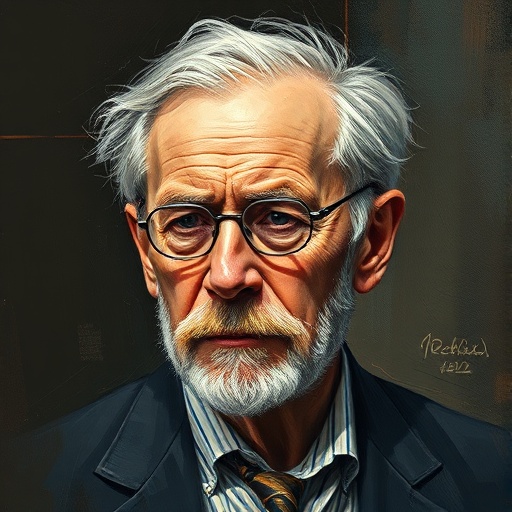
Erwin Schrodinger — "I am enough of an artist to draw freely upon my imagination."
I am enough of an artist to draw freely upon my imagination.
I am enough of an artist to draw freely upon my imagination.
Click any product to generate a realistic preview. Up to 3 at a time.
* Initial load can take up to 90 seconds — revising the preview in another color is nearly instant.
"This life of yours which you are living is not merely a piece of the entire existence, but is in a certain sense the whole; only this whole is not so constituted that it can be surveyed in a single gl…"
"The future is not predetermined, but is open to our choices and actions."
"If you ask a theoretical physicist today, ‘What is an electron?’ he will probably say, ‘It is a symbol in the wave equation.’ We have got so far from the concrete picture of nature."
"The greatest obstacle to discovery is not ignorance, but the illusion of knowledge."
"The only constant in life is change."
Austrian physicist who shared the 1933 Nobel for the wave equation that bears his name and the famous cat thought-experiment. Closely associated with Werner Heisenberg (matrix-mechanics rival who reached the same physics by different math) and Albert Einstein (his pen-pal on quantum interpretation). For an intellectual contrast, see Niels Bohr, Danish physicist and architect of the Copenhagen interpretation — Schrödinger's cat thought-experiment was specifically designed to ridicule Bohr's 'observer-dependent reality' reading of quantum mechanics — Schrödinger thought the Copenhagen interpretation was absurd; the cat was meant as reductio ad absurdum.
Found in 1 providers: grok
1 source checked
The quote asserts that creative imagination is an essential tool for understanding—not just an artistic luxury but a rigorous intellectual instrument. It challenges the false divide between science and art, suggesting that the best thinking draws on intuition and vision, the ability to conceive what cannot yet be seen or measured. Imagination isn't opposed to knowledge; it precedes and enables it, generating hypotheses that evidence later confirms or refines.
Schrödinger's wave mechanics required reimagining electrons not as particles but as probability waves—a leap of pure creative imagination. His book What is Life? speculatively proposed that genes were aperiodic crystals, inspiring Watson and Crick decades later. His Cat paradox was a vivid imaginative construction exposing quantum absurdities. He read Sanskrit, wrote poetry, and engaged deeply with Vedantic philosophy, embodying the scientist-artist fusion this quote describes.
In the 1920s–1930s, classical physics was collapsing. Einstein's relativity had shattered Newtonian certainties, and quantum mechanics demanded physicists abandon intuitive visual models entirely. Schrödinger's era required scientists to imagine realities defying direct observation—wave functions, superposition, uncertainty. Vienna and Weimar Germany also blurred art-science boundaries; expressionism, psychoanalysis, and modernism valorized inner vision over external description, making imagination a credible epistemological tool.
AI-generated insights based on extensive research and information for context. Factual errors? Email [email protected].
Your cart is empty