What it means
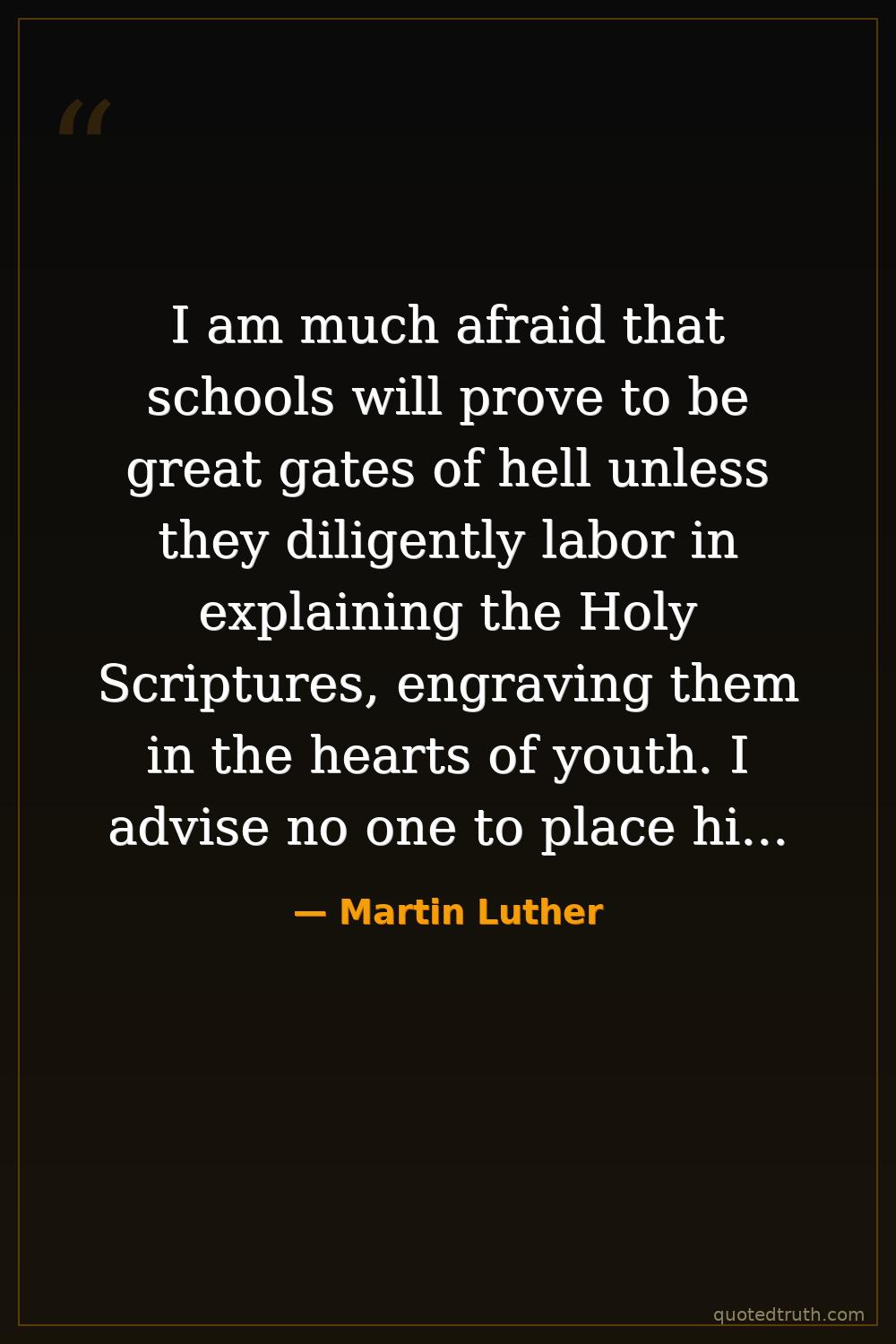
Luther warns that schools which neglect Scripture become spiritually dangerous, even destructive to students. Any education that pushes the Bible to the margins, he argues, is worse than no education at all because it shapes minds without grounding them in what he considered ultimate truth. He urges parents not to enroll children anywhere the Bible isn't central, treating curriculum choice as a matter of their souls, not just their careers.
Relevance to Martin Luther
Luther translated the Bible into German specifically so ordinary people, including children, could read it directly. He wrote catechisms for household instruction and pushed German princes to fund schools teaching Scripture in the vernacular. This quote captures his core conviction: salvation comes through the Word alone (sola scriptura), so any schooling that sidelines Scripture endangers the student. Education, for Luther, was a theological act, not just civic training.
The era
In the early 1500s, European education was dominated by Catholic monastic and cathedral schools teaching Latin, scholastic philosophy, and humanist classics. Luther's Reformation was dismantling that monopoly, and reformers were scrambling to build Protestant alternatives. Humanism had elevated Greco-Roman pagan authors, which Luther feared would crowd out biblical instruction. Princes were just beginning to fund public schooling, making curriculum choices urgently contested between Catholic, humanist, and emerging Protestant visions of what a child should learn.
AI-generated insights based on extensive research and information for context. Factual errors? Email [email protected].