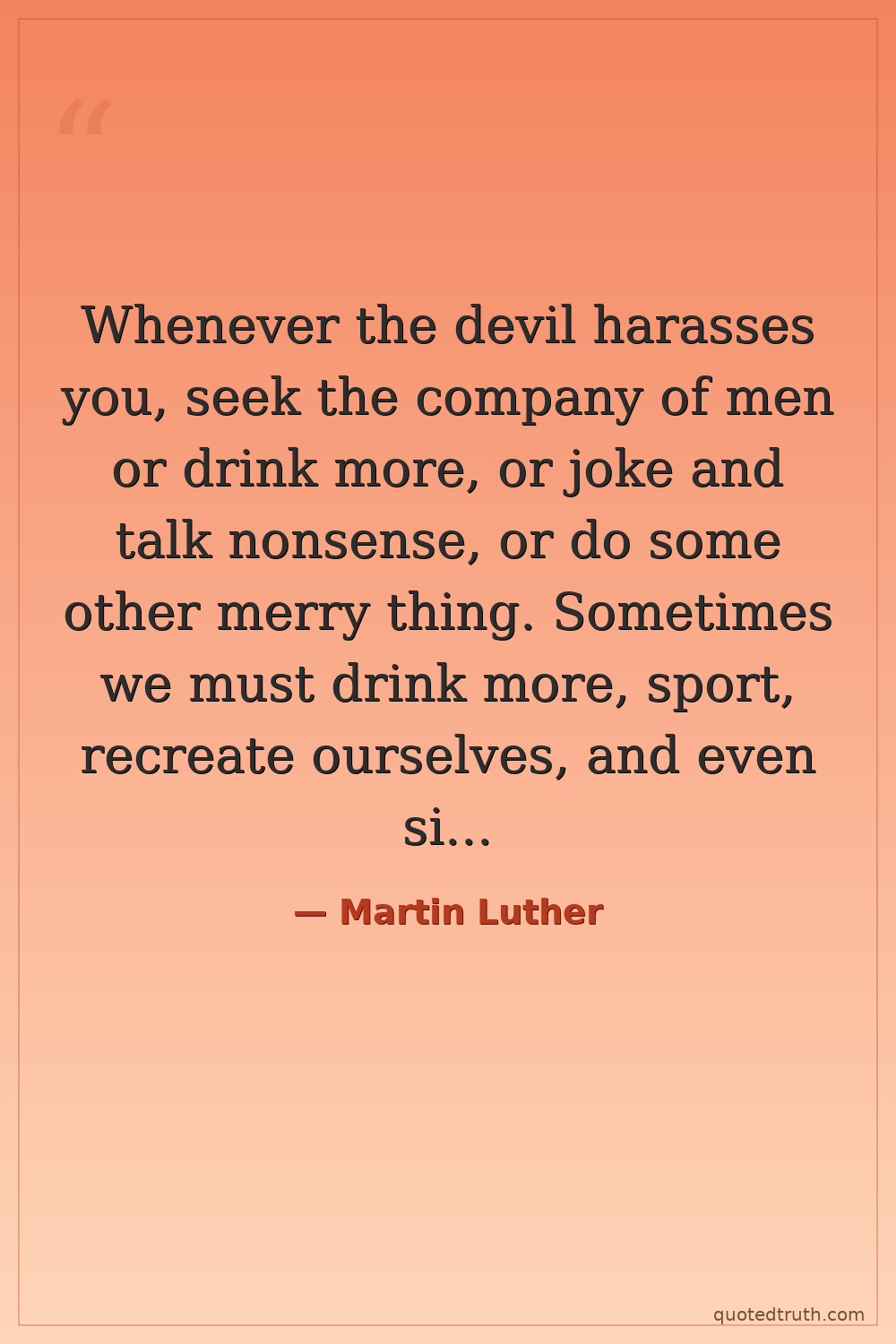
Martin Luther — "Whenever the devil harasses you, seek the company of men or drink more, or joke …"

Whenever the devil harasses you, seek the company of men or drink more, or joke and talk nonsense, or do some other merry thing. Sometimes we must drink more, sport, recreate ourselves, and even sin a little to spite the devil, so that we leave him no place for troubling our consciences with trifles. We are conquered if we try too conscientiously not to sin at all. So when the devil says to you: do not drink, answer him: I will drink, and right freely, just because you tell me not to.
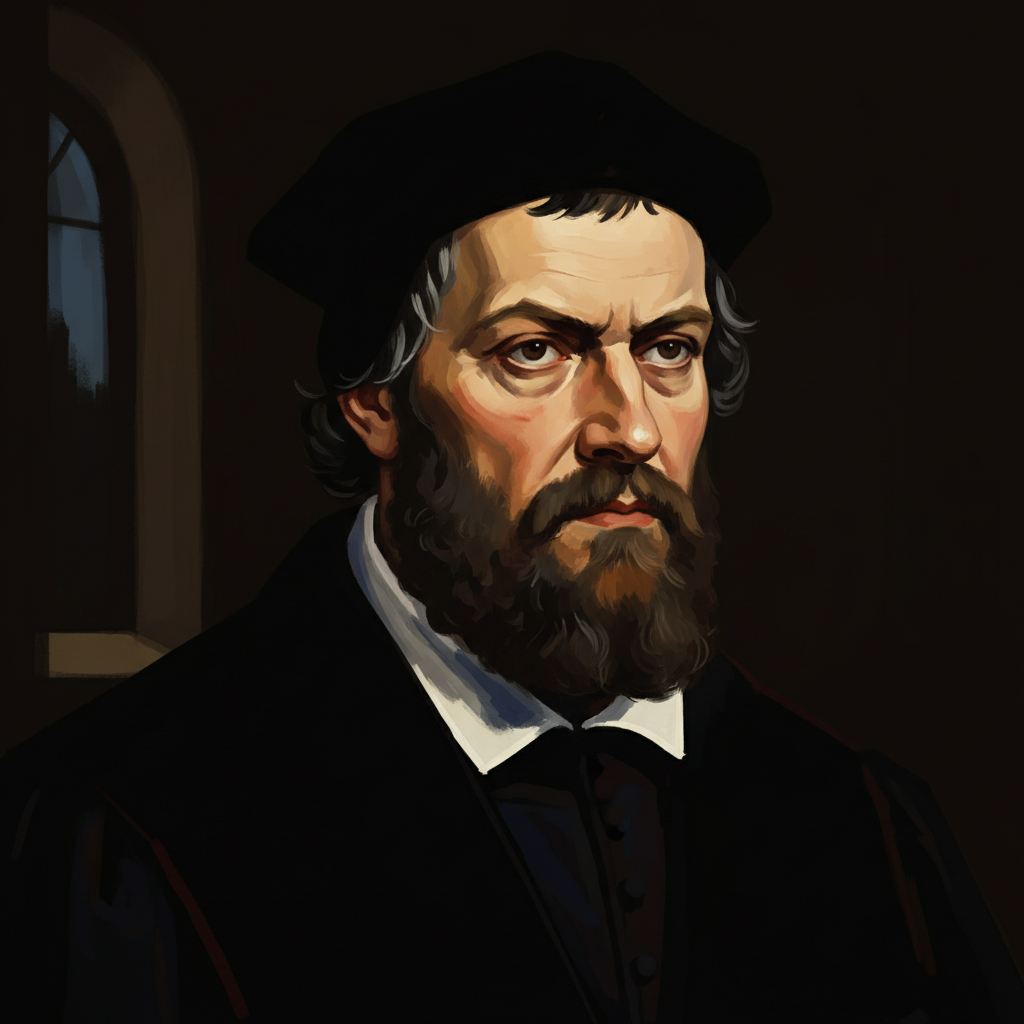
Martin Luther — Martin Luther Early Modern · Leader of the Protestant Reformation

Get This Quote & Author's Image Illustrated On:

Click any product to generate a realistic preview. Up to 3 at a time.
* Initial load can take up to 90 seconds — revising the preview in another color is nearly instant.

Kitchen

Apparel

Other

About Martin Luther (1483-1546)

German theologian whose 95 Theses (1517) launched the Protestant Reformation and broke the Catholic Church's monopoly on Western Christianity. Closely associated with Philipp Melanchthon (Lutheran systematizer) and John Calvin (later Reformer who built on Luther's break). For an intellectual contrast, see Pope Leo X, Renaissance pope (1513-1521) — Leo X's indulgence sales triggered Luther's break and Leo excommunicated him in 1521 — Luther's entire Reformation is structured as a direct answer to the indulgence-funded Vatican Leo represented.

Details

Quoted in collections of his sayings, often from 'Table Talk'.

Date: 1530s-1540s (Table Talk)

Food & Drink

Verification

Unverifiable

Found in 1 providers: gemini

1 source checked

Understanding this quote

What it means

Luther says that when guilt, obsession, or dark thoughts torment you, don't fight them by becoming more rigidly pious. Instead, get around other people, have a drink, joke around, or do something lighthearted. Trying too hard to be perfectly sinless actually hands power to your inner tormentor. Deliberately loosening up, even if it means small indulgences, breaks the grip of scrupulous self-accusation and restores sanity.

Relevance to Martin Luther

Luther famously battled intense spiritual anxiety he called Anfechtungen, bouts where he felt crushed by guilt and demonic assault. A former monk who had punished himself through fasting and confession, he rejected monastic scrupulosity after discovering grace. He married, drank beer openly with students at his Wittenberg table, and preached that freedom from the law meant Christians should not let the devil enslave them through petty guilt.

The era

In early sixteenth-century Europe, late-medieval piety pressured laypeople toward constant confession, indulgences, and fear of damnation over minor sins. Monastic ideals treated bodily pleasure as spiritually dangerous. Luther's Reformation, launched with the 1517 Ninety-Five Theses, attacked this system, arguing salvation came by faith, not by anxious works. His robust table talk and defense of ordinary joys like beer and marriage directly challenged centuries of ascetic religious conditioning.

AI-generated insights based on extensive research and information for context. Factual errors? Email [email protected].
Your Cart

Your cart is empty