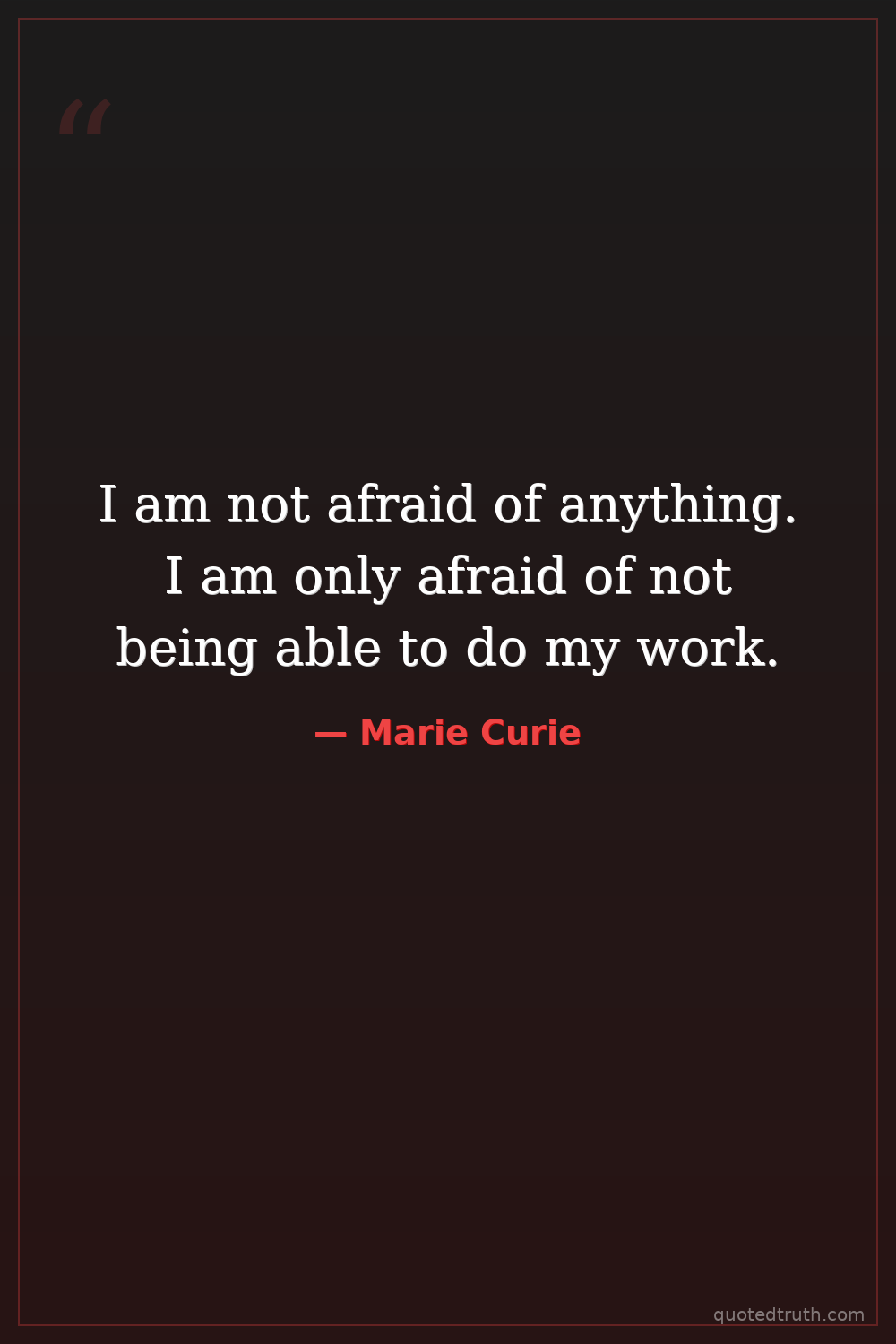
Marie Curie — "I am not afraid of anything. I am only afraid of not being able to do my work."
I am not afraid of anything. I am only afraid of not being able to do my work.
I am not afraid of anything. I am only afraid of not being able to do my work.
Click any product to generate a realistic preview. Up to 3 at a time.
* Initial load can take up to 90 seconds — revising the preview in another color is nearly instant.
"The way of progress was neither swift nor easy."
"I am a woman of science. I am a woman of reason. I am a woman of logic. I am a woman of truth. I am a woman of justice. I am a woman of peace. I am a woman of love. I am a woman of humanity. I am all …"
"Life is not easy for any of us. But what of that? We must have perseverance and above all confidence in ourselves. We must believe that we are gifted for something and that this thing must be attained…"
"First principle: never to let one's self be beaten down by persons or by events."
"The greatest scientists are artists as well."
Found in 1 providers: grok
1 source checked
The speaker rejects fear of danger, failure, or hardship, declaring that only one thing truly worries them: losing the ability to do meaningful work. Personal safety, reputation, and comfort are secondary to the mission itself. Being stopped, sidelined, or rendered incapable of contributing is the real terror. It is a statement of total devotion to purpose over self-preservation.
Curie handled radioactive materials daily despite burns and illness, carrying glowing test tubes in her pockets and eventually dying of aplastic anemia from radiation exposure. She pushed through her husband Pierre's death, sexist French Academy rejection, and wartime hardship to run mobile X-ray units. Work was her identity; losing the lab, not losing her health, was what she feared, and she labored until her body failed.
Late 19th and early 20th century science was a male fortress: women were barred from many universities, denied academy seats, and dismissed as assistants. Curie worked in a leaky shed isolating radium, faced xenophobic French press attacks over her Polish origin and personal life, and lived through WWI. Radiation's dangers were unknown, and female scientists risked losing laboratories, funding, and legitimacy at any moment of scandal or war.
AI-generated insights based on extensive research and information for context. Factual errors? Email [email protected].
Your cart is empty