What it means
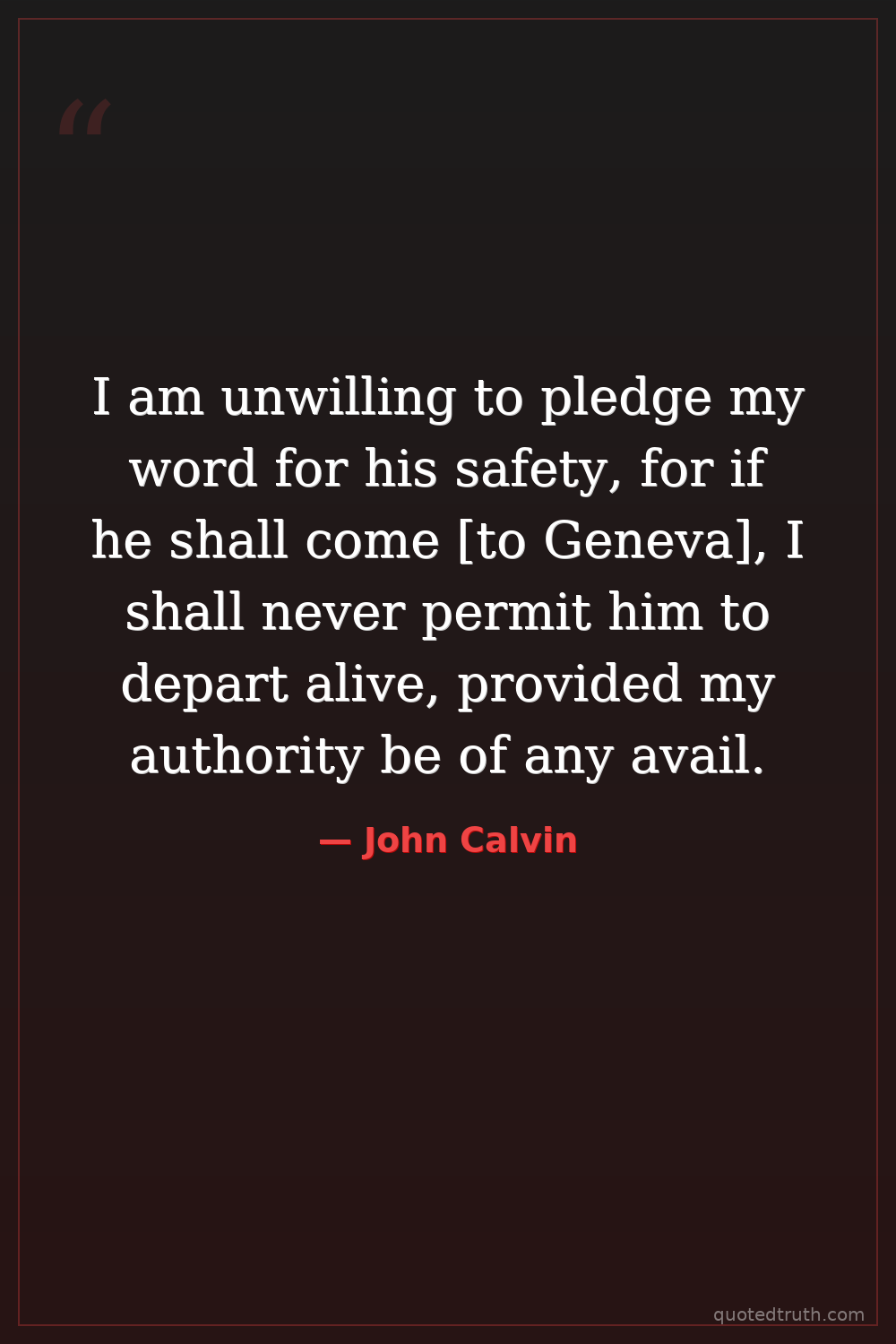
Calvin is refusing to guarantee someone's safety, stating plainly that if this person enters Geneva, he will have them killed if his authority allows it. In modern terms: a direct death threat issued by a ruler against someone he considers a dangerous heretic. It expresses his conviction that certain beliefs are so destructive to society that the person holding them must be eliminated, and that he personally bears responsibility for carrying out that judgment.
Relevance to John Calvin
This quote targets Michael Servetus, a Spanish physician who denied the Trinity—Calvin's theological nemesis for years through hostile correspondence. As Geneva's dominant pastor and de facto political ruler, Calvin controlled the city's courts and councils. It reflects his belief that tolerating heresy was itself sinful, his personal sense of divine mandate to protect the church, and his willingness to merge ecclesiastical authority with state power to enforce doctrinal purity. Servetus was indeed burned at the stake in Geneva in 1553.
The era
In 1550s Europe, heresy was a capital offense under both Catholic and Protestant regimes alike. The Reformation had shattered Christendom's unity, making theological conformity feel existential for civic order. Calvin's Geneva was a theocratic experiment—scripture governing law and social life. Religious violence was widespread: the Inquisition, the Schmalkaldic Wars, and eventual Thirty Years' War all reflect an era when rulers believed protecting orthodox doctrine through coercion and execution was a legitimate, even obligatory, function of government.
AI-generated insights based on extensive research and information for context. Factual errors? Email [email protected].