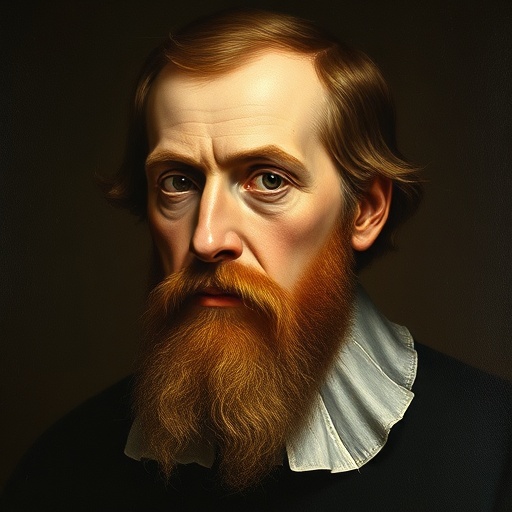
John Calvin — "The salvation of the elect depends on the free election of God."
The salvation of the elect depends on the free election of God.
The salvation of the elect depends on the free election of God.
Click any product to generate a realistic preview. Up to 3 at a time.
* Initial load can take up to 90 seconds — revising the preview in another color is nearly instant.
"The Lord then would have all the godly to burn with so much zeal in the defense of lawful worship and true religion, that no connection, no relationship, nor any other consideration, connected with th…"
"The Christian life is a perpetual exercise of repentance."
"The reprobate are not able to believe, because God does not give them the gift of faith."
"Our hearts are so prone to idolatry that we cannot but be continually forging new gods for ourselves."
"Our salvation depends on the free election of God."
French theologian whose Institutes of the Christian Religion (1536) systematized Protestant Reformed doctrine, including predestination. Closely associated with Martin Luther (Reformation founder, Calvin's predecessor). For an intellectual contrast, see Jacobus Arminius, Dutch Reformed theologian (1560-1609) — Arminius's rejection of strict double-predestination founded Arminianism — the theological tradition modern Methodism, most evangelicalism, and Pentecostalism descend from. The Calvinist-Arminian debate has divided Protestantism for 400 years.
Found in 1 providers: grok
1 source checked
This quote asserts predestination: God independently and freely chooses specific individuals — the elect — for salvation, without regard to human merit, effort, or prior faith. Salvation is not earned or initiated by people; it flows entirely from God's sovereign will. The word 'free' is critical — God's choice is unconditional, not a response to anything humans do, believe, or deserve in advance.
Calvin built his entire theological system around divine sovereignty. His Institutes of the Christian Religion (1536–1559) devoted major sections to predestination, making it the cornerstone of Reformed theology. As Geneva's de facto religious leader, he enforced strict moral discipline partly because the elect were expected to live visibly holy lives. This doctrine sharply distinguished Calvinism from Catholicism and from the more human-centered Arminian Protestantism that arose directly in reaction to his teachings.
During the Reformation, the Catholic Church taught that sacraments and righteous works contributed to salvation — a system Calvin viewed as corrupting the Gospel. Across Europe, theologians fiercely debated whether humans had any role in choosing God. Calvin's insistence on free election challenged Catholic meritocracy and emerging Protestant voices softening predestination. The Council of Trent (1545–1563) was simultaneously condemning Protestant doctrines, making Calvin's uncompromising position both a theological stance and a direct political confrontation.
AI-generated insights based on extensive research and information for context. Factual errors? Email [email protected].
Your cart is empty