What it means
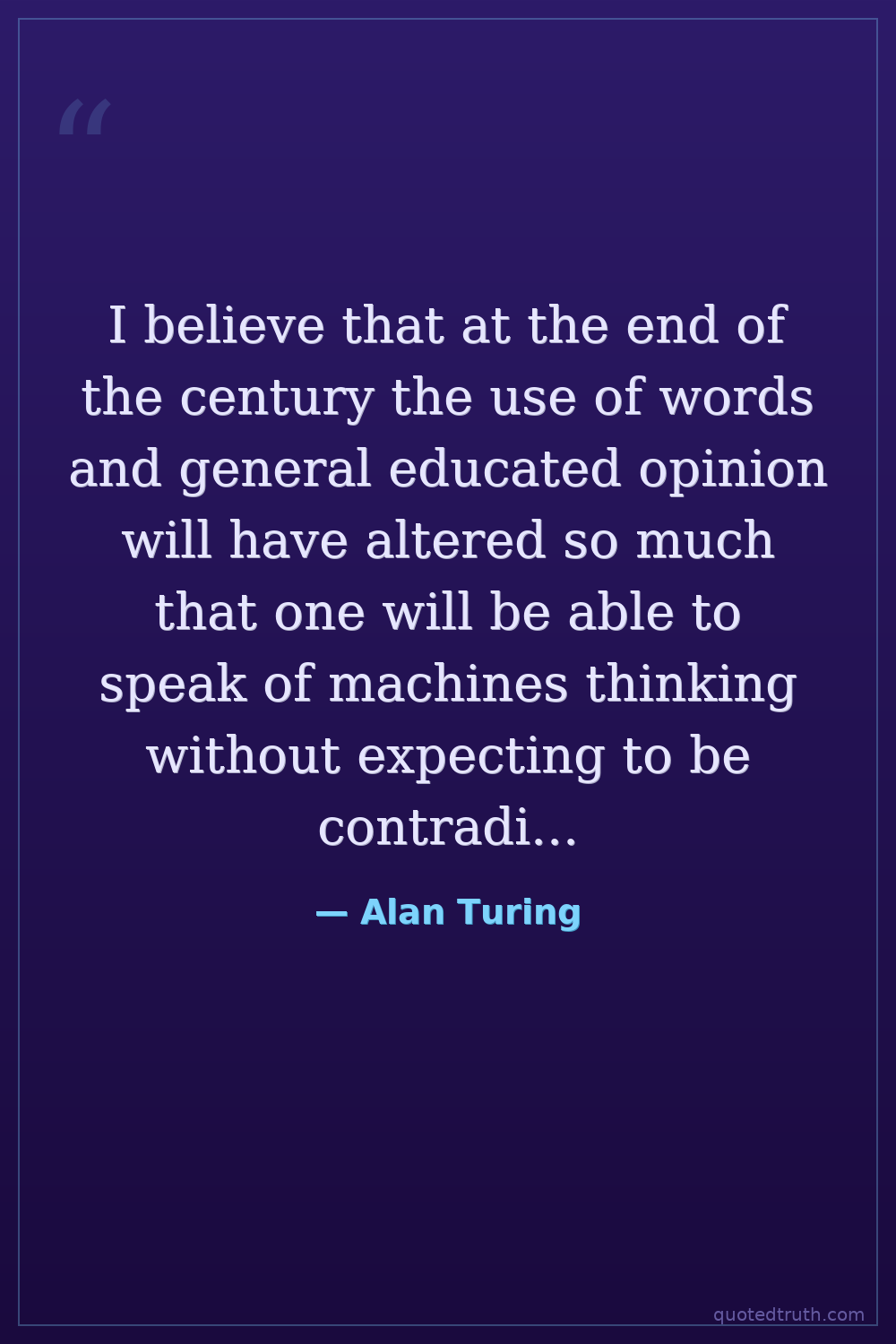
By 2000, the phrase 'machines thinking' will be unremarkable — cultural attitudes and vocabulary will have shifted enough that nobody argues against it. Turing isn't claiming machines already think; he's predicting a future where the question gets resolved not by proof but by consensus. It's as much a forecast about changing human minds as about advancing technology itself.
Relevance to Alan Turing
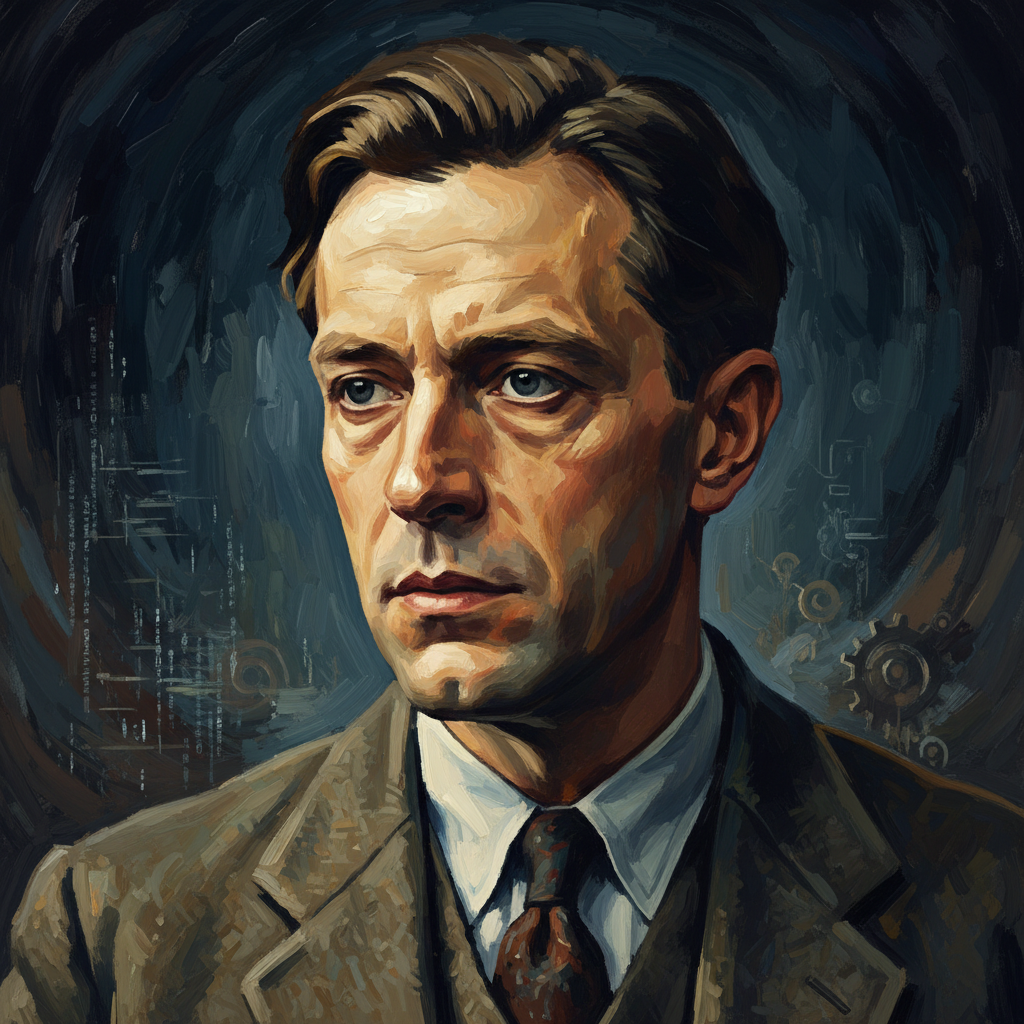
Written in his 1950 paper introducing the Turing Test, this reflects Turing's lifelong habit of defending radical positions with quiet confidence. He spent WWII proving machines could outperform human codebreakers on Enigma. Simultaneously prosecuted for homosexuality by a society hostile to his identity, he understood firsthand how entrenched opinion could shift — and believed it would.
The era
In 1950, 'thinking machines' was fringe speculation. ENIAC had existed five years; the Manchester Mark 1 ran its first program in 1948. Most philosophers and scientists dismissed machine thought as a category error. Cybernetics was just emerging; AI didn't exist as a discipline. Turing was staking a calm, long-range claim against near-universal establishment skepticism at the literal birth of computing.
AI-generated insights based on extensive research and information for context. Factual errors? Email [email protected].