What it means
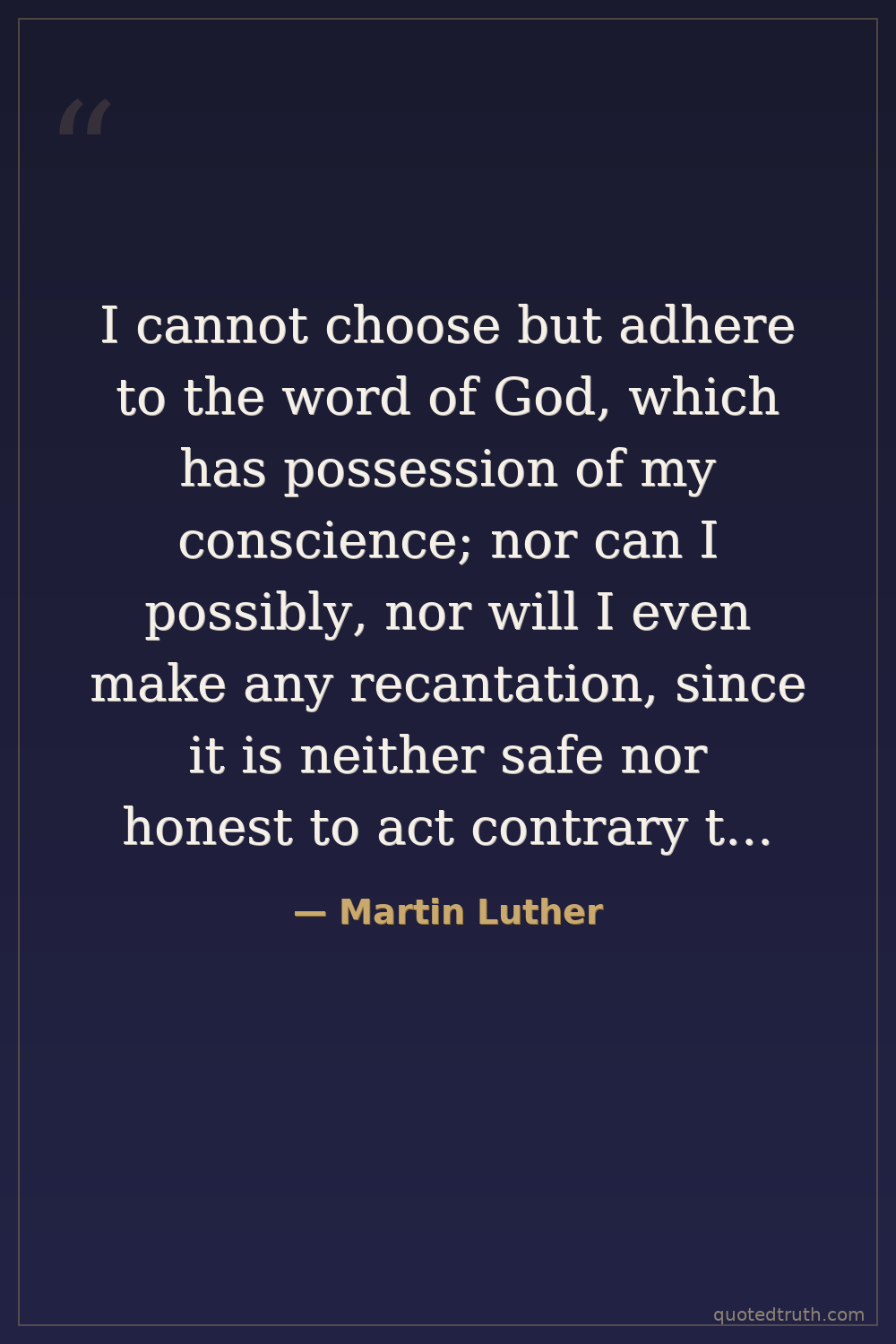
Luther refuses to take back what he has written because his conscience, shaped by Scripture, will not let him. He argues it is both unsafe for his soul and dishonest to say something he does not believe just to satisfy authorities. Even under threat, he will not pretend. He plants his feet, accepts whatever consequences come, and asks God for the strength to hold the line.
Relevance to Martin Luther
Luther delivered these words at the Diet of Worms in 1521, when Emperor Charles V demanded he recant his writings against indulgences and papal authority. As an Augustinian monk and theology professor who had nailed his Ninety-Five Theses in 1517, Luther built his whole reform project on sola scriptura, the belief that Scripture alone binds conscience. Refusing to recant risked excommunication and death, yet matched his core conviction perfectly.
The era
In early sixteenth-century Europe, the Catholic Church wielded enormous political and spiritual power, and heresy was often punishable by burning. The printing press was spreading reform pamphlets faster than Rome could suppress them, and German princes chafed under papal taxation. Luther's stand at Worms crystallized a religious, political, and cultural rupture that split Western Christianity, fueled peasant revolts, and helped launch the modern idea of individual conscience against institutional authority.
AI-generated insights based on extensive research and information for context. Factual errors? Email [email protected].