What it means
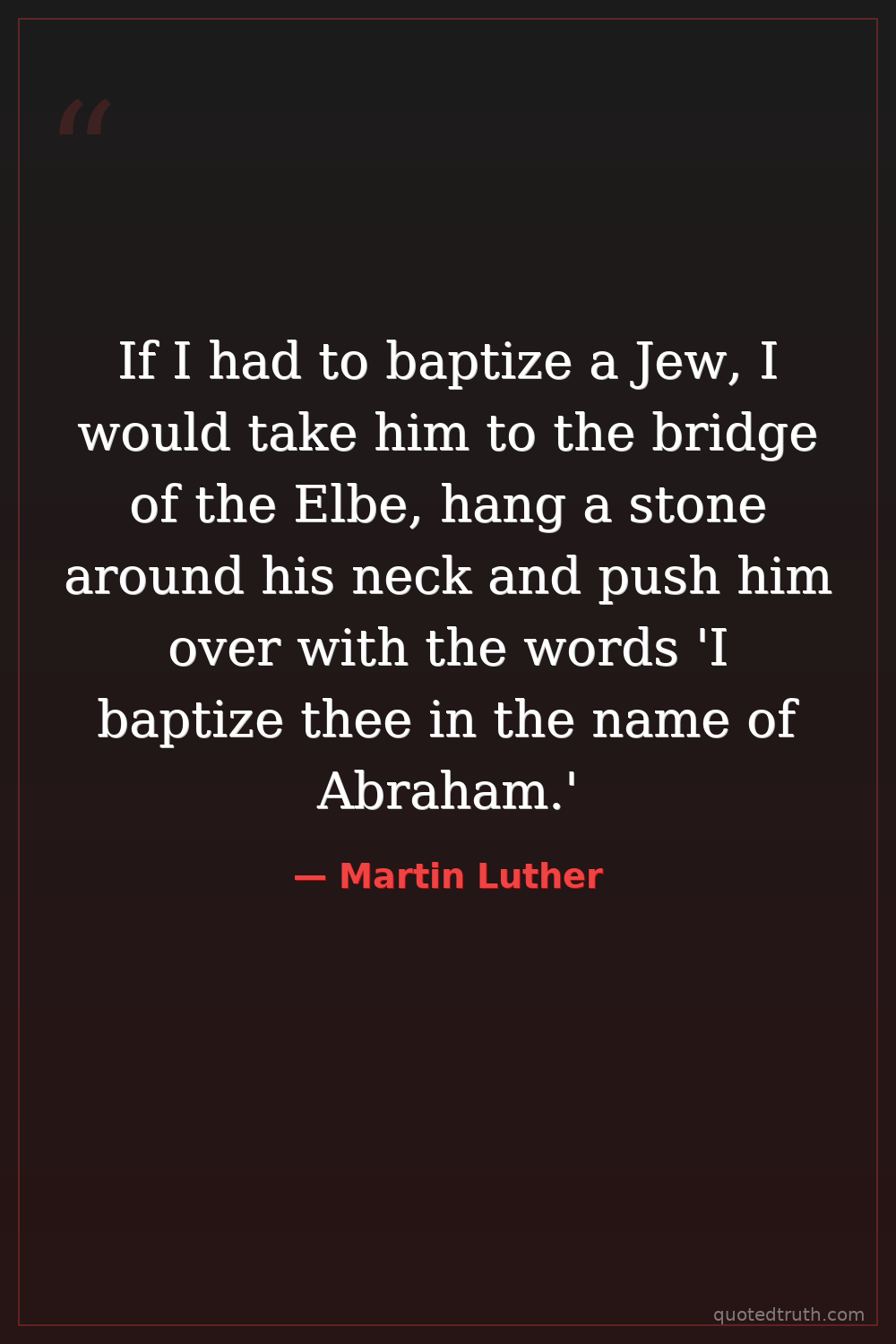
Luther is saying that if forced to baptize a Jewish person, he would rather drown them in the Elbe River than perform a genuine Christian baptism. He invokes Abraham's name as a mocking substitute for the Trinity, signaling that he considers Jews unworthy of Christian sacraments. The statement expresses violent rejection dressed in theological language, treating murder as preferable to religious inclusion of Jewish converts.
Relevance to Martin Luther
Luther spent his later years writing virulent antisemitic tracts, most notoriously 'On the Jews and Their Lies' (1543), which urged burning synagogues, destroying Jewish homes, and expelling Jews from German lands. Initially he had hoped Jews would convert to his reformed Christianity; when they refused, his rhetoric turned genocidal. This quote captures that embittered late-career hostility and reflects his willingness to sanctify violence through scripture.
The era
In early modern Europe, Jews faced expulsions, ghettoization, and blood libel accusations across German-speaking lands. The Reformation (1517 onward) intensified religious polarization, and Luther's antisemitic writings circulated widely through the new printing press. His words later provided ideological cover for centuries of persecution, culminating in Nazi propagandists citing him directly in the 1930s to justify the Holocaust.
AI-generated insights based on extensive research and information for context. Factual errors? Email [email protected].