What it means
The speaker admits he once predicted humans wouldn't achieve flight for fifty years, a forecast made just two years before it actually happened. That massive error taught him a lifelong lesson: his own judgment on ambitious possibilities is unreliable, while his brother's optimism and conviction proved correct. He now defers to his brother's instincts rather than his own doubts when facing bold questions about what can be done.
Relevance to Wright Brothers (Orville & Wilbur)
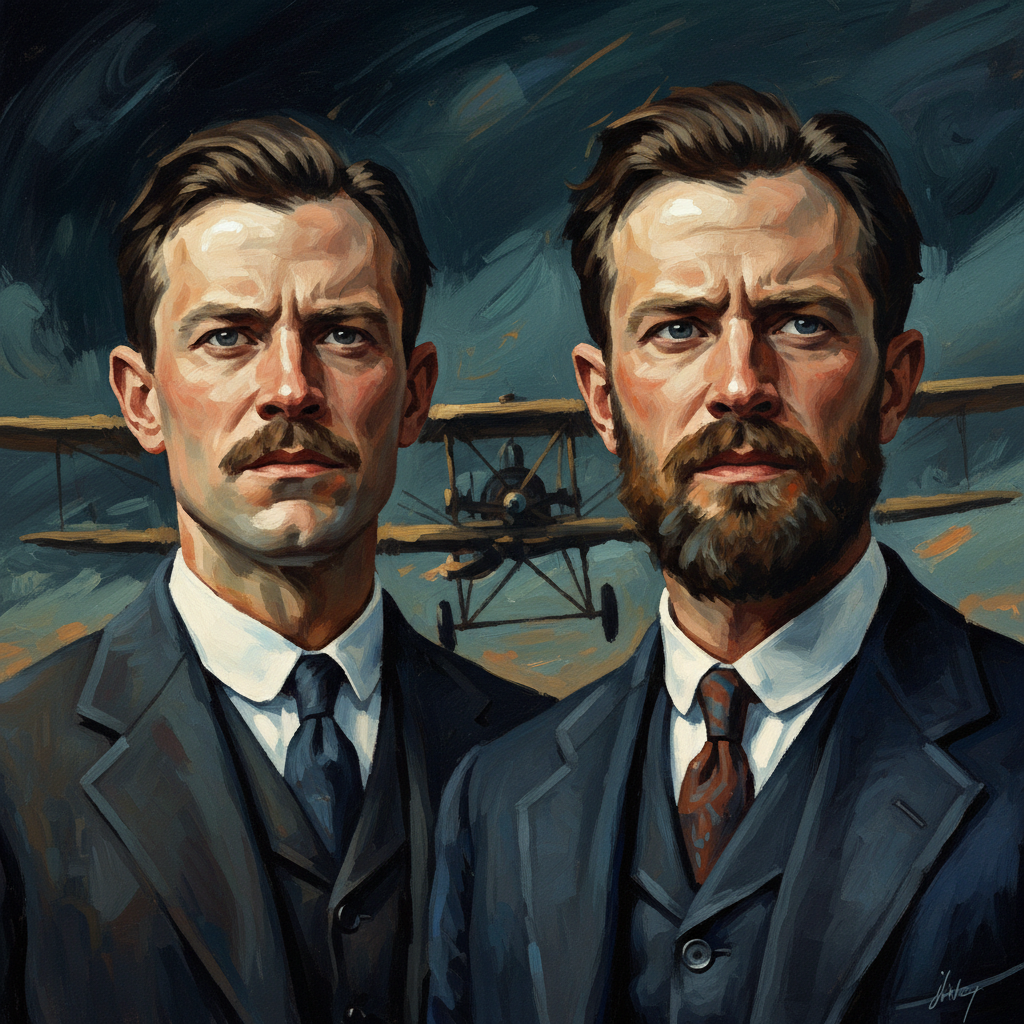
Wilbur spoke these words about Orville after their 1903 Kitty Hawk success. The brothers were self-taught bicycle mechanics from Dayton who solved powered flight while trained engineers failed. This quote captures their partnership dynamic: relentless mutual testing, shared credit, and willingness to revise beliefs against evidence. Their methodical wind-tunnel experiments and 1900-1902 glider trials converted Wilbur's pessimism into the December 17, 1903 breakthrough that rewrote human possibility.
The era
The turn of the 20th century was dense with failed flight attempts, including Samuel Langley's publicly humiliating 1903 Potomac crash just days before Kitty Hawk. Scientific authorities like Lord Kelvin declared heavier-than-air flight impossible. Yet it was also an era of electrification, automobiles, and radio, where amateur tinkerers routinely outpaced credentialed experts. The Wrights' 1903 success arrived amid widespread skepticism, and newspapers initially refused to report it, believing flight remained decades away.
AI-generated insights based on extensive research and information for context. Factual errors? Email [email protected].