Wright Brothers (Orville & Wilbur) — "The greatest value of our work is that it will be an inspiration to others."
The greatest value of our work is that it will be an inspiration to others.
The greatest value of our work is that it will be an inspiration to others.
Click any product to generate a realistic preview. Up to 3 at a time.
* Initial load can take up to 90 seconds — revising the preview in another color is nearly instant.
"The greatest danger in flying is the ground."
"The difficulties were great, but our faith was greater."
"We were very much surprised at the ease with which the machine was controlled."
"If its engine stops, it must fall with deathly violence, for it can neither glide like the aeroplane or float like the balloon. The helicopter is much easier to design than the aeroplane, but is worth…"
"The desire for flight is the expression of a deep-seated human instinct."
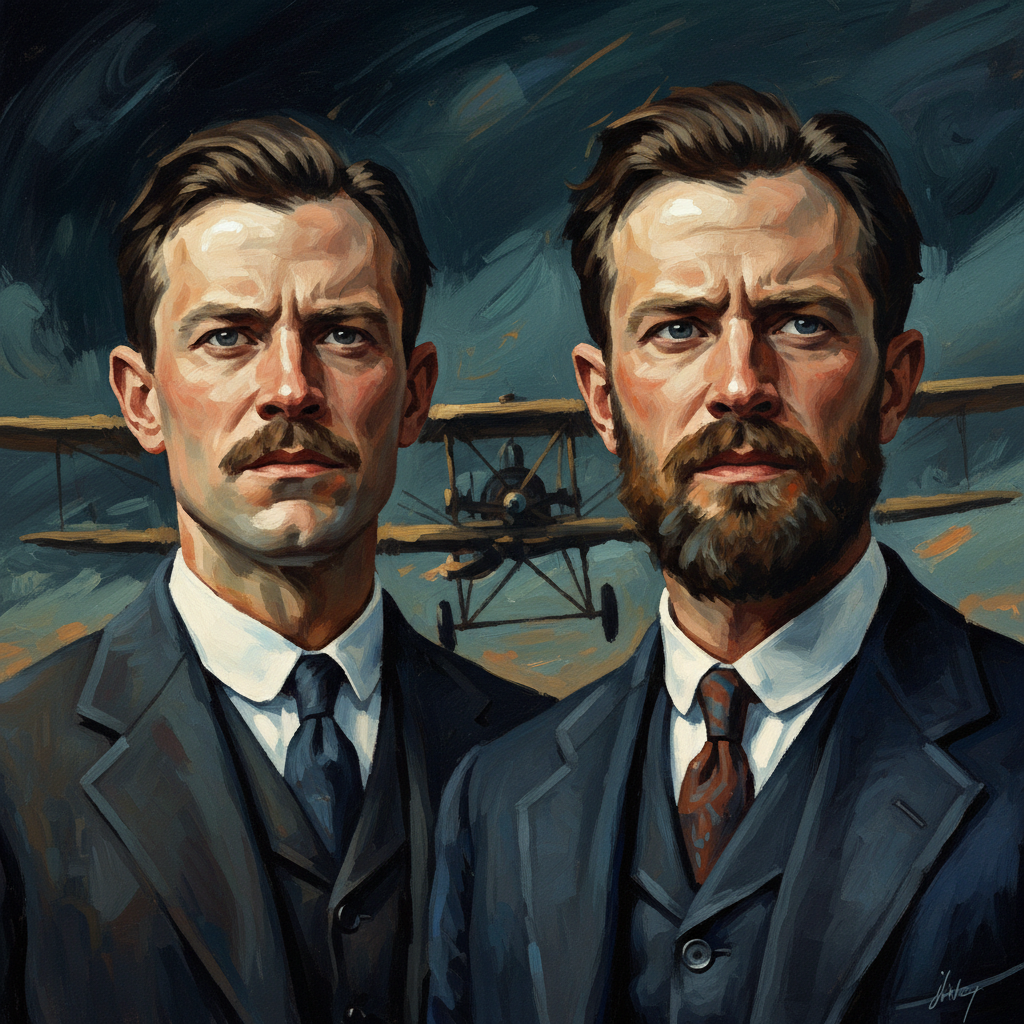
American aviation pioneers who achieved the first sustained powered controlled airplane flight at Kitty Hawk, NC, on December 17, 1903. Closely associated with Octave Chanute (their gliding mentor and aeronautical correspondent). For an intellectual contrast, see Samuel Pierpont Langley, Smithsonian Institution Secretary and government-funded aviation researcher — Langley's Aerodrome crashed twice into the Potomac in October-December 1903 with $50,000 of War Department funding; the Wright Brothers' bicycle-shop empiricism beat Langley's institutional Big Science by 9 days. The most-cited example in engineering history of empirical-tinkerer beating institution-funded credentialism.
Found in 1 providers: grok
1 source checked
The speaker argues that the true worth of an achievement lies not in the thing itself but in its power to motivate other people to attempt difficult goals. A successful accomplishment proves something is possible, lowering the psychological barrier for everyone who comes after. The lasting impact is measured in the ambition it awakens in strangers, not in the immediate reward or recognition the creators receive.
The Wrights were two self-taught bicycle mechanics from Dayton with no engineering degrees, no government funding, and no scientific pedigree, yet they cracked powered flight in 1903. Their breakthrough directly seeded the aviation industry, inspiring figures from Glenn Curtiss to Charles Lindbergh. They understood their achievement's real legacy was proving heavier-than-air flight was attainable by ordinary, determined builders, not just wealthy institutions or credentialed experts.
In the early 1900s, respected scientists publicly declared powered flight impossible, and Samuel Langley's government-funded attempts had failed spectacularly weeks before Kitty Hawk. The era was defined by rapid industrial invention, Edison's electrification, and Ford's assembly line, yet most breakthroughs came from independent tinkerers rather than universities. The Wrights' success validated the American ideal that self-taught craftsmen could outpace credentialed institutions, fueling a generation of garage inventors.
AI-generated insights based on extensive research and information for context. Factual errors? Email [email protected].
Your cart is empty