What it means
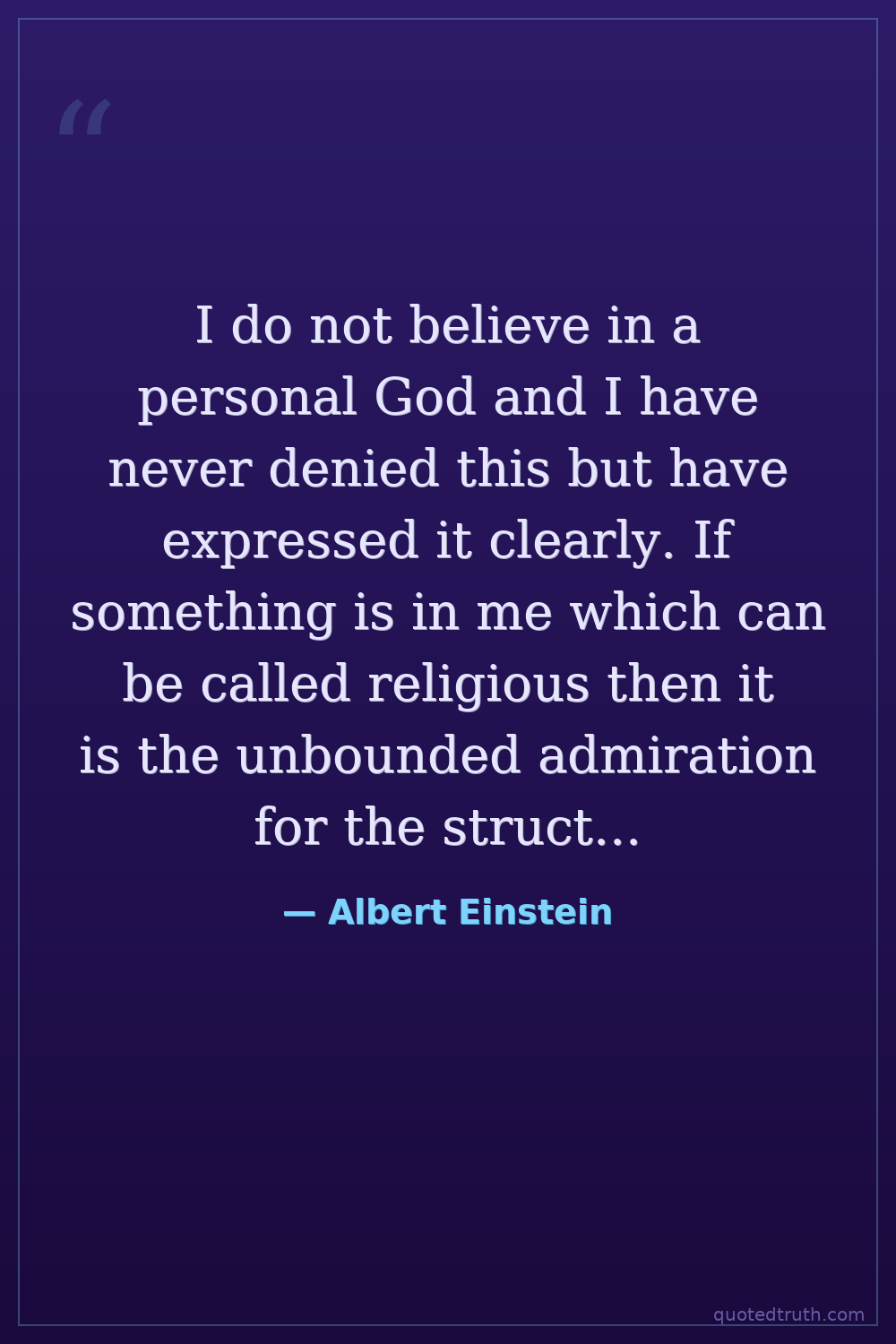
Einstein distinguishes between two very different things: believing in a personal God who listens, judges, and intervenes in human lives — which he rejects entirely and publicly — and experiencing something he calls religious: a deep, overwhelming admiration for the mathematical order underlying physical reality. He finds the universe's elegant structure, as uncovered by science, worthy of reverence. That awe, not faith in a deity, is his version of the sacred.
Relevance to Albert Einstein
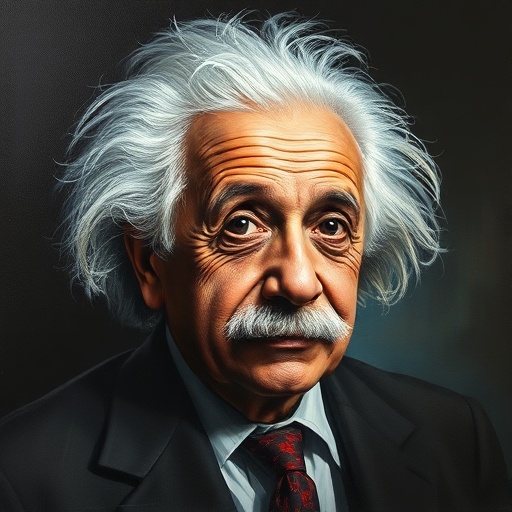
Einstein spent his career revealing the universe's hidden mathematical architecture — special and general relativity, unified field equations, quantum debates. He famously said 'God does not play dice,' meaning he trusted cosmic order over randomness. Raised Jewish, he rejected orthodoxy early, aligning with Spinoza's pantheism: God as nature's laws, not a being. His public atheism drew constant controversy, and he addressed it directly throughout his life without retreating.
The era
The early-to-mid 20th century was a battleground between scientific materialism and organized religion. Relativity and quantum mechanics overturned centuries of Newtonian certainty, alarming theologians and the public alike. Einstein fled Nazi Germany — which weaponized religious nationalism — and watched his physics lead to atomic bombs. Secular humanism was rising, and intellectuals faced intense pressure to declare their metaphysical position. His open rejection of a personal God carried real cultural and political weight.
AI-generated insights based on extensive research and information for context. Factual errors? Email [email protected].