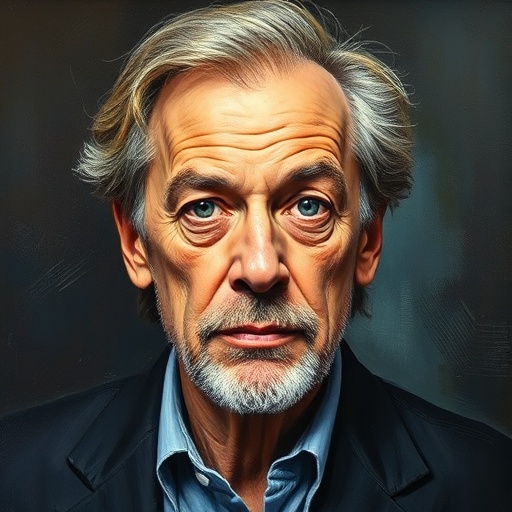
Richard Feynman — "I don't believe in anything, but I have a lot of fun."
I don't believe in anything, but I have a lot of fun.
I don't believe in anything, but I have a lot of fun.
Click any product to generate a realistic preview. Up to 3 at a time.
* Initial load can take up to 90 seconds — revising the preview in another color is nearly instant.
"I was also a little bit of a clown."
"I'm smart enough to know that I'm dumb."
"I have often thought that if there is any hell, it must be the place where there are no questions, only answers."
"What do you care what other people think?"
"It's a great thing to be able to say, 'I don't know.'"
American theoretical physicist who shared the 1965 Nobel for QED, developed Feynman diagrams, and wrote the Feynman Lectures on Physics. Closely associated with Julian Schwinger (co-Nobelist for QED) and Murray Gell-Mann (Caltech rival and Eightfold-Way physicist). For an intellectual contrast, see Deepak Chopra, physician and quantum-mysticism author — Feynman's Caltech 'cargo cult science' commencement address is the precise template for what he saw as misuse of physics terminology — Chopra-style appropriation of quantum vocabulary for metaphysical claims is the canonical example of what Feynman called 'fooling yourself'.
Found in 1 providers: grok
1 source checked
Skepticism and joy can coexist — you don't need dogma, religion, or rigid ideology to live fully. Refusing to accept claims on faith isn't nihilism; it's intellectual honesty. Life's richness comes from curiosity, experience, and wonder, not from subscribing to belief systems that demand certainty where none exists.
Feynman was a lifelong skeptic who distrusted authority, religion, and unverified claims. He famously quit the National Academy of Sciences because he disliked its prestige-gatekeeping. Yet he was notoriously playful — bongo drums, safecracking, strip clubs, pranks at Los Alamos. His joy was real, his irreverence genuine, his refusal to pretend certainty absolute.
Feynman worked mid-20th century, when Cold War ideology, McCarthyism, and institutional conformity pressured Americans toward loyalty oaths and credal allegiance. Religion remained a dominant social force. His open agnosticism and refusal to perform belief — while thriving professionally and personally — was a quiet but sharp cultural challenge to that climate of demanded certainty.
AI-generated insights based on extensive research and information for context. Factual errors? Email [email protected].
Your cart is empty