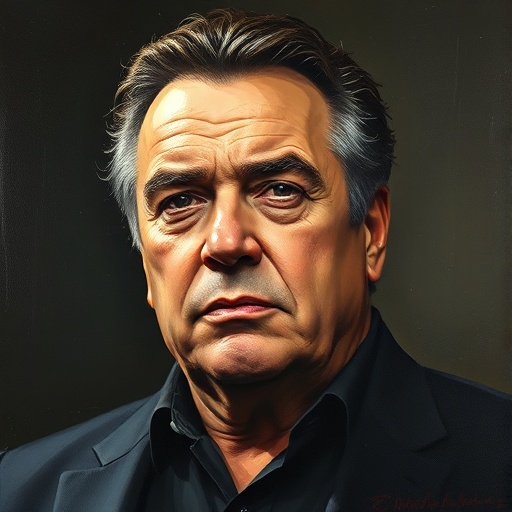
Marlon Brando — "I don't have any regrets. I've lived my life the way I wanted to."
I don't have any regrets. I've lived my life the way I wanted to.
I don't have any regrets. I've lived my life the way I wanted to.
Click any product to generate a realistic preview. Up to 3 at a time.
* Initial load can take up to 90 seconds — revising the preview in another color is nearly instant.
"Acting is the expression of a neurotic impulse. It's a bum's life. Quitting acting, that's the sign of maturity."
"I don't like to be pushed around by anybody—including the government."
"I don't like to be famous. I think it's a burden."
"I'm going to be a plumber. I don't want to be an actor. I don't want to be a movie star. I don't want to be anything. I just want to be myself."
"I'm not interested in being a legend. I'm interested in being a human being."
American actor whose A Streetcar Named Desire (1947) and On the Waterfront (1954) defined Method acting and reshaped 20th-century film performance. Closely associated with James Dean (Method-acting peer and protégé) and Montgomery Clift (Method contemporary and friend). For an intellectual contrast, see Laurence Olivier, British classical-trained actor — Olivier's technical, externally-constructed approach to acting is the precise opposite of the Method's emotional-recall internalism — the canonical 'Method vs classical' binary 20th-century acting pedagogy is organized around. Olivier reportedly told a frustrated Hoffman: 'Try acting, my dear boy'.
Your cart is empty