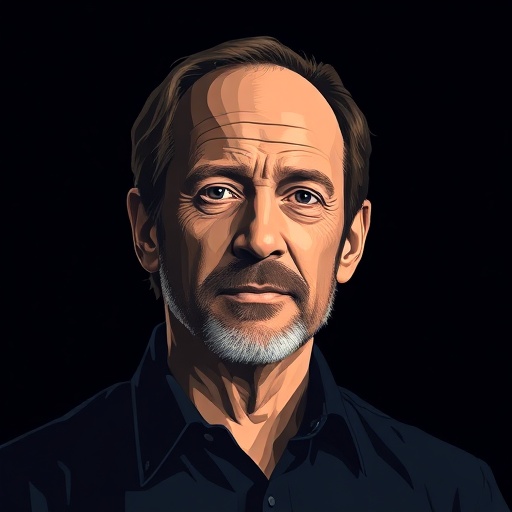
Tim Berners-Lee — "I don't think I'm a visionary. I just saw a problem and tried to solve it."
I don't think I'm a visionary. I just saw a problem and tried to solve it.
I don't think I'm a visionary. I just saw a problem and tried to solve it.
Click any product to generate a realistic preview. Up to 3 at a time.
* Initial load can take up to 90 seconds — revising the preview in another color is nearly instant.
"We need to reclaim the web from corporate and political interests."
"The web is a vast experiment in human communication."
"I'm working on a new project called Solid, which is designed to decentralize the web and give users more control over their data."
"The web is a two-way street. It's about communication and collaboration."
"The web is a work in progress. We need to keep working on it to make it better."
British computer scientist who invented the World Wide Web at CERN in 1989 and founded the W3C, championing open web standards. Closely associated with Vint Cerf (TCP/IP co-creator and 'father of the internet') and Marc Andreessen (Mosaic browser creator and Netscape co-founder). For an intellectual contrast, see Mark Zuckerberg, Facebook (Meta) founder — Zuckerberg's walled-garden Facebook is the canonical contemporary opposite of Berners-Lee's open-web vision; Berners-Lee's Solid project and 'recapture the web' essays are explicitly written as a rebuttal to the platform-monopoly model Facebook pioneered.
Found in 1 providers: grok
1 source checked
Humility in the face of world-changing impact. The speaker dismisses the romantic idea of genius-as-prophecy, insisting the work was reactive and practical: a problem existed, a solution was built. It reframes invention as methodical effort rather than mystical foresight, suggesting that transformative change often comes from people quietly fixing things rather than those with grandiose ambitions or a declared mission to reshape civilization.
Berners-Lee invented the Web in 1989 at CERN after writing a memo titled 'Information Management: A Proposal' — a dry, technical document addressing how researchers couldn't share data across incompatible systems. He released HTTP, HTML, and URLs without patents, free to the world. He founded W3C to keep the Web open and has consistently resisted celebrity. His entire career reflects this anti-visionary self-image: fix the problem, give it away, move on.
In the late 1980s, networked computing existed but information was fragmented across incompatible systems. CERN itself was a model of Cold War-era international scientific collaboration, demanding open data exchange. The internet had infrastructure but no usable document layer. By the mid-1990s dot-com boom, tech culture began mythologizing founders as oracles. Berners-Lee's framing — problem-solver, not prophet — deliberately pushed back against that emerging Silicon Valley narrative of visionary genius as brand identity.
AI-generated insights based on extensive research and information for context. Factual errors? Email [email protected].
Your cart is empty