What it means
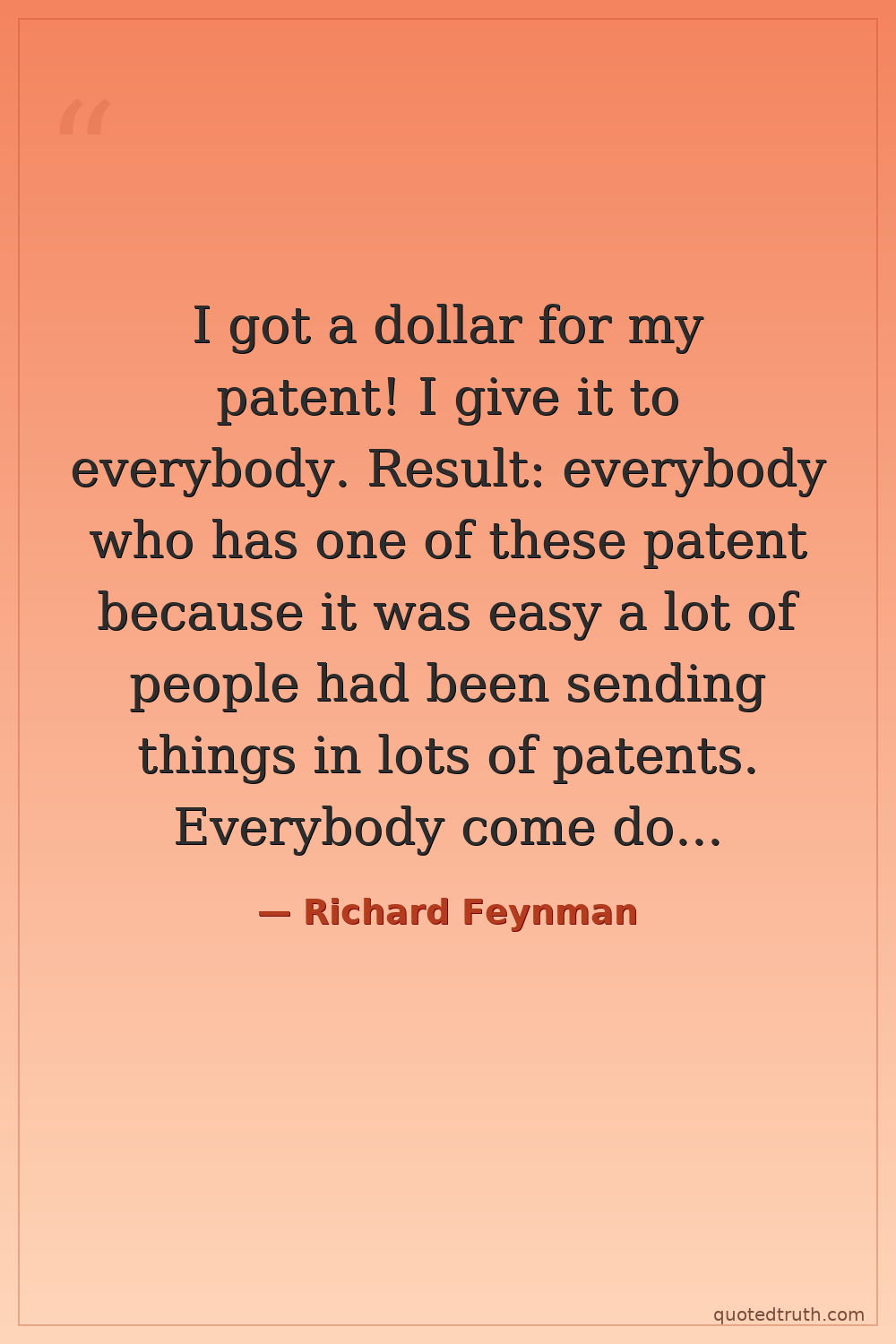
Feynman describes a symbolic patent reward system where employees received one dollar per patent. Once word spread that the payout was guaranteed and easy, everyone rushed to submit patents and collect their dollar. The manager handing out dollars from his own pocket quickly realized the casual gesture had become an unexpected financial drain — a small incentive triggering an avalanche of claims he hadn't anticipated.
Relevance to Richard Feynman
Feynman worked at Los Alamos and later Caltech, navigating institutional bureaucracy throughout his career. He famously valued substance over ceremony and was amused by how systems produce unintended consequences. This anecdote reflects his sharp observational wit — watching a well-intentioned incentive mechanism collapse under its own logic perfectly illustrates the kind of human-systems humor he loved to expose.
The era
Post-WWII American corporations and research institutions aggressively built patent portfolios during the 1950s-60s technology boom. Companies incentivized invention through token reward programs. This era saw massive R&D expansion at Bell Labs, IBM, and defense contractors, where bureaucratic patent processes became both symbols of innovation culture and targets of satire for researchers like Feynman who saw the absurdity in rewarding quantity over genuine discovery.
AI-generated insights based on extensive research and information for context. Factual errors? Email [email protected].