What it means
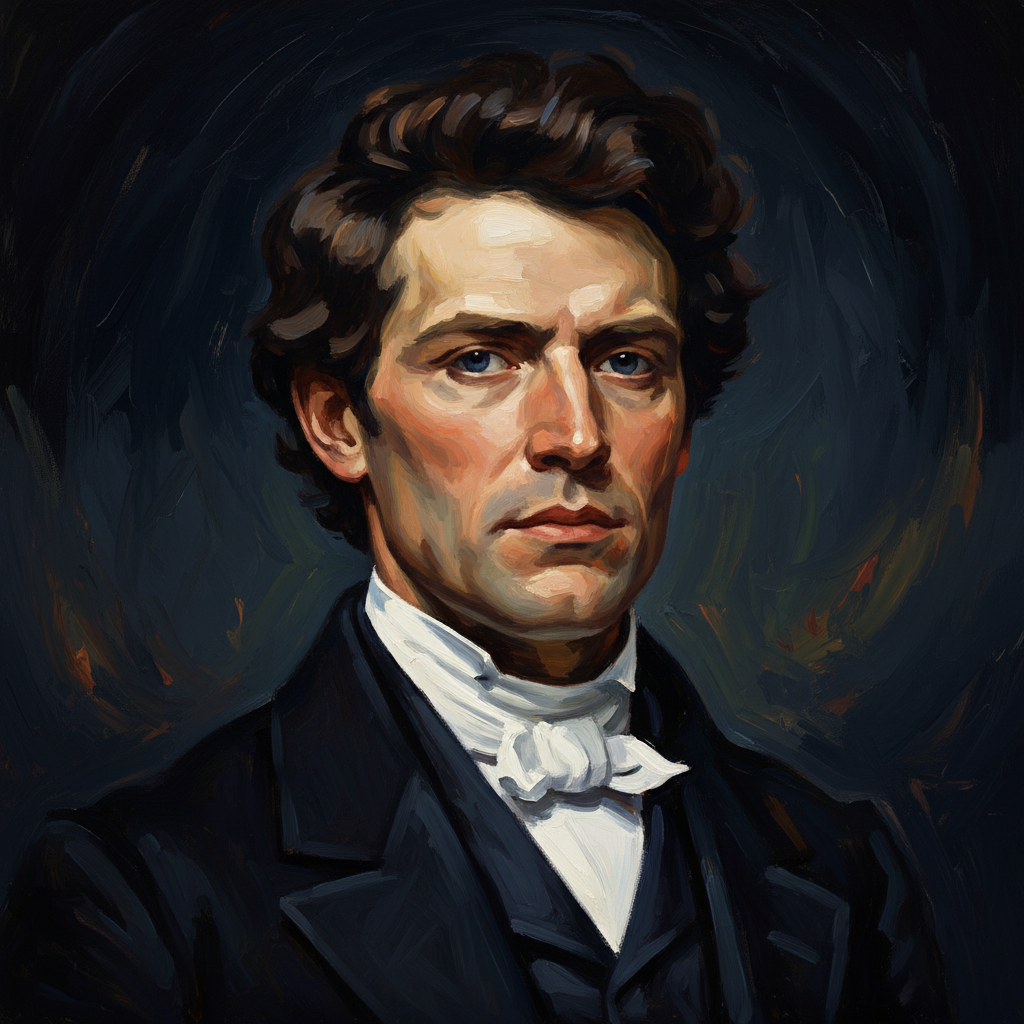
Smith straightforwardly declares himself a divinely appointed prophet — not metaphorically, but literally. He uses the LDS concept of testimony, a personal witness of spiritual truth delivered with conviction. Invoking Christ's name frames the claim as sacred and authoritative. The statement is confrontational in its directness: he is not asking listeners to believe him; he is announcing a certainty he personally holds and expects to be taken seriously.
Relevance to Joseph Smith
Joseph Smith (1805–1844) staked everything on prophetic identity. He claimed divine visions from age 14, translated the Book of Mormon by revelation, and built a church on the premise that God actively speaks through living prophets. Facing constant persecution, legal battles, and violent opposition, he repeatedly reasserted his calling rather than recanting. He was killed in 1844 while awaiting trial, never abandoning these claims — this quote captures his defining, uncompromising conviction.
The era
The early 1800s in America — particularly upstate New York — saw explosive religious ferment known as the Second Great Awakening. Revival movements, competing denominations, and claims of direct divine revelation were widespread. This burned-over district produced multiple new sects and prophetic voices. Amid this environment, Smith's bold prophetic declaration was not merely personal conviction; it was a necessary act of religious authority in a culture actively debating who could legitimately speak for God.
AI-generated insights based on extensive research and information for context. Factual errors? Email [email protected].