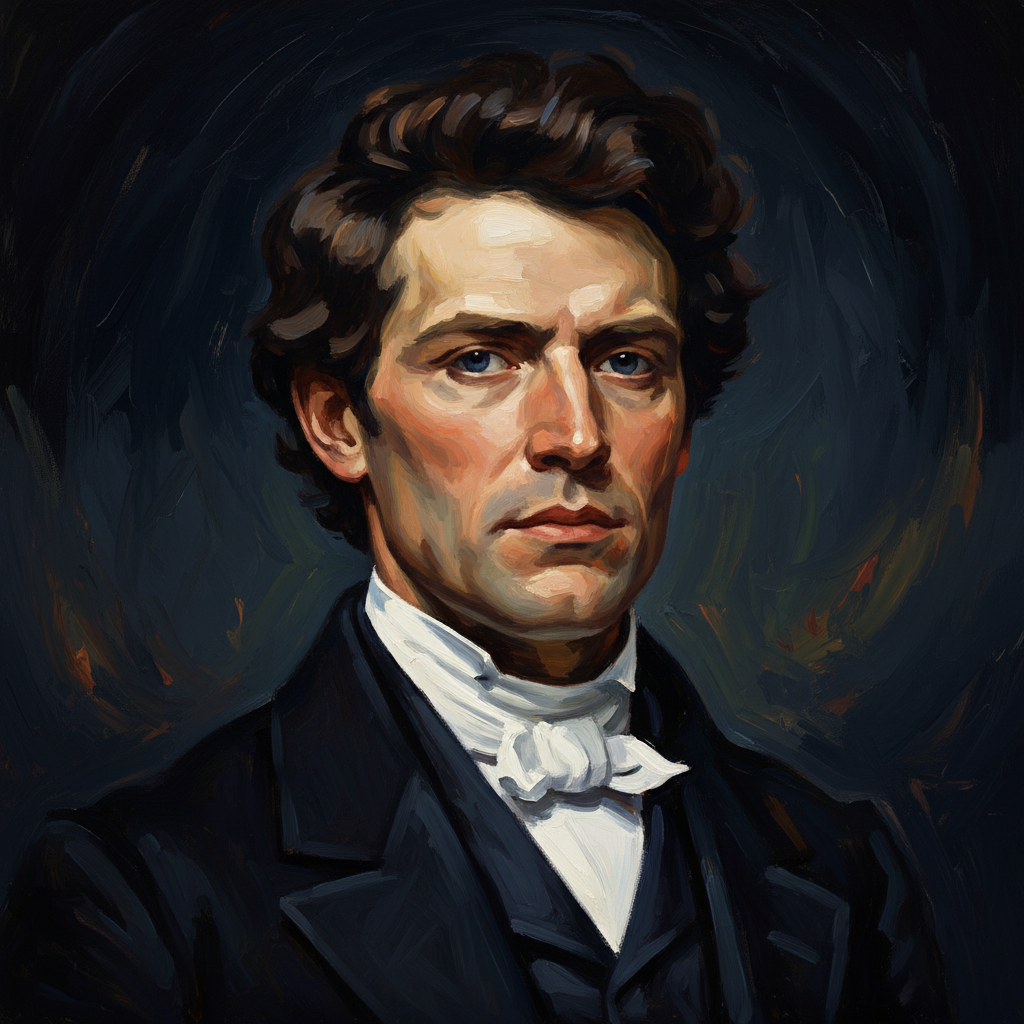
Joseph Smith — "I am willing to lay down my life for the cause of truth."
I am willing to lay down my life for the cause of truth.
I am willing to lay down my life for the cause of truth.
Click any product to generate a realistic preview. Up to 3 at a time.
* Initial load can take up to 90 seconds — revising the preview in another color is nearly instant.
"If I had not been persecuted, I would not have been a prophet."
"When all the rest of the children have received their blessings in the Holy Priesthood, then that curse will be removed from the seed of Cain, and they will then come up and possess the Priesthood, an…"
"The greatest responsibility in this world that God has laid upon us is to seek after our dead."
"I am a man of brotherly kindness, and I will be kind to all men."
"I will preach on the one grand key-note of the whole volume of scripture, which is the resurrection of the dead."
Found in 1 providers: grok
1 source checked
Someone declares absolute devotion to what they believe is true, placing that commitment above self-preservation. It's a statement of radical conviction—the speaker signals they will not retreat, recant, or compromise their beliefs to survive. In modern terms, it's the difference between someone who believes something when it's convenient and someone who holds that belief even when the cost is catastrophic.
Smith's entire adult life was marked by violent opposition—mob attacks, tarring and feathering, repeated imprisonment, and forced expulsions across Missouri and Illinois. In June 1844, he was killed by a mob while jailed at Carthage, Illinois. He had opportunities to flee or recant but refused. This statement was not rhetorical; Smith acknowledged the specific danger his prophetic claims created and chose martyrdom over disavowal.
The early 1800s Second Great Awakening produced explosive religious competition across America, with new sects provoking fierce hostility from established communities. Missouri's 1838 Extermination Order legally authorized killing Latter-day Saints on sight. New religious founders claiming direct revelation from God were seen as threats to social order. In this climate, asserting prophetic authority was a genuinely life-threatening act, not philosophical posturing—Smith's statement reflected a documented, immediate danger.
AI-generated insights based on extensive research and information for context. Factual errors? Email [email protected].
Your cart is empty