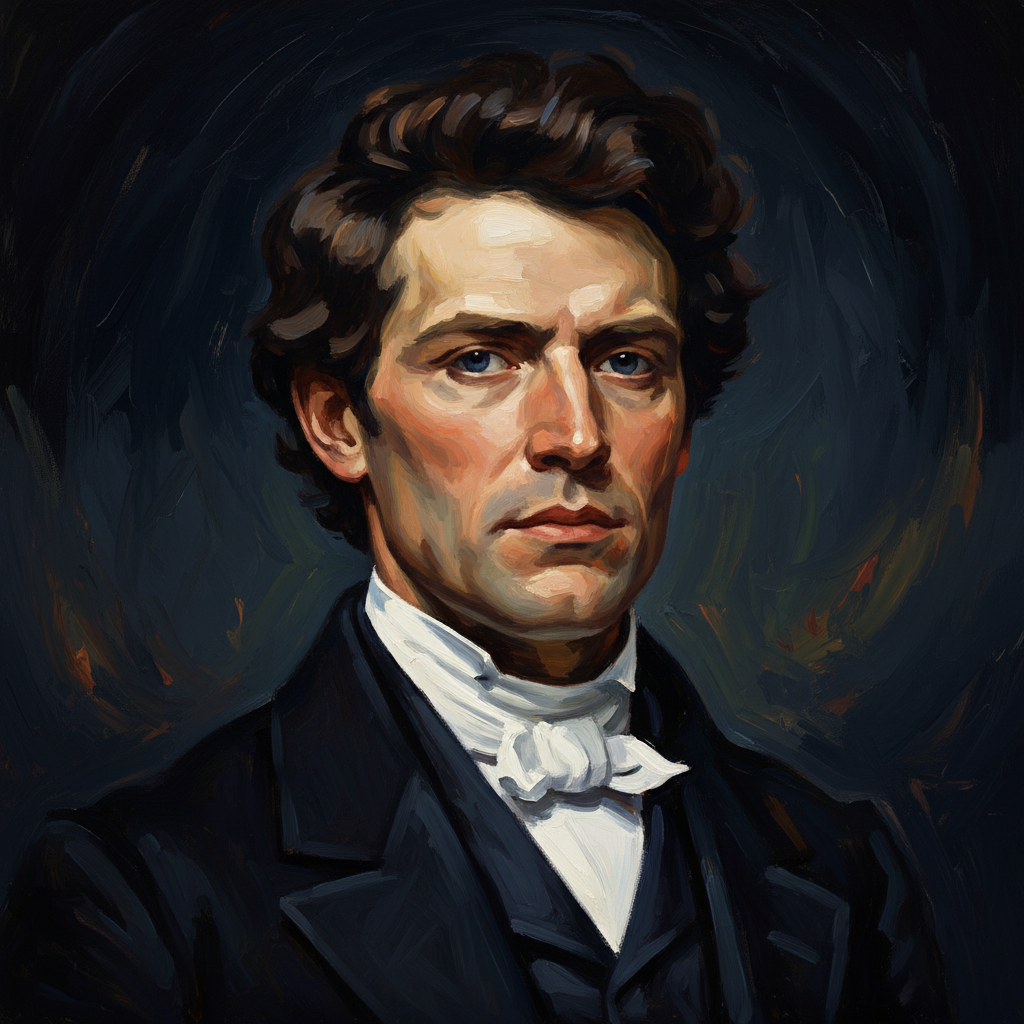
Joseph Smith — "I will not be bought, nor sold, nor flattered, nor threatened."
I will not be bought, nor sold, nor flattered, nor threatened.
I will not be bought, nor sold, nor flattered, nor threatened.
Click any product to generate a realistic preview. Up to 3 at a time.
* Initial load can take up to 90 seconds — revising the preview in another color is nearly instant.
"I am a man of hope, and I will hope in God to the end."
"I told them I was a Prophet of God, and had a right to obtain revelations, and that I should not be trammelled by men."
"The standard of truth has been erected; no unhallowed hand can stop the work from progressing."
"I have seen many things that no eye has seen, and heard many things that no ear has heard."
"I believe the Bible as it read when it came from the pen of the original writers. Ignorant translators, careless transcribers, or designing and corrupt priests have committed many errors."
Found in 1 providers: grok
1 source checked
This quote declares absolute personal sovereignty against the four most common forms of corruption and coercion. The speaker refuses to be purchased through bribery, traded away by others, won over through empty praise, or forced into submission through intimidation. It asserts uncompromising integrity—that character cannot be compromised regardless of the method used against it. No external force, whether financial, social, or violent, can control the speaker's convictions.
Joseph Smith faced relentless opposition as founder of the Latter-day Saints—arrested over 40 times, driven from multiple states, tarred and feathered, and ultimately killed by a mob in 1844. His followers were expelled from Missouri under a literal extermination order. Smith repeatedly refused to recant his religious claims despite mounting pressure. This statement captures his documented defiance: he died in Carthage Jail rather than abandon his testimony or flee to safety.
The 1830s–40s saw intense religious ferment during America's Second Great Awakening, but new movements faced fierce persecution. Smith's era was defined by frontier vigilantism, mob rule, and weak legal protections for religious minorities. State governments often sided with majorities against outsiders. The LDS church was driven from New York, Ohio, and Missouri before expulsion from Illinois. Publicly defying persecution made religious founders defining symbols of their movements' legitimacy and survival.
AI-generated insights based on extensive research and information for context. Factual errors? Email [email protected].
Your cart is empty