What it means
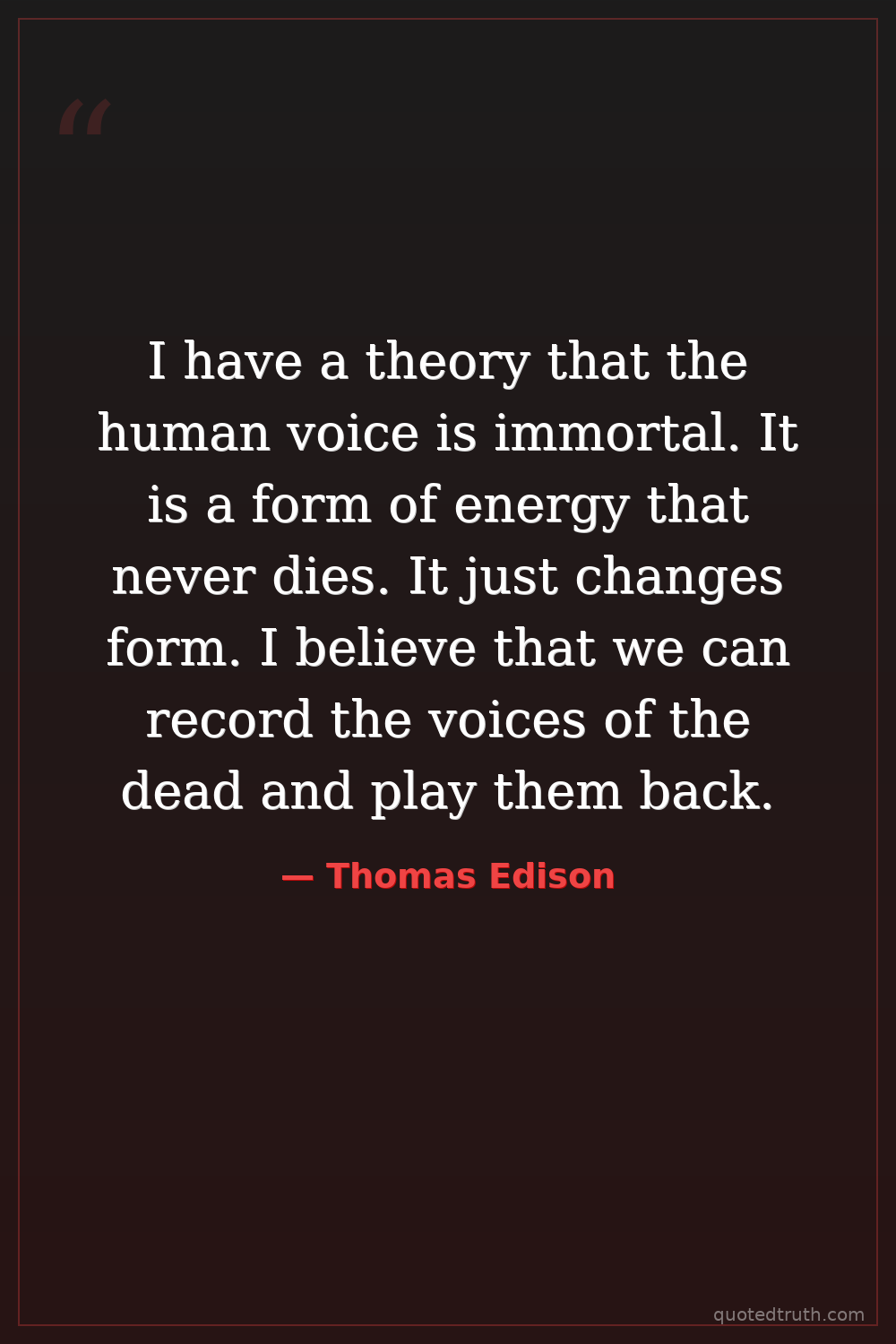
The speaker proposes that human voices are a kind of energy that cannot be destroyed, only transformed. Drawing on the principle of conservation of energy, they argue voices of deceased people still exist in some altered state and could theoretically be captured and replayed with the right technology. It is a claim that death does not erase sound, only scatters it beyond our current ability to retrieve.
Relevance to Thomas Edison
Edison invented the phonograph in 1877, making him the first person to capture and replay human voices. Late in life he reportedly worked on a 'spirit phone' intended to contact the dead, reflecting a genuine belief that if sound could be recorded mechanically, consciousness itself might leave detectable traces. The quote mirrors his lifelong conviction that any natural phenomenon, including the afterlife, could be solved through instrumentation and patient experimentation.
The era
Edison lived through the late 1800s and early 1900s, an era when Spiritualism, seances, and mediums were mainstream pursuits even among scientists. Recording technology, radio, and X-rays were revealing invisible energies everywhere, blurring the line between physics and the supernatural. Against this backdrop, proposing a machine to hear the dead seemed less like mysticism and more like the next logical frontier of the electrical age that Edison himself helped create.
AI-generated insights based on extensive research and information for context. Factual errors? Email [email protected].