What it means
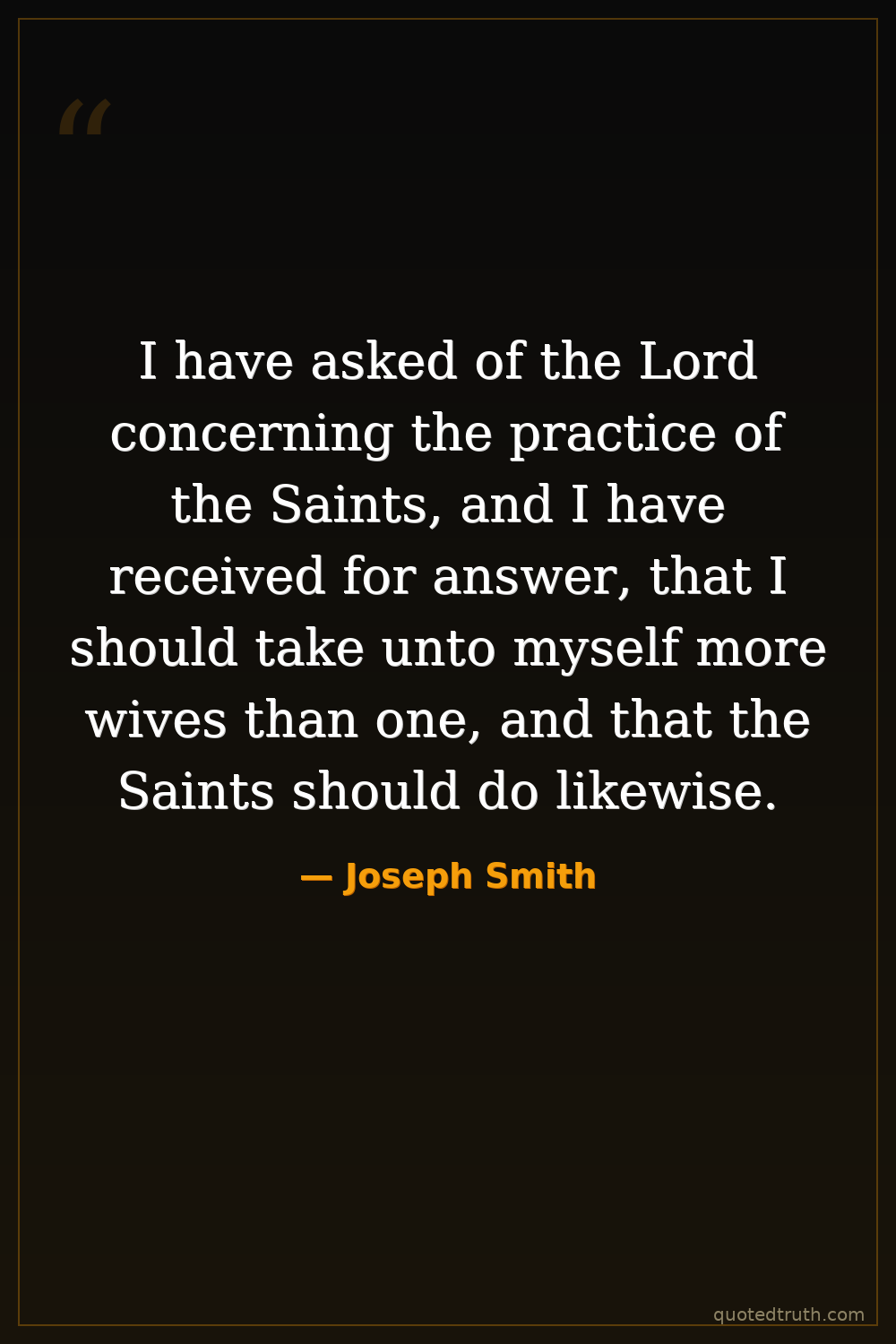
The speaker claims divine authorization to practice plural marriage, meaning taking multiple wives simultaneously. He presents this not as personal choice but as a commandment received directly from God, binding both himself and his followers. It frames polygamy as religious duty rather than preference, demanding communal compliance. The phrase 'asked of the Lord' positions the practice as a response to sincere prayer answered by revelation, making refusal tantamount to rejecting God's will.
Relevance to Joseph Smith
Smith founded a new American religion by claiming continuous divine revelation, and plural marriage was his most explosive doctrinal innovation. Recorded in 1843 as Doctrine and Covenants 132, Smith had already secretly married dozens of women, including teenagers and wives of living men. His prophetic authority rested entirely on claimed direct communication with God, so framing polygamy as revelation was structurally identical to how he introduced scripture, baptism for the dead, and temple ceremonies — revelation as the ultimate trump card.
The era
In 1840s America, the Second Great Awakening had normalized claims of personal revelation and new religious movements. Biblical polygamy — Abraham, Jacob, David — was familiar to Protestant audiences, lending Smith's doctrine partial scriptural cover. Nauvoo, Illinois was Smith's theocratic city-state where he wielded political and religious power simultaneously. Plural marriage remained a dangerous secret; its exposure contributed directly to his imprisonment and 1844 assassination. The US government later waged a decade-long legal campaign forcing the LDS church to renounce polygamy by 1890.
AI-generated insights based on extensive research and information for context. Factual errors? Email [email protected].